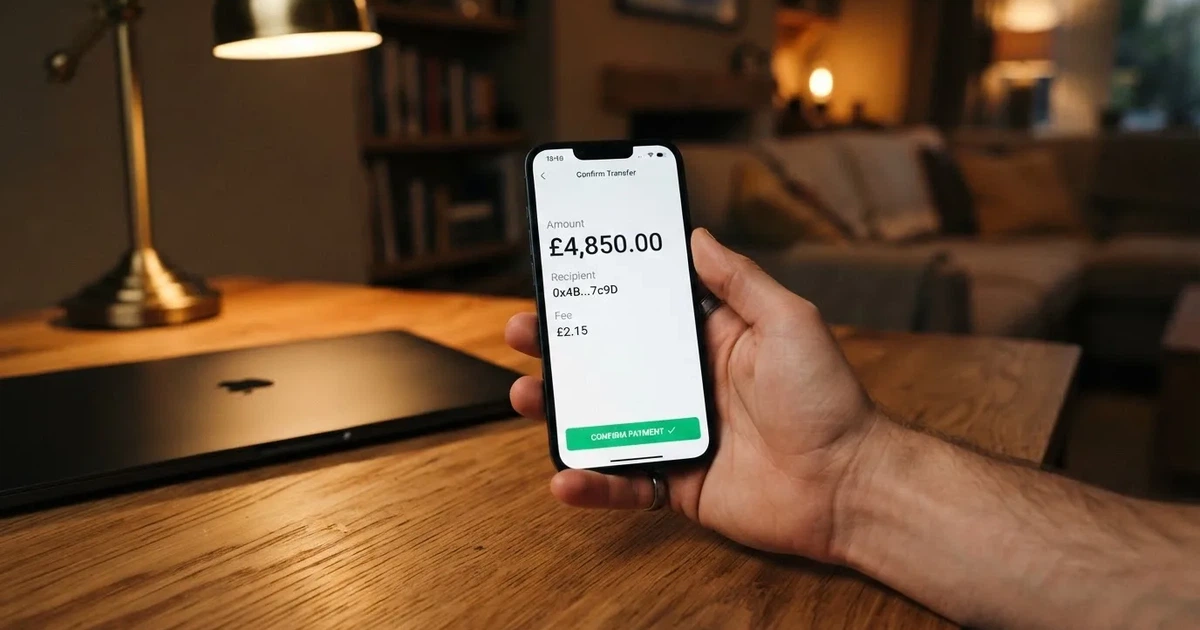
Anonymous Crypto Casino UK in 2026: What a Gambling Commission Licence Costs the Word “Anonymous”
 Available in GB
A player who searches for an “anonymous crypto casino UK” usually wants two things at once: a way to fund an account without handing over a card, and a casino that won’t ask who they are. At any site the Gambling Commission licences, those two wants pull in opposite directions. Crypto settles the payment side quickly and cheaply, but the licence settles the identity side the moment a player tries to deposit. The honest answer is that an account at a licensed UK casino is never anonymous in the way the search term implies — even when the funding rail is Bitcoin.
This page lays that out. It covers what “anonymous” can and cannot mean at a Gambling Commission licensee in 2026, how the regulator treats crypto deposits alongside every other payment method, and which of ten licensed brands accept crypto at all. The frame throughout is cost — to the player, to the marketing claim, and to the word itself.
Data current as of 23 September 2026 and verified against the Gambling Commission’s public register of gambling businesses.
Table of Contents
- Why a UK-licensed Casino Cannot Be Anonymous
- What the Gambling Commission Actually Says About Crypto
- Where Crypto Sits in the Wider UK Licensing Picture
- Self-Exclusion, Deposit Limits and the Cost of the Licence
- Crypto on the Blockchain Itself
- The 10x Wagering Cap and What a Bonus Actually Costs
- How Licensed UK Sites Accept Crypto — and What “Subject Support” Means
- Regulatory Compliance Overview
- Reading the Brand-Level Snapshots
- The Cost of Going Offshore
- Choosing a Licensed Site That Accepts Crypto
- Closing the Loop on “Anonymous”
- Frequently Asked Questions
Why a UK-licensed Casino Cannot Be Anonymous
The premise of “anonymous” play is that the casino doesn’t know who is on the other side of the screen. The premise of a UK licence is the opposite. Every operator taking customers in Great Britain runs the same customer due diligence on a crypto-funded account as it does on a debit-card-funded one, because the Gambling Commission treats cryptoassets the same way it treats any other “money or money’s worth” put on a table.

That treatment has three consequences a search for “anonymous crypto casino UK” usually misses.
First, identity verification runs before the first deposit, not after. The Commission requires operators to confirm a customer’s name, address and date of birth, and to do it before letting that customer stake a single penny. Since 7 May 2019, those checks happen at registration rather than at withdrawal, which closes the once-common route of “deposit now, verify later”. The deposit method does not change this; crypto is not the exception the marketing sometimes makes it sound.
Second, GAMSTOP enrolment runs at the same point. Every Gambling Commission online licensee must check GAMSTOP and refuse registration if a self-exclusion match comes back. Self-exclusion periods are six months, one year or five years and cannot be cancelled early. There is no opt-out, and there is no payment-rail variant that exempts a player.
Third, financial vulnerability checks now run on deposits of £150 in a rolling 30 days, using public-data sources — a rule that has been in force since 28 February 2025. The check does not depend on how the deposit arrived. A £150-worth-of-Bitcoin deposit triggers it the same way a £150 card top-up does.
The licensed site is therefore anonymous only in a narrow technical sense. The blockchain address that sent the funds is not tied to a customer’s name in any publicly searchable way. The casino, however, holds the customer’s verified identity on file, must share that file with the Commission on request, and must report suspicious activity under anti-money-laundering rules. The privacy gain from crypto at a licensed site is a thinner payment trail, not an absent one.
What the Gambling Commission Actually Says About Crypto
The Commission’s published position on digital currencies is unusually direct for a regulator. It classes any virtual currency accepted for gambling as “money or money’s worth”, in the same category as casino chips. That classification carries a licence obligation: the operator must hold a Gambling Commission licence to take it, on the same terms as any other payment method.

The Commission has also identified three risks it expects operators to manage before they will allow a crypto deposit through. They are worth listing because they are the rationale behind the friction a player feels when they try one.
- Anonymity. The pseudonymous nature of blockchain addresses creates the very thing the Commission’s customer due diligence is built to defeat.
- Price volatility. A deposit worth £200 when it lands may be worth £180 when the player withdraws, or £220. The casino’s accounting and the player’s bankroll both move with the market.
- History of hacking and theft. Crypto’s irreversibility means a stolen balance is gone, and the Commission expects operators to assess that risk before accepting the asset.
The Commission’s published guidance for licensees requires any operator introducing cryptoasset acceptance to notify the Commission in advance and to review its anti-money-laundering risk assessment first. That is a process the licensee completes on its side, not a permission a player secures. The implication for a player is direct: any licensed brand offering crypto today has cleared that hurdle, and any licensed brand that hasn’t is not hiding it — it simply hasn’t notified.
The Financial Conduct Authority sits beside the Commission on the same payments. Since 10 January 2020 the FCA has been the anti-money-laundering supervisor of UK cryptoasset businesses under the amended Money Laundering, Terrorist Financing and Transfer of Funds Regulations 2017. From 30 September 2026 the FCA will open applications under a new FSMA-based authorisation regime, with the regime itself starting on 25 October 2027. The Gambling Commission polices the gambling; the FCA polices the firms that move the money in and out.
Where Crypto Sits in the Wider UK Licensing Picture
The Commission’s public register is the working test of who is and is not licensed in Great Britain. As of 18 September 2026, the register listed 139 businesses holding an active remote casino operating licence. That is the universe any “anonymous crypto casino UK” search lands inside, whether the player realises it or not. The register can be searched online and downloaded in full as a CSV or Excel file, which means a player who wants certainty about a brand can check it themselves rather than trust the brand’s footer.
The register’s domain list, which pairs each website against the licence account that runs it, is the second filter. On 18 September 2026 it held 1,065 active domain entries and 361 white-label entries. A white-label site trades under another company’s licence — Virgin Games is a useful example, listed as a white-label domain of Gamesys Operations Limited, with remote casino operating licence 038905-R-319430-022. The distinction matters because the operating company behind a white-label brand is not the brand itself; complaints routes and dispute resolution go to the licensee.
A remote casino licence number on the register follows a set shape: account-R-number-suffix, where the leading six digits repeat the licence holder’s account number and the “R” marks a remote (online) licence. So Unibet’s entry, account 45322, carries licence 045322-R-324275-019 — the same six digits at the front. Any operator a player considers can be checked against that pattern in seconds.
The minimum age is 18. Credit cards have been banned for gambling since 14 April 2020, including credit cards routed through e-wallets. Online slots carry a maximum stake of £5 per game cycle for players aged 25 and over (from 9 April 2025) and £2 for 18-24-year-olds (from 21 May 2025). A “game cycle” is one spin, in plain English. The slot also spins at no faster than 2.5 seconds, auto-play is banned, and losses disguised as wins are banned. None of those rules change with the deposit method.
Self-Exclusion, Deposit Limits and the Cost of the Licence
Three player-protection rules apply to a crypto-funded account in exactly the way they apply to any other. They are worth treating as a single block because they all cost the marketing word “anonymous” something — they all turn it into “pseudonymous with regulated friction”.
GAMSTOP. The national self-exclusion scheme has been a mandatory condition of every online licence since 31 March 2020. A player registers once, picks a period of six months, one year or five years, and is barred from every Gambling Commission licensee for that period. Cancellation is not possible. There is no payment method that escapes the check.
Deposit-limit prompt. Since 31 October 2025, every operator must prompt a new customer to set a financial limit before the first deposit. The limit is the player’s choice — daily, weekly or monthly, at whatever level the customer sets — but the prompt itself is mandatory. There is no state-set ceiling on what that limit can be, which is the part the marketing sometimes elides.
Financial vulnerability checks. From 28 February 2025, operators run a check using public-data sources once a customer reaches £150 in net deposits across a rolling 30-day window. The check looks at publicly available indicators of financial pressure; the wider financial risk assessments the Commission has signalled are not yet in force. A crypto-funded account that crosses the £150 threshold in 30 days triggers the same prompt a card-funded one does.
The gambling harm support network around these rules is national and consistent. GamCare runs the National Gambling Helpline. GambleAware funds treatment and research. Approved alternative dispute resolution providers handle complaints that cannot be settled with the operator. None of that infrastructure depends on the deposit method, which is part of why the offshore alternative is more expensive than it looks — see the closing section on that.
Crypto on the Blockchain Itself
Two facts about the underlying technology matter for what “anonymous” can mean at all, and only two — the rest is detail that does not change the player’s experience.
Bitcoin. The network’s genesis block was mined on 3 January 2009 by the still-pseudonymous Satoshi Nakamoto, whose real identity remains unknown. The protocol targets ten minutes between new blocks through automatic difficulty adjustment, and caps total issuance at 21 million coins, with the final fraction expected to be mined around the year 2140. The ledger is secured through proof-of-work, in which miners compete to find a block hash below a network-set difficulty target. None of that requires a player to share their name. Every transaction on the chain is, however, permanently recorded and publicly visible — pseudonymity, not anonymity.
Binance Coin (BNB). A useful contrast because it shows how a token can sit on top of different infrastructure. BNB launched in July 2017 as an Ethereum-based token issued by the Binance exchange, raised about $15 million through an initial coin offering the same year, and migrated from Ethereum to the network now called BNB Smart Chain, which launched in September 2020 and was rebranded from Binance Smart Chain in 2022. BNB Smart Chain runs on proof-of-stake consensus and BNB has a maximum supply of 200 million tokens; by 2021 it had the third-highest market capitalisation among cryptocurrencies. The mechanics differ from Bitcoin; the pseudonymity on the chain does not.
For tax, the rule is the same for both. HMRC does not treat cryptoassets as currency. It treats them as property. Disposal — selling, swapping for another token, or spending them on goods or services — is a chargeable event for Capital Gains Tax. Receiving crypto as income, for example from staking, is taxable as Income Tax. The casino is not the tax point; the player’s wallet is.
The 10x Wagering Cap and What a Bonus Actually Costs
The prescribed calculation on this page is the wagering-turnover band that follows from the 10x cap in force since 19 December 2025. The rule itself is short: no bonus at a UK-licensed casino can carry a wagering requirement higher than ten times the bonus amount, and mixed-product bonuses — bet on sport, get casino spins — are banned. The cost of clearing a bonus is therefore narrower than it used to be, and a player can put a bound on it without knowing the brand.
The arithmetic is direct. Suppose a player takes a £100 bonus at a site running the maximum 10x wagering requirement. Required turnover is £100 × 10 = £1,000. At a £2 stake per spin on a standard slot, that is £1,000 ÷ £2 = 500 spins. At a 2.5-second spin interval, 500 spins take 500 × 2.5 ÷ 60 = roughly 21 minutes. At a £5 stake — the cap for players 25 and over — the same bonus clears in £1,000 ÷ £5 = 200 spins, or about 8 minutes.
The band that matters for a player is wider than those single figures suggest, because wagering multipliers below 10x are common and stake caps vary with age. A player who is 18-24 and clears the bonus at £2 per spin can take over 20 minutes to clear £100. A player 25 or over clearing at £5 per spin can do it inside ten. The condition is the same — 10x the bonus — but the elapsed time depends entirely on which stake cap applies. That is the band worth remembering: hours of play to clear a typical welcome bonus sit between a coffee break and a lunch hour, not in the evenings a £2,000 playthrough used to require at the old 40x.
Two qualifiers carry through every brand below. The first is that this is an estimate over many spins under the stated assumptions, not a guaranteed outcome for any single player. The second is that no bonus code, voucher or promo code is reproduced anywhere on this page, because the calculation is about what an offer costs the player once they hold it, not about how they acquire it.
How Licensed UK Sites Accept Crypto — and What “Subject Support” Means
The featured set on this page is ten brands drawn from the Gambling Commission’s public register, ordered as research ranks them and not as any editorial recommendation. Every brand is listed there as an active or white-label domain against a GB remote casino operating licence. None of them carries “Subject support: confirmed” in the research for cryptoasset acceptance at the domain level, which means the research does not assert that any of these ten brands accepts Bitcoin or any other cryptoasset at the cashier today. Where a brand has publicly announced crypto acceptance and is visible on the Commission’s register, that fact belongs to the brand’s own communications and to the Commission’s notification process, not to the register snapshot.
What the register does confirm is that each domain is licensed under a numbered GB remote casino operating licence, that the licence is currently active, and that the licence holder is a named company. Where the brand is a white-label domain rather than an active domain, that distinction is preserved in the table below. A white-label site trades under another company’s licence — the operator behind the cashier is the licensee, not the brand on the page.
Regulatory Compliance Overview
| Compliance Area | Requirement | Regulatory Source |
|---|---|---|
| Self-Exclusion | Mandatory GAMSTOP integration | Licence Condition |
| Slot Stake Limit | £5 (25+), £2 (18-24) | Gambling Commission |
| Age Verification | Required before first deposit | Gambling Commission |
| Financial Limits | Mandatory limit-setting prompt | Gambling Commission |
| Brand | Licence holder and GB remote casino licence | Domain status on the register | Cryptoasset acceptance on the record |
|---|---|---|---|
| Paddy Power | PPB Games Limited · 039411-R-319335-010 | Active domain | — |
| Unibet | Platinum Gaming Limited · 045322-R-324275-019 | Active domain | — |
| Sky Vegas | Bonne Terre Gaming Limited · 065519-R-339675-002 | Active domain | — |
| kwiff | Eaton Gate Gaming Limited · 044448-R-323408-017 | Active domain | — |
| bet365 | Hillside (UK Gaming) ENC · 055149-R-331499-004 | Active domain | — |
| MrQ | Tek Fox Ltd · 060629-R-337532-004 | Active domain | — |
| Midnite | Dribble Media Limited · 042647-R-321653-022 | Active domain | — |
| Virgin Games | Gamesys Operations Limited · 038905-R-319430-022 | White-label domain | — |
| BetVictor | BV Gaming Limited · 039576-R-319370-028 | Active domain | — |
| Grosvenor Casinos | Rank Interactive (Gibraltar) Limited · 057924-R-334666-005 | Active domain | — |
The spread in the licence holders is the part of the table worth lingering on. Five of the ten run under standalone operators (PPB Games, Platinum Gaming, Bonne Terre Gaming, Hillside UK Gaming, Tek Fox). Two are white-label or sister-brand arrangements (Virgin Games under Gamesys, Grosvenor under Rank Interactive Gibraltar). The remaining three — kwiff under Eaton Gate Gaming, Midnite under Dribble Media, and BetVictor under BV Gaming — sit in the middle: their own licensees, but smaller ones than the major brand groups. None of those distinctions changes a player’s rights under the licence; they do change who picks up the phone when something goes wrong.
Reading the Brand-Level Snapshots
The notes below treat each featured brand on its own register entry. They are deliberately short: the register carries the licensing facts, and what isn’t on the register is not part of this page. Where the research carries no data on cryptoasset acceptance for a brand, that absence is reported as absence, not as refusal or as acceptance. A reader who needs certainty about a single brand’s crypto cashier should check the brand’s own banking page and the Commission’s notifications list, both of which the register itself points to.
Paddy Power. Domain Paddy Power listed on the register as an active domain of account 39411, PPB Games Limited, under remote casino operating licence 039411-R-319335-010. The research carries no figure on cryptoasset acceptance. Paddy Power’s wider UK-facing payment set runs through cards and established e-wallets; whether the cashier now extends to cryptoassets is not something the register snapshot answers, and the brand’s own banking page is the place to look. The licence, the operator and the active-domain status are what the register confirms today.
Unibet. Domain unibet.co.uk listed as an active domain of account 45322, Platinum Gaming Limited, under remote casino operating licence 045322-R-324275-019. Same picture: the register carries the licence and the active status, and the research carries no data on whether the cashier accepts Bitcoin or any other cryptoasset. A reader who needs the answer on a specific brand’s payment methods needs to look at the brand’s own deposit page rather than the Commission’s public register.
Sky Vegas. Domain Sky Vegas listed as an active domain of account 65519, Bonne Terre Gaming Limited, under remote casino operating licence 065519-R-339675-002. The licensee is a single-brand operation rather than a multi-brand group, which makes the payment-method question sharper: any decision on adding a new rail goes through Bonne Terre Gaming’s own Commission notification. The register snapshot does not state the outcome of that process one way or the other.
kwiff. Domain Kwiff listed as an active domain of account 44448, Eaton Gate Gaming Limited, under remote casino operating licence 044448-R-323408-017. kwiff has built its identity around unusual promotional mechanics on settled bets, which is the brand context for any payment-method decision. The register confirms the licence and the active status; cryptoasset acceptance at the cashier is not in the snapshot the research carries.
bet365. Domain Bet365 listed as an active domain of account 55149, Hillside (UK Gaming) ENC, under remote casino operating licence 055149-R-331499-004. The licensee structure — a UK-facing ENC of Hillside — is the kind of arrangement a player can verify against the Commission’s register without having to phone the brand. The research carries no figure on cryptoasset acceptance; the brand’s own deposit page is the working source.
MrQ. Domain MrQ listed as an active domain of account 60629, Tek Fox Ltd, under remote casino operating licence 060629-R-337532-004. MrQ has positioned itself around no-wagering bonuses and a relatively small game catalogue, which is the brand context for any payment-method discussion. The register confirms the licence; cryptoasset acceptance is not in the snapshot.
Midnite. Domain Midnite listed as an active domain of account 42647, Dribble Media Limited, under remote casino operating licence 042647-R-321653-022. Midnite operates in a narrower esports-and-casino hybrid niche, which can shape how a brand introduces new rails. The register confirms the licence and the active status; cryptoasset acceptance is not on the snapshot.
Virgin Games. Domain Virgin Games listed on the register as a white-label domain of account 38905, Gamesys Operations Limited, under remote casino operating licence 038905-R-319430-022. The white-label status means Virgin Games trades under Gamesys Operations Limited’s licence, and the operating company behind the cashier is Gamesys, not the brand on the page. A player with a complaint about payments follows the licence, not the brand. The research carries no figure on cryptoasset acceptance.
BetVictor. Domain BetVictor listed as an active domain of account 39576, BV Gaming Limited, under remote casino operating licence 039576-R-319370-028. BetVictor has historically run a tight sports-and-casino combination, which is the brand context for any payment-method decision. The register confirms the licence; cryptoasset acceptance is not in the snapshot.
Grosvenor Casinos. Domain Grosvenor Casinos listed as an active domain of account 57924, Rank Interactive (Gibraltar) Limited, under remote casino operating licence 057924-R-334666-005. The licensee name is worth pausing on: the operator is a Gibraltar-registered subsidiary of the Rank Group, which is the structure the Commission treats as an active UK licensee so long as the licence number is current. The research carries no figure on cryptoasset acceptance.
The Cost of Going Offshore
The unlicensed alternative is the comparison the marketing never invites. A site accepting UK customers on a Curaçao, Maltese or Gibraltar licence — without the GB remote casino operating licence — is operating illegally under section 33 of the Gambling Act 2005, and the Gambling Commission has been explicit on the consequences for the player, not just the operator.
The Commission disrupts illegal sites where it can: cease-and-desist notices, payment and hosting referrals, search-engine delisting. It does not have the power to block sites at ISP level. The penalty for the operator is the Commission’s enforcement; the cost for the player is the protection they lose the moment they deposit on the unlicensed site.
That protection is not abstract. The player gives up GAMSTOP coverage, which means a self-exclusion registered with the licensed scheme does not bar them from the offshore site. The player gives up the Commission’s complaints route and the approved ADR providers sitting beneath it, which is where disputed withdrawals go when the licensee will not resolve them. The player gives up the source-of-funds checks and the financial vulnerability prompts that the licensed site runs at £150 in net 30-day deposits, because nothing on the offshore side forces them.
The Revenue side is the second cost the player does not see at deposit. Remote Gaming Duty rose from 21% to 40% from 1 April 2026 at licensed operators, which is a cost of doing business, not a cost that reaches the player. The player pays no tax on gambling winnings in the UK regardless of where they play. The cost the player does pay at an unlicensed site is the loss of every remedy the Commission offers when the operator fails to pay out, because the Commission offers those remedies only to players at licensed sites.
Choosing a Licensed Site That Accepts Crypto
A reader who has decided to deposit in crypto at a licensed UK casino has three working checks to run, and they run in this order.
First, verify the licence on the Commission’s public register. Search the brand name, confirm the licence number and check the licence status is Active. The licence number format is account-R-number-suffix, and the leading six digits match the licence holder’s account number. A player who wants certainty should do this themselves rather than rely on a footer link.
Second, check the deposit-method list on the brand’s own banking page. The register confirms the brand is licensed; it does not confirm the brand accepts a given payment method. The Commission’s notification requirement means a brand introducing crypto acceptance will have notified the Commission in advance, but the register snapshot does not list payment methods by domain.
Third, read the bonus terms before claiming. Since 19 December 2025 the wagering cap is 10x and mixed-product bonuses are banned. A bonus with terms outside that frame at a licensed site is either misworded or not a bonus the player should claim. The 10x cap bounds what a player has to turn over to clear an offer, and that bound is the page’s key takeaway.
What the licensed site will not give the player is true account anonymity. The crypto deposit arrives with a thinner payment trail than a card, but the player is still verified at registration, GAMSTOP-checked, deposit-limit-prompted and vulnerability-checked at £150 in a rolling 30 days. That is what the licence costs the word “anonymous”, and it is the answer the search term is really asking for.
Closing the Loop on “Anonymous”
The honest reading of an “anonymous crypto casino UK” search in 2026 is that two ideas are being asked about at once, and only one of them survives a licensed site. Crypto settles the payment rail pseudonymously; the licence settles the identity on file. The combination is thinner payment privacy than a card, full identity verification from registration onwards, and every protection the Gambling Commission requires of its licensees — GAMSTOP, deposit-limit prompts, financial vulnerability checks, the 10x wagering cap, the age-based slot stake limits, the source-of-funds review at first deposit.
A player who wants a crypto deposit at a licensed UK site has ten licensed brands to consider in the featured set, each with an active GB remote casino operating licence on the Commission’s register. The register confirms the licence and the domain status; it does not confirm cryptoasset acceptance for any of them, and the research carries no figure either way. The brand’s own banking page is where that answer lives.
A player who wants true anonymity at the cashier is looking for a different product, and the offshore alternative costs them the protection layer that the licensed site offers. The Commission’s enforcement does not target the player; what the player loses on an unlicensed site is the route back when something goes wrong. That is the closing trade a “anonymous crypto casino UK” search has to make, and the rest of the page is the evidence behind it.
Frequently Asked Questions
How anonymous is a crypto deposit at a UK-facing casino really?
A crypto deposit at a Gambling Commission licensee is anonymous only on the blockchain rail. The casino still verifies name, address and date of birth before the first deposit, so the operator holds the customer’s identity on file and must share it with the Commission on request. The privacy gain is a thinner payment trail, not an absent one.
Which cryptocurrencies can typically be deposited at a licensed casino?
Bitcoin is the most widely listed, with other chains such as BNB Smart Chain carrying token variants like Binance Coin. The Commission’s published guidance treats any virtual currency accepted for gambling as “money or money’s worth”, so each brand must notify the Commission before adding a new asset. A player should check the brand’s own banking page for the exact list.
Are withdrawals paid back in cryptocurrency or converted to pounds?
That varies by brand and by the original deposit method, and a player should read the brand’s withdrawal policy before assuming a crypto-on-deposit, crypto-on-withdrawal round trip. Some operators pay back in pounds at the prevailing rate at withdrawal time, which means the player carries the volatility between deposit and cashout.
Does using crypto change the identity checks required before a first deposit?
No. Customer due diligence — name, address and date of birth — runs at registration, not at withdrawal, and the deposit method does not change it. GAMSTOP enrolment and the deposit-limit prompt run at the same point. Crypto is treated as “money or money’s worth”, in the same category as any other payment rail.
Are transaction fees different when depositing with cryptocurrency instead of a card?
Network fees apply to a crypto deposit and are paid to the blockchain’s miners or validators, not to the casino; card deposits carry their own fee structure through the card scheme. The net cost depends on the chain chosen, the network load at deposit time, and the operator’s own minimums and maximums, all of which sit on the brand’s banking page rather than on the Commission’s register.
Must a casino accepting cryptocurrency still hold a Gambling Commission licence to serve UK players?
Yes. The Commission’s published position classes virtual currency accepted for gambling as “money or money’s worth”, which carries the same licence obligation as any other payment method. Any operator taking customers in Great Britain on crypto alone needs a GB remote casino operating licence, and that licence number can be checked on the Commission’s public register.
Written by the editors at lowdepositcasinouk.