Casino VIP programmes in the UK in 2026 — what a high-roller tier actually changes
Casino VIP programmes in the UK in 2026: the perks that scale, the rules that don’t
 Available in GB
Data current as of 5 November 2026, checked against the Gambling Commission’s public register of gambling businesses.
A high-roller account at a British-licensed casino is a relationship, not a passport. The promise is real: a named host, faster withdrawal reviews once a player has cleared identity and source-of-funds checks, higher ceilings on what can be taken out in a day. What does not scale is the regulatory frame around the account. The £5 slot stake cap, the 10x wagering-requirement ceiling, the prompt for a deposit limit before the first pound goes in, and GAMSTOP self-exclusion all sit above any tier a casino draws up. A player reaching the top of a loyalty ladder at a UK-licensed brand is playing under exactly the same perimeter rules as someone who opened the account yesterday.
The regulatory perimeter is the focus of this page. This guide covers the high-roller experience, the role of a VIP host, faster withdrawal reviews, bonus terms and the legal framework around them, using data from the Gambling Commission’s public register. The angle is consequence: what each mechanism actually means for the player, and when those conditions apply.
Table of Contents
- The crypto and anonymity shelf
- Payments, payout speed and the credit-card line
- Bonuses, free spins and the wagering cap that binds every offer
- The licensed high-roller landscape in 2026
- The legal frame every VIP account sits inside
- Responsible gambling at a VIP tier
- How a £100 bonus clears under the current 10x cap — a worked band
- Reading the comparison across the ten brands
- Frequently asked questions
The crypto and anonymity shelf
The UK regulatory frame presents a contradiction: VIP status and anonymity. A “crypto VIP casino” implies a player who holds a larger balance and wants relationship-management perks but prefers to remain unknown. At a licensed UK casino, the process is fixed. Name, address and date of birth are verified before the first deposit or any play. A dedicated VIP account manager sits on top of this verification, not beside it — the host is the person who knows the player, asks whether the source of funds has changed, and routes the withdrawal review.

A crypto-funded VIP account is therefore not anonymous in any sense the regulator recognises. A licensed casino cannot take crypto deposits and route them past the Commission’s anti-money-laundering rules; offshore brands can, but they are not licensed in Great Britain, and the protections attached to a UK account — GAMSTOP, ADR, Commission complaints route — disappear with the licence. What a UK VIP gets in this space is not concealment. It is a single point of contact who already has the file open.
How the host actually fits the KYC workflow
Account managers do not replace KYC. They work the queue when a withdrawal triggers an enhanced check, when a deposit pattern shifts, or when a player asks for a higher withdrawal ceiling. The Commission requires the casino to verify the source of funds at a £150 net-deposit threshold in a rolling 30-day window using public data — the lighter-touch financial vulnerability check that came in on 28 February 2025 — and the host is the person who explains what the player has been asked for and why. They do not, and cannot, waive a check.

A player who values anonymity is not served by this arrangement. A player who values a named contact who already knows the file is. This is a point the industry discusses without quite stating it.
Payments, payout speed and the credit-card line
Higher-tier accounts are sometimes reviewed for faster withdrawal processing once identity and source-of-funds checks are complete — that phrasing on its own is the truth of the matter. The underlying rails are the same ones every player at the brand uses, and the same ones every licensed casino in Great Britain uses.
Faster Payments and the rails under every brand
Bank transfers within the UK typically move through the Faster Payments Service, which has run since 2008 under Pay.UK and operates 24 hours a day, seven days a week. Most payments arrive instantly or within a couple of minutes, though transfers can occasionally take up to two hours. The scheme itself sets a £1,000,000 per-transaction limit, though individual banks can and do impose lower limits on their customers. The Bank of England is not a direct participant in Faster Payments but is responsible for overseeing the system’s safety and stability and providing final settlement.
What this means for a VIP withdrawal: a casino that releases a payout to a UK bank on a Tuesday afternoon is using the same rail as a £7 refund. The VIP differential is review time at the casino — the period between the player pressing withdraw and the operator instructing the bank — not the bank’s own settlement speed. A reviewer at the brand who already knows the player, who has the source-of-funds file current, and who is not chasing a missing document is what “faster” means here. The honest ceiling on that improvement is the casino’s own queue, and that queue is what a host can move.
The credit-card ban that binds every tier
From 14 April 2020, the Gambling Commission banned the use of credit cards to fund gambling across all online and offline gambling products in Great Britain, except non-remote lotteries paid for face-to-face; debit card and bank transfer deposits were unaffected by the ban. The ban includes credit cards routed through e-wallets, so a player cannot fund a VIP account by topping up an intermediary wallet with a credit card and then paying the casino from the wallet. The Commission estimated that around 800,000 UK consumers used credit cards to gamble in 2018, and found that 22% of online gamblers who used credit cards to gamble were classed as problem gamblers — the population the rule was written for.
A VIP tier cannot lift this. No tier at a licensed brand can. A high-roller account funded from a credit card, at any UK-licensed casino, is being funded in breach of the operator’s licence conditions, and the operator — not the player — is the one on the wrong end of that fact.
Apple Pay, AstroPay and the wider wallet set
Apple Pay is developed and operated by Apple Inc. and launched on 20 October 2014, initially supporting only US-issued payment cards. UK-issued card support followed on 14 July 2015. Apple Pay protects card data through tokenization, replacing the actual card number with a device-specific tokenised Device Primary Account Number and generating a dynamic security code for each transaction; in-store payments use near-field communication (NFC) to communicate wirelessly with contactless payment terminals. Apple states that a supported card from a participating card issuer is required to use Apple Pay, and that Apple Pay is not available in all markets. On an iPhone with Face ID, Apple Pay in-store purchases are authenticated by double-clicking the side button; on models with Touch ID, by double-clicking the Home button.
The regulatory reach around Apple Pay is widening in other jurisdictions. The US Consumer Financial Protection Bureau finalised a rule in November 2024 bringing large nonbank digital wallet operators, including Apple Pay, under bank-like federal oversight. The European Commission opened an investigation in 2020 into whether Apple abused its control of iPhone NFC hardware to block rival payment apps’ access to contactless payments, in relation to Apple Pay. Neither action is a UK Gambling Commission rule, but both signal that large wallet operators are no longer outside the bank-supervisor frame.
AstroPay, founded in 2009 and headquartered in Uruguay, operates as a global digital wallet offering online payments, virtual and physical debit cards, and peer-to-peer transfers, and spun off its payment-processing business, dLocal, as a separate company in 2016. Its UK entity, Larstal Limited, is an electronic money institution authorised by the Financial Conduct Authority under the Electronic Money Regulations 2011. AstroPay also holds licences in the Isle of Man (AstroPay Global (IOM) Limited, licensed by the Isle of Man Financial Services Authority for money transmission), Brazil (Astro Instituição de Pagamento Ltda, authorised by the Brazilian Central Bank as an electronic currency issuer) and Denmark (Larstal Denmark ApS, authorised as an electronic money institution by the Danish Financial Supervisory Authority). AstroPay serves users across markets including Argentina, Australia, Brazil, Canada, Colombia, Denmark, Spain, the United Kingdom, the United States and Uruguay.
For a UK VIP, the practical test on any wallet is whether the underlying card is a debit card or a credit card, and whether the casino accepts the wallet at all. Apple Pay is funded from a debit card by default; that is in scope. A pre-funded e-wallet that was topped up from a credit card is out of scope under the Commission’s 2020 rule. The tier does not change either outcome.
Bonuses, free spins and the wagering cap that binds every offer
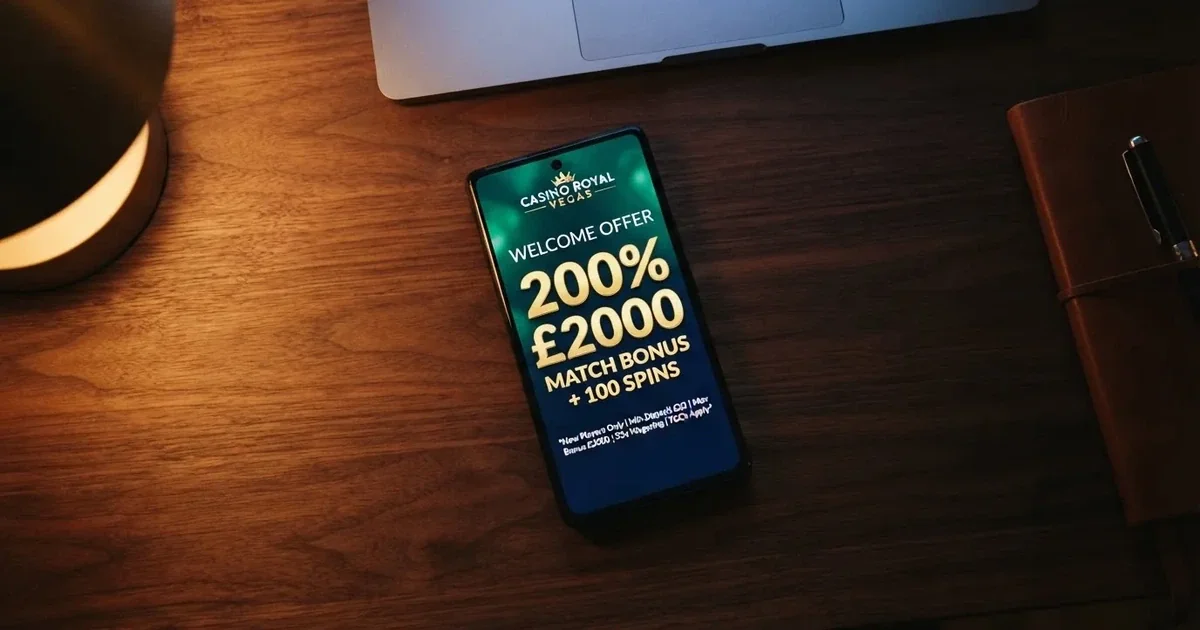
A VIP tier at a licensed UK casino typically bundles incentives that sit on top of the standard welcome package — a personal host, a tailored gift selection, higher withdrawal ceilings that scale with tracked activity. The shape of those incentives is set by the operator. The ceiling on what any bonus can ask of the player is not.
| Feature | Requirement / Limit |
|---|---|
| Max slot stake (25+) | £5 |
| Max slot stake (18-24) | £2 |
| Max wagering cap | 10x |
| Vulnerability check | £150 net/30 days |
| Deposit limit prompt | Before first deposit |
Since 19 December 2025 wagering requirements at UK-licensed casinos have been capped at 10x, and mixed-product bonuses — for example, bet on sport, get casino spins — are banned. The cap applies to every bonus offered to a player at a licensed brand. A VIP reload offer, a cashback programme, a “premium” matched deposit — all of them sit inside the same 10x ceiling. So does the headline welcome offer that brought the player in.
That rule is the sharpest line on this page. Before 19 December 2025 a player claiming a £100 bonus at a brand running 35x wagering had to turn over £3,500 before any of the bonus became withdrawable. Under the current 10x cap, the same £100 bonus requires £1,000 of qualifying play. The cap has not eliminated the requirement — turnover is still real money in the sense that it must come out of the player’s balance before withdrawal — but it has cut the gap between bonus and withdrawable cash to a fraction of what it was a year ago.
A worked band for a £100 bonus under the 10x cap
Take a £100 bonus at the 10x wagering cap in force since 19 December 2025. Required turnover is £100 multiplied by 10, which is £1,000. The number of slot spins needed to clear that turnover depends on stake per spin. At the £5 per-game-cycle ceiling for players aged 25 and over, the player would need 200 spins to complete the qualifying turnover, assuming only the bonus amount is wagered. At a £2 stake — the ceiling for players aged 18 to 24 — the same £1,000 turnover takes 500 spins.
The honest answer is therefore a band, not a figure. A player aged 25 or over clearing a £100 bonus under the current cap is committing to roughly 200 spins at the £5 stake. A player aged 18 to 24 clearing the same bonus is committing to 500 spins at the £2 stake. Both arrive at the same withdrawal-eligible position; the younger player has carried the work, the older player has carried the per-spin risk. A VIP tier does not move either number. The cap is on the offer, not on the player.
How free-spin packages read under the same rule
Free-spin offers work the same way: the winnings they generate become a bonus, and that bonus is itself subject to the 10x cap. A “200 free spins on a featured slot” headline resolves, on the casino’s terms page, into a small bonus balance that must be turned over ten times before withdrawal. A VIP player receiving a heavier free-spin package — 500 spins, a daily drop, a weekly allocation — sees a larger bonus balance, not a different rule. The cap is the same in pounds sterling even if the spin count is higher.
Why “no deposit” offers are not the loophole they look like
“No deposit bonuses” are not a loophole. They are small bonus balances credited without a deposit and are still subject to the 10x wagering cap, as is any free-spin package. Neither can bypass the cap. The clearest signal for any player is the wagering multiple. Anything above 10x at a UK-licensed brand is either stale or wrong.
The licensed high-roller landscape in 2026
A ranking of UK VIP programmes is, in practice, a ranking of how each brand sets its tier ladder — the thresholds, the perks and the withdrawal ceilings. The hard frame around the ranking is the same for every brand on the Gambling Commission’s public register: the same stake caps, the same wagering cap, the same GAMSTOP and the same financial-vulnerability check at the £150 net-deposit trigger. What changes from brand to brand is the ladder above that frame.
The register on 18 September 2026 lists 139 businesses holding an active remote casino operating licence — the figure anyone can check on the register itself. The register’s domain list, on the same date, held 1065 active and 361 white-label domain entries, with each site’s status logged as Active, Inactive or White Label; a white-label site trades under another company’s licence. The register is a public document and the test of whether a brand holds a licence. A remote casino licence number on the register uses the format account-R-number-suffix, where the leading six digits repeat the licence holder’s account number and the “R” marks a remote (online) licence.
The ten brands below are all on that register. Several share a licence account: Ladbrokes, Coral and Gala Bingo all sit under LC International Limited; Jackpotjoy and Virgin Games both sit under Gamesys Operations Limited. A player reading across them should note where one operator runs several skins, because a “different brand” in the comparison may not be a different company.
Regulatory frameworks for the listed operators
| Brand | Licence holder and GB remote casino licence | Domain status on the register | Subject support |
|---|---|---|---|
| Coral | LC International Limited, 054743-R-330863-014 | Active | — |
| BetVictor | BV Gaming Limited, 039576-R-319370-028 | Active | — |
| Virgin Games | Gamesys Operations Limited, 038905-R-319430-022 | White Label | — |
| Ladbrokes | LC International Limited, 054743-R-330863-014 | Active | — |
| Jackpotjoy | Gamesys Operations Limited, 038905-R-319430-022 | Active | — |
| PokerStars | Stars Interactive Limited, 039108-R-319334-026 | Active | — |
| Gala Bingo | LC International Limited, 054743-R-330863-014 | Active | — |
| William Hill | WHG (International) Limited, 039225-R-319373-015 | Active | — |
| Grosvenor Casinos | Rank Interactive (Gibraltar) Limited, 057924-R-334666-005 | Active | — |
| Midnite | Dribble Media Limited, 042647-R-321653-022 | Active | — |
The Subject support column carries the article-language no-data marker across the set, because none of the brands in this ranking publishes a verified, on-the-record VIP threshold or perk list that a reader can act on without opening an account. The comparison that follows is on the licence, the licence holder and the operator behind the skin — the verifiable layer. The perk ladders themselves are reviewed below.
Coral — the LC International flagship skin
Coral (coral.co.uk) is an active domain of LC International Limited (licence 054743-R-330863-014). It is one of three skins under this licence, alongside Ladbrokes and Gala Bingo. A player with a Coral account and a player with a Ladbrokes account are customers of the same company. The loyalty programme is consistent per skin. Tier status earned at one skin does not always carry across, and the host assigned is an LC International host.
BetVictor — single-skin independent under BV Gaming
BetVictor (Betvictor.com) holds the remote casino operating licence 039576-R-319370-028 via BV Gaming Limited. It operates as a single-skin brand. This unification simplifies tier rules and withdrawal processes compared to multi-skin groups. Its smaller operator footprint results in narrower product variety — fewer sister brands provide cross-promotional offers.
Virgin Games — white-label under Gamesys Operations
Virgin Games is listed on the Gambling Commission register as a white-label domain of account 38905, Gamesys Operations Limited, which holds the active remote casino operating licence 038905-R-319430-022. A white-label site trades under another company’s licence; the operating company is Gamesys Operations, and the brand layer is Virgin Games. For a VIP player this is the thinnest separation on the table — the same operator runs the loyalty engine, the same KYC queue reviews the withdrawals, and the host the player sees is a Gamesys Operations host. The Virgin branding does not extend to the licence.
Ladbrokes — second skin under LC International
Ladbrokes (Ladbrokes.com) is a skin of LC International Limited (licence 054743-R-330863-014), alongside Coral and Gala Bingo. A Ladbrokes VIP sits within the same regulatory framework as its sister brands. Differentiation exists in its product mix and sportsbook heritage, which colours the rewards (event hospitality, race-day extras). The 10x wagering cap and GAMSTOP requirement apply universally.
Jackpotjoy — active sister to Virgin Games under Gamesys
Jackpotjoy (Jackpotjoy.com) is a brand of Gamesys Operations Limited (licence 038905-R-319430-022). Unlike Virgin Games, Jackpotjoy operates as an Active site. The loyalty engine is shared, and a Gamesys host covers both brands. Differentiation lies in the games catalogue and brand positioning rather than in the tier ladder itself.
PokerStars — Stars Interactive’s UK skin
PokerStars (Pokerstars.uk) is operated by Stars Interactive Limited (licence 039108-R-319334-026). Its loyalty programme has evolved around a poker-first product, resulting in a distinct reward profile compared to pure casino sites. The 10x wagering cap applies to all bonuses.
Gala Bingo — the LC International bingo-vertical skin
Gala Bingo is another skin of LC International Limited (licence 054743-R-330863-014), shared with Coral and Ladbrokes. The product is bingo-led, with casino content included. A high-roller whose tracked activity is concentrated on bingo sees a tier ladder weighted accordingly. The regulatory envelope is consistent with its sister brands.
William Hill — WHG International single-skin operator
William Hill operates under WHG (International) Limited (licence 039225-R-319373-015). Historically sportsbook-focused, it applies casino perks to a foundation similar to other operators. VIP tier rules are set by WHG (International) Limited, the licence holder.
Grosvenor Casinos — the Rank Interactive land-based operator
Grosvenor Casinos is an active domain of Rank Interactive (Gibraltar) Limited (licence 057924-R-334666-005). The offline casino estate adds a dimension: tier status earned online can carry across to Grosvenor physical venues under the Rank Group’s scheme. A player splitting activity between online and venues sees a uniquely differentiated perk set.
Midnite — the newest active skin on the register
Midnite (Midnite.com) is operated by Dribble Media Limited (licence 042647-R-321653-022). It is a recent entrant with a more streamlined footprint. The loyalty programme is in an earlier stage, with fewer legacy rules and a narrower perk ladder — unlike the layered complexity of longer-running brands. The underlying regulatory frame is identical to other operators.
The legal frame every VIP account sits inside
A licensed UK casino’s VIP tier is layered on top of the operator’s ordinary Gambling Commission licence for the jurisdiction. The same stake caps, identity checks and GAMSTOP rules apply to a top-tier account as to a brand-new one. The legal frame is set by the Gambling Act 2005, which covers Great Britain (England, Scotland, Wales), not Northern Ireland, and is enforced by the Gambling Commission, sponsored by DCMS. Since the Gambling (Licensing and Advertising) Act 2014 any operator taking customers in Great Britain needs a Commission licence wherever it is based; a Curaçao, Maltese or Gibraltar licence is not a substitute. Online casino is licensable; the public register is the whole test of whether a brand holds a licence.
The minimum age for casino play in Great Britain is 18. Name, address and date of birth are verified before the first deposit or any play, and have been since 7 May 2019. A VIP tier cannot waive this; the tier sits above the verification, not around it. Anonymous play is not possible at a licensed site.
Stake, time and the way the slot is built
Online slots carry a maximum stake per game cycle — £5 for players aged 25 and over, in force from 9 April 2025, and £2 for players aged 18 to 24, in force from 21 May 2025. Since 31 October 2021 auto-play is banned, a slot spin may not be faster than 2.5 seconds, and losses disguised as wins are banned. These are game-design rules, not player-set rules; a VIP programme cannot ask the operator to override them, because the operator’s licence conditions are where they live. A player who wants to stake more per spin on a UK-licensed site is asking for something the operator is not licensed to provide.
There is no state-set deposit or loss ceiling. Operators must prompt a customer to set a financial limit before the first deposit, and that requirement has been in force from 31 October 2025. A player can set a high limit, and a VIP tier will not have that limit overridden. The prompt is a one-off check at the account-opening step; subsequent limit changes are at the player’s initiative.
Wagering, bonuses and the 10x ceiling
Wagering requirements are capped at 10x, and mixed-product bonuses are banned, since 19 December 2025. The cap is per bonus, not per player, and applies to every bonus credited to a UK account at a licensed brand. The 10x figure is the most consequential single number on this page — it changes the arithmetic of every offer a player sees, from the headline welcome bonus through to a VIP reload, and is the single largest tightening of the bonus frame in the post-2020 period.
Payments, identity and the financial-vulnerability check
Credit cards are banned for gambling since 14 April 2020, including credit cards routed through e-wallets. The £150 net-deposit trigger for a financial vulnerability check, in force from 28 February 2025, is the moment at which a casino must run a public-data review of a player’s financial position. Wider financial risk assessments are announced but not yet in force. A VIP tier does not change either threshold — the £150 figure is set in the Commission’s social responsibility code, not in the operator’s loyalty terms.
GAMSTOP, the national online self-exclusion scheme, is a mandatory condition of every online licence since 31 March 2020. Self-exclusion periods are six months, one year or five years and cannot be cancelled early. A player on GAMSTOP cannot open a VIP account at any licensed UK brand; the scheme is enforced at the operator’s account-creation step. National Gambling Helpline (GamCare) and GambleAware sit alongside it as the help-line layer.
Tax, ADR and the offshore alternative
Players pay no tax on gambling winnings in the UK. Operators pay Remote Gaming Duty, raised from 21% to 40% from 1 April 2026. The Commission runs an alternative dispute resolution (ADR) route for unresolved player complaints against licensed operators. Offshore — providing gambling to people in Great Britain without a Commission licence — is an offence under section 33 of the Gambling Act 2005. The Commission disrupts illegal sites (cease-and-desist notices, search-engine delisting, payment and hosting referrals) but has no ISP-blocking power. No penalty is aimed at the player; what the player loses on an unlicensed site is protection — no GAMSTOP, no Commission complaints route, no approved ADR.
A high-roller player choosing between a UK-licensed brand and an offshore VIP programme is not choosing between two products at the same regulatory altitude. The licensed brand carries the perimeter described above in full; the offshore brand carries whatever the operator’s own terms page says, with no recourse to the Commission and no GAMSTOP. The wagering cap, the stake cap and the identity-check trigger are not in scope offshore.
Responsible gambling at a VIP tier
A VIP account at a licensed UK casino is not a regulated carve-out from the responsible-gambling frame. It sits inside it. Larger balances do not exempt a VIP account from deposit limits, reality checks or mandatory GAMSTOP self-exclusion, and a licensed casino applies the same responsible-gambling tools regardless of how high a player’s tier sits.
What the tier cannot lift
Deposit limits set at account opening are not overridden by tier progression. A player who set a £500 weekly limit when they opened the account is held to that limit at the top of the ladder. The limit can be raised later, but only at the player’s initiative, and any lowering takes effect immediately while any raising carries a cooling-off period. Reality checks — the periodic on-screen prompt that reports time and money spent — apply on the same schedule regardless of tier. A VIP player who has been at the brand for a year is reminded they have been playing for an hour on the same clock as a player who opened the account that morning.
GAMSTOP is the harder line. A self-excluded player is excluded from every UK-licensed online casino, including the operator they had a VIP account with, and the exclusion cannot be lifted early. The five-year period is the longest available, and it is the period a player who has hit a tier they will not return from is, in practice, choosing against.
What the tier does add — and where it costs the player
A VIP host can be a force for safer gambling, or against it. The Commission’s concern, set out in its 2020 VIP-charter work and reflected in the social responsibility code, is that a host with a sales target can become the channel through which a player is encouraged to deposit more, play longer, or chase a tier threshold. The audit signal on this is whether the host’s communications carry the same safer-gambling language as the rest of the brand. A player who reads an escalation in their host’s contact pattern — more frequent calls, larger suggested deposit matches, faster bonus offers — has a reading available: it is the part of the programme that is most worth reading.
The financial vulnerability check at £150 net deposits in 30 days is the Commission’s tool for catching a player whose deposits have grown faster than their declared income can support. A VIP player crossing that threshold is not flagged as a problem gambler; they are flagged for a check, and the check uses public data only. The lighter-touch approach is deliberate — the Commission does not want the threshold to be a barrier to play — but it does mean the check is the only systematic review at that deposit level, and the host is the human layer around it.
How a £100 bonus clears under the current 10x cap — a worked band
The arithmetic the page has been building toward is the one the 19 December 2025 rule actually changed. A £100 bonus at the 10x wagering cap requires £100 multiplied by 10, which is £1,000 of qualifying turnover before the bonus and any winnings from it become withdrawable. The number of spins needed to clear that turnover depends on stake per spin. At the £5 per-game-cycle ceiling for players aged 25 and over, the player needs 200 spins to complete the qualifying turnover, assuming only the bonus amount is wagered. At a £2 stake — the ceiling for players aged 18 to 24 — the same £1,000 turnover takes 500 spins.
That is the band. A player aged 25 or over clearing a £100 bonus under the current cap is committing to roughly 200 spins at the £5 stake, with each spin subject to the slot’s house edge. A player aged 18 to 24 clearing the same bonus is committing to 500 spins at the £2 stake, with the same house edge applied five hundred times rather than two hundred.
The point of stating it as a band rather than a single number is that the player’s age — and therefore the stake ceiling that applies to them — is what determines the work, not the brand they choose. Two players clearing the same £100 bonus at the same UK-licensed casino will arrive at the withdrawal-eligible position on different timetables because the per-spin stake they can legally place is different. The bonus is the same in pounds sterling. The path to withdrawing it is not.
A worked example of the expected cost can be read off the same inputs. A 200-spin session at £5 on a slot with a 96% return-to-player yields an expected loss of 200 multiplied by £5 multiplied by 0.04, which is £40 over the qualifying turnover. A 500-spin session at £2 on the same slot yields 500 multiplied by £2 multiplied by 0.04, which is also £40 — the expected loss is a function of the turnover, not of the stake-per-spin or the spin count, and the cap has produced equal turnover for both players. That is the statistical estimate. It is an average across many spins under the stated assumptions, not a guaranteed outcome for any single player, and it promises no win, no payout and no return. A player who finishes their 200 or 500 spins ahead is not “due” anything; a player who finishes behind has lost the indicated figure on average, not by rule.
Reading the comparison across the ten brands
The table above is the verifiable layer. Each brand sits under a Commission-licensed operating company, on a domain whose status is logged on the public register. Several of those companies run more than one skin in this comparison: LC International operates Coral, Ladbrokes and Gala Bingo; Gamesys Operations operates Jackpotjoy and Virgin Games. The remaining five — BetVictor, PokerStars, William Hill, Grosvenor and Midnite — sit under their own single-skin licences.
For a high-roller player comparing the ten brands on VIP terms, the practical questions are four:
- Is the tier ladder set by one operator, or by one of several operating companies I will encounter under different brand names?
- Does the loyalty programme carry across to the operator’s other skins, or is it siloed per brand?
- Are the perks casino-led, sportsbook-led, or split across verticals in a way that matches my tracked activity?
- Does the operator have a land-based estate (Grosvenor) or a poker-first heritage (PokerStars) that adds a non-casino dimension to the tier?
The verifiable answers, in the order of this list, are: one operator for BetVictor, PokerStars, William Hill, Grosvenor and Midnite; one operating company for each of LC International, Gamesys Operations and Stars Interactive, covering the remaining five skins; loyalty programmes that in some cases carry across (Grosvenor’s Rank-wide scheme) and in others do not (the LC International skins are brand-segmented); and the product-mix answers above are tied to each operator’s history.
What this comparison does not contain, by design, is a ranking of which brand is the “best” VIP programme. The audit the audit could produce from this evidence is whether each brand is licensed, under which operator, and what the public register says about the skin. The substantive perk ladder — thresholds, gifts, withdrawal ceilings — is not on the register, and the brands in this set do not publish a comparable on-the-record tier ladder that a reader can act on without opening an account. The reader’s next move, if they want to compare the ladders themselves, is to open an account at each brand or to read each brand’s published terms; the comparison above is the framework around that work, not the work itself.
Frequently asked questions
Can a VIP account raise the £5 regulatory stake cap on UK online slots?
No. The £5 per-game-cycle ceiling for players aged 25 and over (and the £2 ceiling for 18 to 24-year-olds) is set in the Gambling Commission’s licence conditions and applies to every account at every licensed UK brand, regardless of tier. A VIP host cannot authorise a higher stake, and a casino that accepted one would be in breach of its licence.
Does a VIP or high-roller programme change the 10x wagering-requirement cap on bonus offers?
No. The 10x cap, in force since 19 December 2025, applies to every bonus credited to a UK account at a licensed brand. A VIP reload, a cashback programme and a free-spin package all sit inside the same ceiling. A bonus term that quotes a multiple above 10x at a licensed UK brand is either stale or wrong.
Do higher-tier accounts get faster withdrawal processing at a licensed casino?
Sometimes, and only after identity and source-of-funds checks are complete. The Faster Payments rail under every UK bank transfer is the same rail at every tier; the differential is the time the casino takes to instruct the bank. A VIP host with the file already current can shorten that interval; a missing document at any tier resets it.
Is a dedicated VIP account manager a form of identity verification, or separate from it?
Separate. The host works the queue after KYC has been completed; name, address and date of birth have been verified before the first deposit or any play, and have been since 7 May 2019. The host is the named contact for enhanced checks at higher deposit levels — the £150 net-deposit financial vulnerability check, source-of-funds reviews — but does not waive or replace them.
Do deposit limits and GAMSTOP self-exclusion still apply once I reach VIP status?
Yes to both. A deposit limit set at account opening is held regardless of tier; it can be raised by the player, and any raising carries a cooling-off period. GAMSTOP self-exclusion applies to every UK-licensed online casino, and the exclusion cannot be lifted early. A VIP account at a licensed brand is inside both perimeters, not above them.
What is the practical difference between a casino’s VIP programme and a one-off welcome bonus?
A welcome bonus is a single bonus credited once at the account-opening step and subject to the 10x wagering cap. A VIP programme is an ongoing tier ladder that bundles perks — a host, tailored gifts, higher withdrawal ceilings — across continued tracked activity, with the 10x cap applying to each bonus credited within the programme. The welcome offer is a transaction; the VIP programme is a relationship layered on top of the same regulatory frame.
Created by the ”lowdepositcasinouk” editorial team.