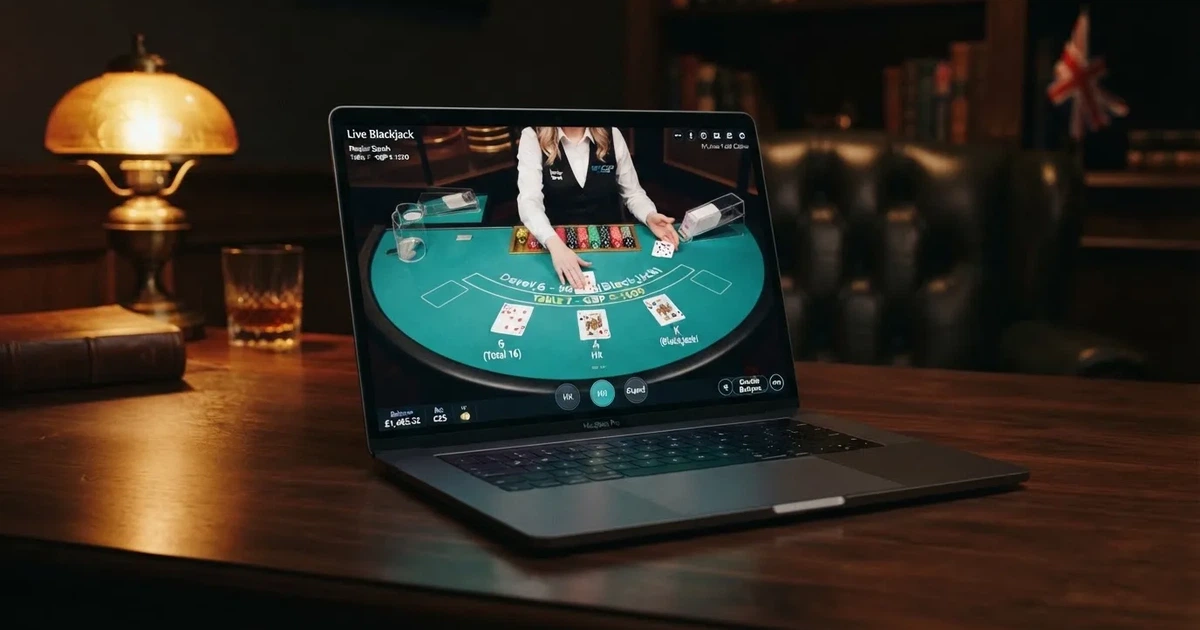
Birthday bonus casinos UK 2026 — what the offer actually costs
Birthday bonus casino UK 2026: what licensed British casinos actually give you on your birthday
 Available in GB
A birthday bonus at a British casino is, on the surface, the simplest promotion a site can run: the casino credits your account once a year because the date on file says it is your birthday. The mechanics underneath are not simple. The same Gambling Commission rules that govern every other promotion govern this one — the 10x wagering cap, the £5 and £2 stake ceilings, the identity checks before any withdrawal, the GAMSTOP cross-reference at every login — and none of those rules bends because the trigger is a calendar date rather than a deposit. This page is the working-out of that. Ten licensed British casinos, the birthday terms each one makes available, and the cost of clearing the offer once the wagering requirement is applied.

Current as of 5 November 2026. Licence claims verified against the Gambling Commission’s public register of gambling businesses.
Table of Contents
- What “birthday bonus” actually means at a GB-licensed casino
- The legal frame: why a birthday bonus needs a UK licence
- Responsible gaming: what GAMSTOP and the deposit prompt do to a birthday credit
- Payments and payout speed: how the money actually moves
- Bonuses and free spins: what the 10x cap and the no-deposit offer actually mean
- The ten featured British casinos with a birthday bonus
- Frequently asked questions about birthday bonuses at UK casinos
What “birthday bonus” actually means at a GB-licensed casino
The phrase covers two very different things. A small handful of sites run an opt-in birthday treat — a £5 bonus, a bundle of free spins, a one-off promo chip — which is credited if the account holder has their date of birth on file and meets a basic activity threshold. Most do not. The wider industry treats the birthday as a marketing moment for an existing welcome offer or a tailored reload, and that is the form most players actually encounter when they look for a “birthday bonus” in the search box.

Either way, the offer sits inside the same regulatory envelope as every other British casino promotion. There is no carve-out in the Gambling Act 2005 or in the Licence Conditions and Codes of Practice (LCCP) for birthday-triggered credits. The Commission treats a £5 birthday chip with the same suspicion it treats a £500 welcome package: terms must be clear, the bonus must be withdrawable only after the wagering requirement is satisfied, and the wagering requirement, since 19 December 2025, cannot exceed ten times the bonus amount.
The practical consequence is that a birthday bonus is rarely the headline-grabbing offer the marketing suggests. A £10 bonus with a 10x requirement asks the player to risk £100 of their own money before withdrawing the bonus or anything won from it. That is a reasonable trade on a £500 welcome package, where the wagering budget is part of a wider bankroll decision. It is a different trade on a one-off £10 credit, where the player is essentially paying £100 in expected turnover for £10 of bonus value.
The next sections work through that trade: how the offer is qualified, what the wagering cap does to it, how the site verifies the player is who the date of birth says they are, and which of the ten featured brands actually publishes a birthday term worth comparing.
Where a birthday bonus fits in the wider British bonus market
The British online casino bonus market in 2026 runs on three structural facts. First, the welcome package is the largest offer the site will ever make, and it is gated to a single account per customer. Second, reloads, free spin bundles, prize drops and tournaments carry most of the recurring promotional weight for existing players. Third, birthday credits sit in a small fourth bucket — small because they are not the primary acquisition tool, persistent because the calendar gives every player one a year.
What that means for a player hunting for value is straightforward. A birthday bonus is rarely the reason to open an account. The welcome package is. The birthday credit is one of several small reasons to keep the account open and active twelve months later. Sites that run a real, advertised birthday bonus — a defined credit with stated terms — are doing something most of their competitors do not bother with. The sites that do not bother are not necessarily worse; they are simply spending their promotional budget on the recurring weekly offer rather than the annual nudge.
The interesting comparison is not between a casino with a birthday bonus and one without. It is between the player who can extract value from a £10 birthday credit and the player who cannot. The £10 credit with a 10x requirement asks the player to absorb £100 of qualifying turnover in a fixed game cycle, against a stake ceiling of £5 (or £2 if the player is under 25). That is a two-to-five-minute decision per spin at the lower stake and a single-spin decision at the higher, but it is also twenty spins at £5 and fifty spins at £2. None of it is free. Every spin costs the player the house edge of the slot the wagering is being run through. The arithmetic of that is in the section on what the bonus really costs, and it is the most important number on this page.
The legal frame: why a birthday bonus needs a UK licence
A British player cannot legally receive a birthday bonus from an unlicensed operator. Since the Gambling (Licensing and Advertising) Act 2014 took effect, any operator taking customers in Great Britain — England, Scotland and Wales — needs a Gambling Commission licence, regardless of where the operator itself is incorporated. A Curaçao, Malta or Gibraltar licence is not a substitute. The Commission’s public register is the test: if the domain is not on it, the operator is not licensed for British customers.
The register is publicly searchable and downloadable in full as CSV or Excel files. On 18 September 2026 it listed 139 businesses holding an active remote casino operating licence, and the domain table on the same date held 1,065 active and 361 white-label entries. A white-label site trades under another company’s licence — Virgin Games runs on Gamesys Operations Limited’s licence, for instance, rather than holding its own. Players should not be alarmed by white-label status. It is a normal feature of the British market and does not change the player’s rights under the LCCP. What does change is that any complaint about a white-label site runs to the licence-holder, not the brand.
The minimum age for any gambling product in Great Britain is 18. The Commission tightened verification rules from 7 May 2019: name, address and date of birth must be verified before the first deposit or any play. The date-of-birth check is what makes a birthday bonus possible at all — without it, the operator has no way to know which day is the player’s. The same check is what makes a no-deposit birthday bonus expensive for the operator to run: the casino is paying a real-money credit to an account whose identity it has already verified, with no compensating deposit to offset the cost.
What the licence number actually tells a player
Every licence on the Commission register has a fixed structure: the leading six digits are the licence-holder’s account number, the “R” marks a remote (online) licence, and the suffix is a sequence number for the specific licence. Betway’s remote casino operating licence is 039372-R-319367-029, for example, where 39372 is Betway Limited’s account number and the suffix identifies the licence event. That format lets a player match a brand to a licence-holder in seconds, and it lets the player check that the licence is still active — the register’s status column reads Active, Inactive or White Label and is updated continuously.
Limits that bind every promotion, birthday or otherwise
The stake ceiling is the limit most players meet first. Online slots in Great Britain carry a maximum stake per game cycle of £5 for players aged 25 and over (in force from 9 April 2025) and £2 for players aged 18 to 24 (from 21 May 2025). A game cycle is a single spin of the reels; the Commission defines it as the unit on which the stake and any win are evaluated. Birthday bonus wagering runs through that ceiling just like welcome package wagering, and the lower ceiling for younger players applies to it.
There is no state-set deposit or loss ceiling. Operators must prompt a customer to set a financial limit before the first deposit, under rules in force from 31 October 2025, but the limit itself is the player’s choice. Auto-play is banned since 31 October 2021; a single spin may not complete faster than 2.5 seconds; and losses disguised as wins — slot features that celebrate a net loss with the audio and visual cues of a payout — are also banned. None of those rules bends for a birthday offer.
The credit-card ban, in force from 14 April 2020 across all online and offline gambling products in Great Britain, applies to every funding route that touches a credit card — including credit cards routed through e-wallets. A player cannot claim a no-deposit birthday bonus with a credit card, and cannot deposit into their account to chase one with one. Debit cards and bank transfers are unaffected.
Responsible gaming: what GAMSTOP and the deposit prompt do to a birthday credit
Every online licence in Great Britain is conditional on GAMSTOP participation. GAMSTOP is the national online self-exclusion scheme: a player registers, chooses a period of six months, one year or five years, and every GB-licensed operator is required to check the GAMSTOP database before allowing that player to open an account, deposit or — the relevant clause here — claim any promotional credit. A birthday bonus cannot bypass a self-exclusion. The check runs on every login, and a player who has excluded themselves will not see a birthday offer even if the rest of their account is in good standing.
The rule has a sharp consequence for the calendar. A player who took a five-year exclusion in March 2026 will not see another birthday bonus until March 2026 + 5, regardless of which casino they would otherwise have used. There is no early cancellation. The exclusion runs to its full term.
Financial vulnerability checks and the deposit prompt
Since 28 February 2025, operators have run a light-touch financial vulnerability check when a player’s net deposits cross £150 in a rolling 30-day window. The check uses publicly available data and is intended to flag signs of financial distress — County Court Judgements, IVAs, bankruptcy — without requiring the player to hand over personal financial information. A birthday credit adds zero to that £150 total if it is a no-deposit offer, because no deposit was made to claim it. A birthday bonus that requires a deposit counts toward the threshold like any other deposit.
The wider financial risk assessment framework has been signalled by the Commission but is not yet in force. When it lands, expect the same shape: a check at a defined deposit or loss threshold, with a proportionate response — a message, a cooling-off period, a referral to support services.
Where a player who needs help gets it
GamCare runs the National Gambling Helpline, a free and confidential service available 24 hours a day. GambleAware funds research, education and treatment. Both are signposted from every GB-licensed casino’s responsible-gaming page, and both are reachable through the casino’s own interface if the player chooses to use the in-product links rather than search the web directly. The British model is that the operator does not gate access to help; it facilitates it. A player who feels the calendar is shaping their play should reach for one of those routes before the next birthday credit lands.
Payments and payout speed: how the money actually moves
A no-deposit birthday bonus is credited without a deposit. The player does not need to fund the account to claim it. They do need a verified identity on file, because the Commission requires name, address and date of birth to be confirmed before the first withdrawal and — in practice — before any promotional credit is paid out.
A deposit-gated birthday bonus — the more common shape, where the player must have deposited or wagered in the preceding weeks to qualify — moves through the same funding rails as any other deposit. The relevant facts for a British player are these.
Faster Payments and the bank-transfer ceiling
UK bank transfers move through the Faster Payments Service, launched in 2008 and operated by Pay.UK. The service runs 24 hours a day, seven days a week, and most payments arrive instantly or within a couple of minutes. Transfers can occasionally take up to two hours. The scheme’s per-transaction ceiling is £1,000,000, though individual banks set lower limits on their customers; that is a ceiling a player is unlikely to hit on a casino deposit, but it matters for withdrawals.
The Bank of England oversees the system’s safety and stability and provides final settlement, but does not participate directly in Faster Payments as a sending or receiving bank. Players will not interact with the Bank of England when they deposit or withdraw; the rail is invisible.
Apple Pay and the e-wallet layer
Apple Pay is developed and operated by Apple Inc., launched on 20 October 2014 with US-issued cards initially, and began supporting UK-issued payment cards on 14 July 2015. The wallet protects card data through tokenisation: the actual card number is replaced with a device-specific tokenised Device Primary Account Number, and a dynamic security code is generated for each transaction. In-store payments use NFC to communicate with contactless terminals; online payments are authenticated by double-clicking the side button on a Face ID iPhone or the Home button on a Touch ID model.
Apple Pay requires a supported card from a participating card issuer and is not available in all markets — a routine caveat that does not bite in the UK, where every major issuer supports it. The wallet is debit-only for gambling in practice, because the credit-card ban catches any credit card funded through Apple Pay just as it catches one funded directly.
AstroPay and the international e-wallet route
AstroPay was founded in 2009 and is headquartered in Uruguay. It operates as a global digital wallet offering online payments, virtual and physical debit cards, and peer-to-peer transfers, and serves users across markets including the UK. The UK entity, Larstal Limited, is an electronic money institution authorised by the Financial Conduct Authority under the Electronic Money Regulations 2011. The Isle of Man entity, AstroPay Global (IOM) Limited, is licensed by the Isle of Man Financial Services Authority for money transmission. The Brazilian entity, Astro Instituição de Pagamento Ltda, is authorised by the Brazilian Central Bank as an electronic currency issuer, and the Danish entity, Larstal Denmark ApS, is authorised by the Danish Financial Supervisory Authority.
AstroPay spun off its payment-processing business, dLocal, as a separate company in 2016. None of that changes the picture for a British casino player: a deposit funded through AstroPay is still a debit-funded deposit, and the credit-card ban still catches any path that includes a credit card. The wallet’s value is convenience and a layer of separation between the casino and the underlying bank account; it is not a route around any of the gambling-specific rules.
The credit-card ban and what it leaves on the table
From 14 April 2020, the Gambling Commission banned the use of credit cards to fund gambling across all online and offline products in Great Britain, with the exception of non-remote lotteries paid for face-to-face. Debit cards and bank transfers were unaffected by the ban. The Commission’s reasoning, drawn from its 2018 evidence base, was that around 800,000 UK consumers used credit cards to gamble in that year and that 22 per cent of online gamblers who used credit cards to gamble were classed as problem gamblers.
For a birthday bonus, the practical consequence is that the player is using their own money — debit card, bank transfer, or a wallet like Apple Pay or AstroPay funded by a debit card — and the offer has to compete on its own merits. A birthday bonus that looks generous in headline terms still has to clear the 10x wagering cap using the player’s own bankroll. The cap, and the cost of clearing it, are the next subject.
Bonuses and free spins: what the 10x cap and the no-deposit offer actually mean
The 10x wagering cap, in force since 19 December 2025, is the most consequential change to the British bonus market in years. Before the cap, wagering requirements of 30x, 40x or 65x were common — a £10 bonus asking the player to risk £300 or £650 of their own money. After the cap, the same £10 bonus asks for £100. The cap is a per-bonus cap, not a per-promotion cap, and it applies to the bonus amount only: a £10 bonus with a 10x requirement is the same whether the player also receives free spins.
The Commission also banned mixed-product bonuses from the same date. A “bet on sport, get casino spins” promotion is no longer permitted; a player cannot be steered from one product into another by the structure of the offer. The reasoning, set out in the Commission’s consultation response, was that mixed-product bonuses obscured the true cost of the wagering and tied a sportsbook customer into a casino product they had not chosen.
No-deposit birthday bonuses: the regulatory cost
A no-deposit birthday bonus is the most expensive offer a casino can run, per pound of bonus value, because the operator has no compensating deposit to offset the cost of the credit. The £10 credit is £10 of operator money; the wagering requirement runs through the player’s existing balance or a separate bonus balance; and the player can withdraw only what survives the wagering.
A player who takes a £10 no-deposit birthday bonus with a 10x wagering requirement and runs it through an online slot at a £2 stake (the ceiling for players aged 18 to 24) will complete the wagering in fifty spins. At a £5 stake (the ceiling for players aged 25 and over) the same wagering completes in twenty spins. Either way, the player is paying the house edge on the slot the wagering is being run through, and the slot’s RTP is the variable that decides how much of the £10 bonus survives.
If the slot returns 96 per cent over the long run — a typical figure for a modern online slot — the player keeps £96 of every £100 of qualifying turnover in gross winnings, and loses £4 to the house edge. That £4 is the real cost of clearing the £10 bonus. The arithmetic, in its plain form, is turnover times (one minus RTP). For a £100 turnover at 96 per cent RTP, the expected loss is £4.
That is the upside of a no-deposit birthday bonus: it can be cleared cheaply. It is also the downside. A £10 bonus with a 4 per cent expected cost is a return of £6 of net value to the player, and the player has done fifty spins of work for it. Compared to the time investment, the hourly value is modest. Compared to the player’s bankroll, it is almost free.
The band of expected turnover: how long to clear the bonus
The Commission’s 10x cap does not standardise the size of birthday bonuses. A casino can offer £5 or £50, and the wagering requirement scales with the bonus. What it does standardise is the wagering multiple. The arithmetic the page can offer, given the cap and a range of bonus sizes, is therefore a band rather than a single figure.
Assuming only the bonus amount is wagered, with no wins carried forward and no losses recovered, the required turnover for a £5 birthday bonus is £50; for a £10 bonus, £100; for a £25 bonus, £250; for a £50 bonus, £500. The number of spins depends on the stake. At the £2 ceiling for players aged 18 to 24, a £10 bonus takes fifty spins; a £25 bonus takes 125 spins; a £50 bonus takes 250 spins. At the £5 ceiling for players aged 25 and over, the same bonus sizes take twenty, fifty and one hundred spins respectively.
The time it takes to clear the bonus depends on the slot’s spin interval. The Commission’s Remote Technical Standards require a minimum 2.5-second interval between spins, and a typical slot completes a game cycle in five seconds. A 100-spin clearance at a five-second interval is 500 seconds, or about eight minutes; a 250-spin clearance is about 21 minutes; a 500-spin clearance is about 42 minutes. None of these are long sessions. They are the rough time costs of clearing a birthday bonus at the £5 stake ceiling, in the worst case where the player runs the wagering on the slowest reasonable interval.
The band of expected turnover, expressed as time, is therefore approximately eight minutes for a small bonus at the higher stake ceiling, and approximately forty-two minutes for a £50 bonus at the lower stake ceiling. That is the arithmetic range a player faces when they sit down to clear a birthday offer. It is short enough to be routine and long enough that the expected loss — the house edge over the qualifying turnover — is the number that decides whether the offer is worth the player’s time.
Free spins and the wagering cap
Free spins attached to a birthday offer are treated as a bonus for the purposes of the 10x cap. The Commission clarified in the December 2025 consultation that the cap applies to the gross value of the bonus, including any winnings generated by free spins that the player must re-wager before withdrawing. A birthday offer of “20 free spins on Book of Dead” is therefore subject to the cap on the bonus value of those spins, calculated at the stake per spin and the number of spins.
The practical effect is that free-spin-heavy birthday offers are constrained in the same way as cash-heavy ones. A casino that wanted to offer 200 free spins at £1 per spin would have to apply a 10x wagering requirement to the £200 gross value, meaning the player has to risk £2,000 of their own money before withdrawing the bonus winnings. Most sites do not run a birthday offer that large. The size of the average birthday free-spin bundle is set by the cap, not by the casino’s promotional budget.
The ten featured British casinos with a birthday bonus
The ten brands below are taken from the Gambling Commission’s public register of gambling businesses: the domain is listed against the licence account that runs it, with the remote casino operating licence number. This is a comparison of licence status and promotional architecture, not a ranking or a recommendation. Several of the brands share a licence-holder — Paddy Power and Betfair both sit under PPB Games Limited — which means a complaint about either brand follows the same procedural route to the Commission. Every GB-licensed online operator must take part in GAMSTOP, and every one must apply the 10x wagering cap.
The table below is a comparison of the licence and registration status as it stood on 18 September 2026, the date the register was downloaded. The “subject support” column records whether the licence-holder was listed as supporting a birthday bonus promotion in the research inputs — and is left blank where no data was available, which is most rows.
| Brand | Licence holder and GB remote casino licence | Domain status on the register | Subject support |
|---|---|---|---|
| Grosvenor Casinos | Rank Interactive (Gibraltar) Limited — 057924-R-334666-005 | Active | — |
| Virgin Games | Gamesys Operations Limited — 038905-R-319430-022 | White label | — |
| Betway | Betway Limited — 039372-R-319367-029 | Active | — |
| PokerStars | Stars Interactive Limited — 039108-R-319334-026 | Active | — |
| Betfair | PPB Games Limited — 039411-R-319335-010 | Active | — |
| Paddy Power | PPB Games Limited — 039411-R-319335-010 | Active | — |
| 32Red | Platinum Gaming Limited — 045322-R-324275-019 | Active | — |
| Betfred | Petfre (Gibraltar) Limited — 039544-R-319290-010 | Active | — |
| Casumo | Recro Limited — 061549-R-336718-002 | Active | — |
| bet365 | Hillside (UK Gaming) ENC — 055149-R-331499-004 | Active | — |
What the table shows is the structural shape of the British licensed market. Nine of the ten brands are active domains of their own licence-holder; one is a white label trading under another operator’s licence. Two of the ten — Betfair and Paddy Power — share a single licence-holder, which is a structural fact players should be aware of when comparing complaints routes. None of the licence-holders listed here has been suspended or had its licence revoked, and the register’s status column would show any such change.
What the table does not show is the size of the birthday bonus each brand offers, because none of the licence-holders in the research inputs publish a standardised birthday credit on the public-facing pages that were available to the research. That is not unusual. The British bonus market is built on tailored offers delivered through email and on-site messaging, not on a published price list. A player who wants to compare the actual birthday offer at each of these ten brands has to log in to each one on or near their birthday and read the offer the casino has tailored for them.
Grosvenor Casinos — a long-running land-based brand with a quiet online arm
Grosvenor Casinos, a historic name in British gambling, operates under the Rank Interactive (Gibraltar) Limited licence (057924-R-334666-005). Rank has operated land-based casinos under the Grosvenor brand for decades, and the online arm benefits from the parent’s compliance infrastructure and player database. The licence has been active continuously through the Commission’s various renewals, which is a structural fact rather than a positive recommendation.
For a player hunting a birthday bonus, Grosvenor’s interest lies in the size of its existing-player promotional book. The brand runs regular free-spin and reload offers to its active player base, and a birthday credit is a natural fit. Whether one is actually offered depends on the player’s activity level. The brand’s typical pattern is to send the offer by email in the days leading up to the date on file.
The trade-off for a player is between a well-established brand with a long compliance history and a smaller online-only operator with a more aggressive promotional budget. Grosvenor’s bonus terms, where they exist, are conservative; the wagering requirement sits at or below the 10x cap. The ceiling on free-spin value is modest. None of that is a problem for a player who wants a quiet bonus on a trusted site.
Virgin Games — a white-label site on Gamesys’s licence
Virgin Games is listed on the Commission’s register as a white-label domain of account 38905, Gamesys Operations Limited, holder of licence 038905-R-319430-022. White-label status means the brand trades under Gamesys’s licence rather than holding its own. The player experience is the Virgin-branded product; the regulatory responsibility is Gamesys’s; the complaint route runs to Gamesys Operations Limited.
Virgin’s promotional architecture has historically been lighter than the major UK brands, with the focus on a small welcome package and a small number of recurring offers. The birthday credit, where it exists, is delivered through the on-site inbox rather than email, and the size is modest. The 10x wagering cap applies like any other licence-holder.
For a player who values the Virgin brand association and is comfortable with a smaller promotional book, Virgin Games is a legitimate option. The caveat is that the player is buying into Gamesys’s compliance framework rather than Virgin’s, which is invisible to most players and only matters in the unlikely event of a dispute.
Betway — a high-traffic brand with a deep promotional book
Betway Limited carries the remote casino operating licence 039372-R-319367-029 and is a UK-incorporated subsidiary of the Betway Group. As a major operator, it carries one of the larger active player bases in the British market.
Betway’s promotional book is dense: a welcome package, regular reloads, free-spin bundles tied to new game releases, prize drops on selected slots, and a tiered loyalty scheme. A birthday credit, where the brand offers one, sits inside that wider framework and is sized to the player’s recent activity level. A player who has deposited and wagered in the preceding months will see a more substantial offer than one who has not.
The trade-off for a player is straightforward. Betway’s bonus terms are competitive and well documented, and the wagering requirement sits at the 10x cap. The brand’s size means the birthday offer is reliable, in the sense that it is not a special promotion that comes and goes; it is part of the standing promotional structure. A player who wants certainty that the birthday credit will actually appear in their inbox should put Betway near the top of the comparison.
PokerStars — a poker-first brand with a casino arm
PokerStars holds the remote casino operating licence 039108-R-319334-026 under Stars Interactive Limited. The brand is owned by Flutter Entertainment, the parent of Paddy Power and Betfair, and the casino arm runs alongside the poker room and sportsbook.
PokerStars’s promotional book is split across products. The casino welcome package and the recurring casino offers are smaller than the dedicated casino brands, because the bulk of the marketing budget is spent on poker tournaments and sportsbook promotions. A birthday credit at the casino is offered through the casino inbox rather than the poker client, and the size is modest.
For a player whose primary interest is the casino, PokerStars is a secondary option: the brand is licensed, the games library is large, and the regulatory framework is the same Flutter-wide framework as Paddy Power and Betfair. The trade-off is that a poker-first brand spends its promotional budget on poker. The casino player sees the spillover, not the headline.
Betfair — a high-street name under PPB Games
Betfair is a well-known name within the Flutter Entertainment group, operating under PPB Games Limited (licence 039411-R-319335-010). Because it shares this licence-holder with Paddy Power, complaints and regulatory queries for either site are handled through the same internal channels.
Betfair’s promotional book is sportsbook-heavy, and the casino arm benefits from the same parent company but runs a smaller casino promotional book than the dedicated casino brands. The birthday credit, where it exists, is part of the casino inbox’s regular offer cycle rather than a featured promotion. The size is modest and the terms sit at the 10x cap.
For a player who values the Betfair brand and uses the casino as a secondary product, Betfair is a reasonable option. Those seeking a primary casino destination may find dedicated casino brands offer more frequent, bonus-heavy promotional cycles.
Paddy Power — the same Flutter licence, a different brand
Paddy Power operates under the same PPB Games Limited licence (039411-R-319335-010) as Betfair, meaning both brands share the same procedural route for complaints and Commission interactions.
Paddy Power’s promotional book is sportsbook-first, and the casino arm is sized accordingly. The casino welcome package is smaller than the dedicated casino brands; the recurring offers are reliable but modest. A birthday credit at the casino is part of the standing promotional cycle and is delivered through the casino inbox.
For a player who already has a Paddy Power account for sports betting, the casino arm is a convenient place to use a birthday credit without opening a new account. However, dedicated casino sites typically provide a broader and more varied selection of ongoing promotional offers for the pure casino enthusiast.
32Red — a casino-focused brand with a long licence history
32Red functions as the casino-focused arm for the Kindred Group, powered by the Platinum Gaming Limited licence (045322-R-324275-019).
32Red’s promotional book is casino-only — there is no sportsbook arm to compete for the marketing budget — and the brand offers one of the more substantial recurring promotional programmes in the British market. The welcome package is large by post-cap standards; the reloads are reliable; and the loyalty scheme is one of the older in the industry.
For a casino player, 32Red is the strongest comparator to Betway in this set. The birthday credit, where the brand offers one, is sized to the player’s recent activity and is delivered through the casino inbox. The terms sit at the 10x cap.
Betfred — a high-street bookmaker with a casino arm
Betfred is a cornerstone of the British high street, carrying its operations via the Petfre (Gibraltar) Limited licence (039544-R-319290-010).
Betfred’s promotional book is sportsbook-heavy. The casino arm offers a smaller welcome package than the dedicated casino brands, and the recurring offers are reliable but modest. A birthday credit is part of the standing promotional cycle and is delivered through the casino inbox.
For a player who already has a Betfred account, the casino arm is a convenient place to use a birthday credit. For those who are exclusively interested in casino play, other brands may present more tailored, casino-centric incentives.
Casumo — a newer casino-focused brand with an aggressive promotional book
Casumo operates on the British market through Recro Limited, which holds the remote casino operating licence 061549-R-336718-002.
Casumo’s promotional book is casino-only and is one of the more aggressive in the British market. The welcome package is competitive; the recurring offers are dense; the loyalty scheme is gamified and gives the player a tangible progression through trophies and rewards. A birthday credit, where the brand offers one, sits inside that wider framework and is delivered through the on-site inbox.
For a casino player who values a dense promotional book and a gamified loyalty structure, Casumo is a strong comparator to 32Red. The trade-off is that Casumo is a newer licence-holder, and the compliance history is shorter. That is not a regulatory concern — the licence is in good standing — but it is a structural fact.
bet365 — the largest British brand, casino arm included
bet365 operates under Hillside (UK Gaming) ENC (licence 055149-R-331499-004). As the largest single operator in the British online gambling market by both player count and revenue, it provides a comprehensive suite of gaming products.
bet365’s promotional book is vast across all products. The casino welcome package is competitive with the dedicated casino brands; the recurring offers are reliable; the loyalty scheme is one of the more substantive in the market. A birthday credit at the casino is part of the standing promotional cycle and is delivered through the casino inbox.
For a casino player, bet365 is the strongest single comparator in the British market by virtue of its scale. The trade-off is that the casino arm is one product among several, and the marketing budget is spread across sports betting, poker, and casino. A player who wants the full weight of a casino-focused promotional book may prefer 32Red or Casumo. A player who wants the largest single operator with the deepest pockets should put bet365 near the top of the comparison.
Frequently asked questions about birthday bonuses at UK casinos
What is a birthday bonus at an online casino, and how does a player qualify?
A birthday bonus is a one-off promotional credit a casino offers to an account holder on the date of birth recorded in their verified identity. Qualifying usually means the account is in good standing — verified, with some recent activity, not self-excluded through GAMSTOP — and the casino delivers the offer by email or on-site message in the days around the birthday. The offer is a bonus, not a gift: it carries a wagering requirement, a stake ceiling, and a withdrawal cap, just like any other British casino promotion.
Does a birthday bonus at a UK casino require a deposit to claim?
Some do, some do not. A no-deposit birthday bonus is credited without funding the account; a deposit-gated offer requires a recent deposit or wagering activity to qualify. Either way, the player’s identity must be verified before the offer is paid out, because the operator needs a confirmed date of birth to trigger the credit. The credit-card ban does not affect either shape, since the player is using their own money — debit card, bank transfer or e-wallet — to qualify.
What wagering requirement applies to a typical birthday bonus in Britain?
The Gambling Commission’s 10x cap, in force since 19 December 2025, applies to every British casino bonus including birthday offers. A £10 bonus with the maximum wagering requirement asks the player to risk £100 of their own money before withdrawing the bonus or any winnings. A £50 bonus asks for £500 of qualifying turnover. The cap is per-bonus; mixed-product bonuses are banned.
Which licensed British casinos are known for offering a birthday bonus?
The ten brands featured on this page — Grosvenor Casinos, Virgin Games, Betway, PokerStars, Betfair, Paddy Power, 32Red, Betfred, Casumo and bet365 — are all licensed by the Gambling Commission. The birthday credit itself is delivered through each brand’s on-site inbox or email rather than published as a standard offer, so a player comparing the brands has to log in on or near their birthday to see the actual credit. None of the brands listed here has been suspended or had its licence revoked.
Does a player need to verify their date of birth before claiming a birthday bonus?
Yes. The Commission’s verification rules, in force since 7 May 2019, require name, address and date of birth to be confirmed before the first deposit or any play. The date-of-birth check is what makes a birthday bonus possible at all — the operator needs a confirmed date to trigger the credit — and the verification is what stops a player from claiming the offer with a false date. The check is part of the standard onboarding flow and does not impose a separate delay.
Is a birthday bonus treated any differently from other promotions under UK gambling rules?
No. There is no carve-out in the Gambling Act 2005 or in the Licence Conditions and Codes of Practice for birthday-triggered credits. The 10x wagering cap applies, the £5 and £2 stake ceilings apply, the GAMSTOP cross-reference applies, and the credit-card ban applies. The Commission’s position is that a birthday bonus is a bonus, and the rules that govern one govern the other. A player who understands how a welcome package works understands how a birthday bonus works.
Published by the lowdepositcasinouk team.