
Casino sites that accept credit card in the UK in 2026
 Available in GB
Current as of 23 September 2026, checked against the Gambling Commission’s public register of gambling businesses.
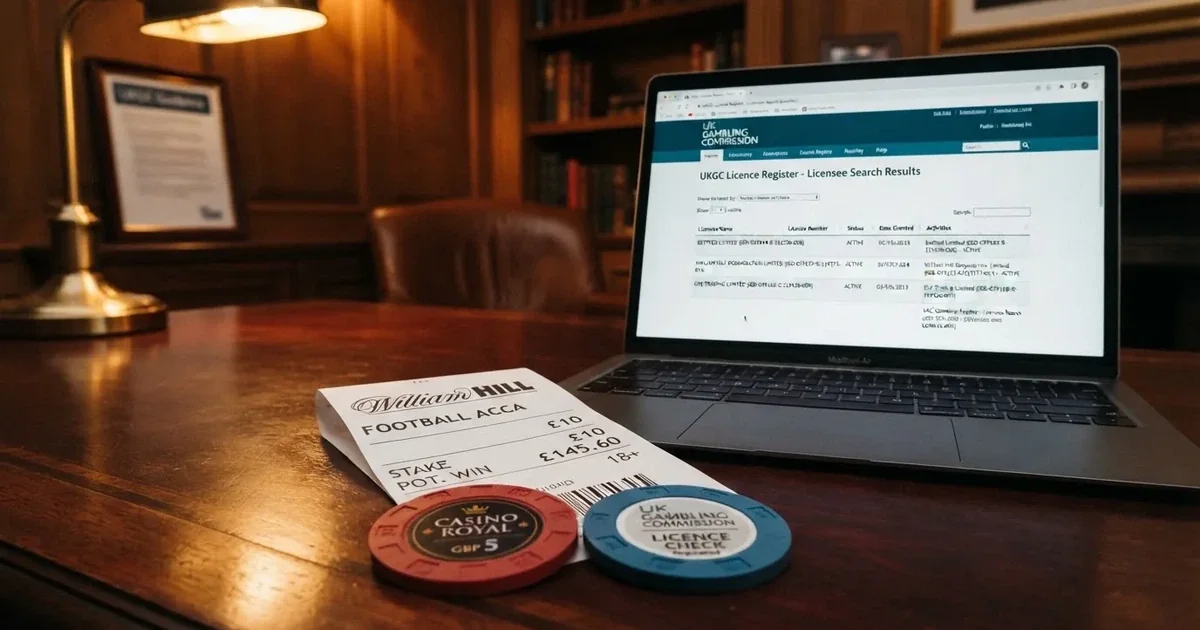
The headline of this page answers itself before it begins: in Great Britain, no licensed casino accepts a credit card deposit. The Gambling Commission banned credit cards for gambling on 14 April 2020, and the rule covers every online operator it licences plus every bookmaker. What this page is actually about is the funded account behind that ban — the licensed deposit method, the regulated limit, the verification step and the self-exclusion layer that sit on top of any way a British player puts money in. Credit card is the prompt; the regulated landscape is the answer.
Table of Contents
- Responsible gaming around a credit-card-shaped hole
- Payments and payout speed without the credit card
- Top 10: ten GB-licensed brands on the register
- How the ten brands compare on the register
- Overview: the deposit landscape at a GB-licensed casino
- Legality: the regulated frame around the cashier
- Frequently asked questions
Responsible gaming around a credit-card-shaped hole
The cluster of searches that brings people to this page — credit card casinos not on gamstop, non gamstop casinos that accept credit cards, the related phrasing — sits on a mistaken premise. The premise is that a casino exists outside the national self-exclusion scheme and that it takes credit cards. Both halves need separating.
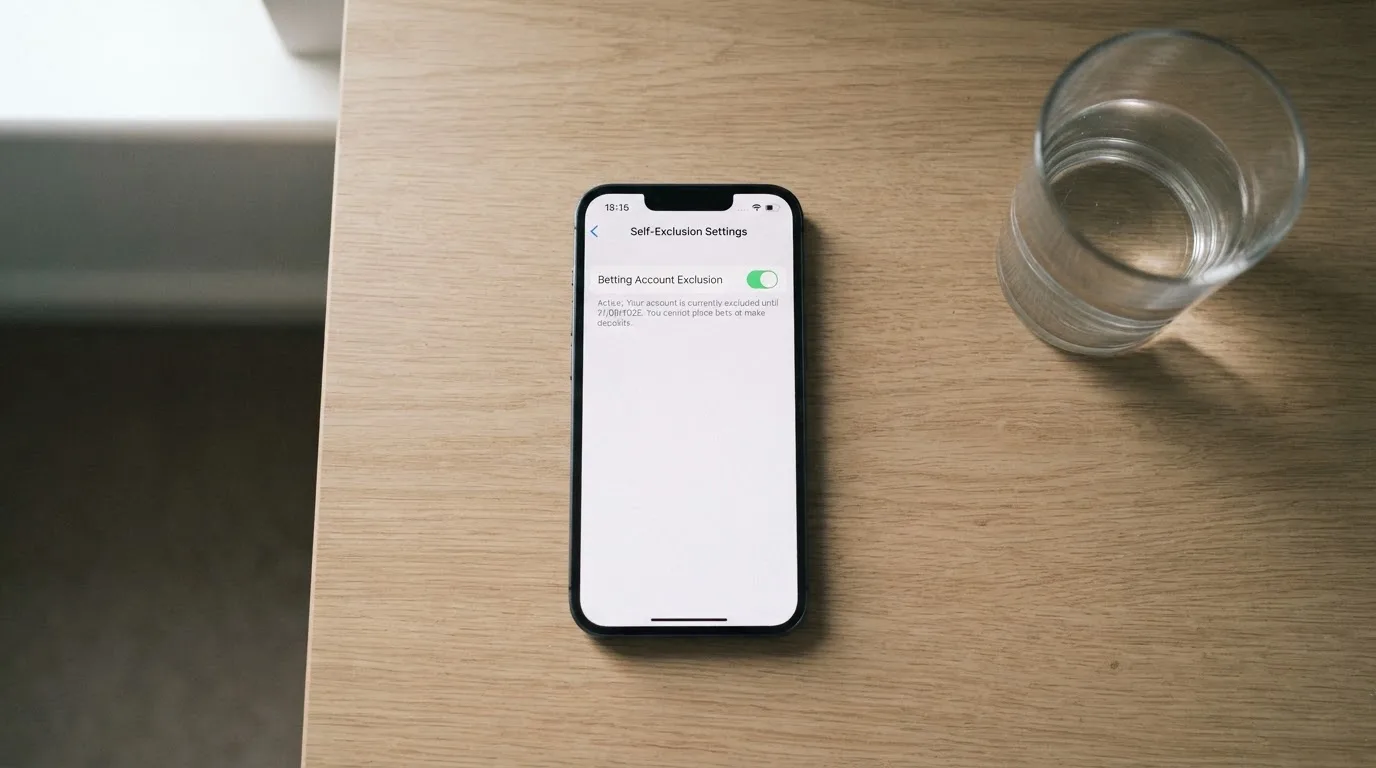
The premise that credit cards still work
The Commission’s 2020 ban was not aimed at operators who choose to refuse cards. It was a blanket prohibition on any licensed business taking a credit card deposit from a GB customer, and the wording covers credit cards routed through e-wallets unless the wallet can demonstrably stop that funding path. Ahead of the ban the Commission cited research finding that 22% of online gamblers who used credit cards to gamble were classed as problem gamblers, and UK Finance data that around 800,000 UK consumers had used a UK-issued credit card to gamble in 2018. That is the policy record behind the rule, and the rule itself has no opt-out for an individual customer or a particular brand. A non-remote (face-to-face) lottery is the narrow exception.
What “not on GAMSTOP” actually means
GAMSTOP self-exclusion is a mandatory condition of every GB online licence since 31 March 2020, with exclusion periods of six months, one year or five years and no early cancellation. A casino that is “not on GAMSTOP” is, in plain terms, an unlicensed offshore site. The Commission’s own position on unlicensed provision is that supplying gambling to people in Great Britain without a licence is an offence under section 33 of the Gambling Act 2005, and the Commission disrupts such sites through cease-and-desist notices, search-engine delisting and payment and hosting referrals. No penalty is aimed at the player; what the player loses on an unlicensed site is protection — no GAMSTOP, no Commission complaints route, no approved ADR. Searches that combine “credit card” with “not on GAMSTOP” are looking for something the regulated market was designed to make unavailable.
How a bank adds a second layer
Even before the Commission’s ban, several UK banks added their own blocks. HSBC declines credit card payments it identifies as gambling based on the merchant category assigned by Mastercard or Visa, with no option for the customer to remove the restriction. HSBC also states it cannot guarantee every gambling transaction is blocked, and the customer remains liable for any that go through. Monzo introduced an in-app gambling block in 2018 — the first UK bank to do so — letting a customer choose a cooldown period from 2 days up to 1 year, during which the block cannot be switched off. Over 275,000 Monzo customers have activated the feature. The combination of the regulator’s ban and the bank’s own block means a credit card deposit at a licensed UK casino is blocked at two stops before the cashier screen.
Where the page lands on the responsible-gaming question
The single concrete point this page can offer someone who arrived looking for an out is what the regulated market already does for them. A licensed UK casino runs GAMSTOP enrolment as part of account opening, prompts a financial limit before the first deposit, runs a financial vulnerability check at £150 net deposits in a rolling 30 days using public data, and exposes the National Gambling Helpline (GamCare) and GambleAware alongside the cashier. The protection is built in; the search that assumes it can be sidestepped is one the regulated system was built to make redundant.
Payments and payout speed without the credit card
The practical cluster of searches — credit card casinos uk, online casino credit card uk and the related phrasing — is asking how funding and withdrawal actually work once credit card is removed. The honest answer is that the rest of the payment set does what credit card did, and the limits on it are tighter than a UK player used to credit card gambling in 2019 will remember.
The funding methods that replace it
A GB-licensed casino takes debit cards, bank transfer and a regulated set of e-wallets. Apple Pay is the high-street option that sits over a debit card rather than a credit card, with tokenisation replacing the actual card number with a device-specific tokenised Device Primary Account Number and a dynamic security code for each transaction. Apple Pay was launched on 20 October 2014 supporting only US-issued payment cards, with UK-issued cards added on 14 July 2015; it uses NFC for in-store payments and a supported card from a participating card issuer is required. On iPhone with Face ID, in-store Apple Pay is authenticated by double-clicking the side button; on Touch ID models, by double-clicking the Home button. AstroPay is the alternative for players who want a wallet outside the bank rails — founded in 2009 and headquartered in Uruguay, operating a global digital wallet with online payments, virtual and physical debit cards, and peer-to-peer transfers. AstroPay’s UK entity, Larstal Limited, is an electronic money institution authorised by the Financial Conduct Authority under the Electronic Money Regulations 2011.
What deposits actually feel like
A deposit by debit card or by Apple Pay credits the casino balance almost immediately. The cashier receives the payment, the operator’s payment service provider routes it, and the in-account balance updates before the customer has closed the deposit screen. That speed is the part of the credit card experience the rest of the payment set matches; the part it does not match is the underlying credit. A debit card takes from the customer’s current account; Apple Pay tokenises the underlying debit card; a bank transfer arrives when the bank clears it, which can mean a short delay.
What withdrawals actually feel like
A withdrawal is a different event. The Commission requires that the same method used to deposit be used to withdraw, where possible, and the operator must run the source-of-funds and identity checks before the first withdrawal is released. A debit card withdrawal back to Visa or Mastercard typically settles in one to three working days after the operator approves it; an e-wallet withdrawal can be near-instant once approved; a bank transfer sits at the upper end, sometimes up to five working days for the receiving bank’s processing. The deposit-versus-withdrawal speed gap is the practical shape of any GB-licensed cashier, and it does not change with the funding method. The withdrawal timetable is the same whether the deposit was funded from credit card routing back in 2019 or from a debit card today.
The minimum deposit and the verification step
There is no Commission-set minimum deposit for credit card, debit card or e-wallet. Operators set their own floor, and the typical minimum at the brands in this comparison sits at £5 or £10. The verification step is the one no funding method bypasses: name, address and date of birth are verified before the first deposit or any play, a requirement in force since 7 May 2019. A customer who tries to deposit before verification is asked for the documents; an account that cannot be verified is closed and the deposit returned. The same rule applies to credit card — and the rule is the only reason an unlicensed site that “accepts credit card” looks attractive by contrast, because it skips the check the regulated market mandates.
Top 10: ten GB-licensed brands on the register
The ranking cluster — best credit card casinos uk and the related phrasing — is, in this market, a comparison of licensed brands on everything except credit card itself. Credit card is removed by regulation; what separates one GB-licensed brand from another is the game catalogue, the customer support, the verification flow and the account limits. Ten brands carry this comparison, each one taken from the Gambling Commission’s public register and listed against the licence account that runs it.

The register snapshot at the centre of this comparison is straightforward. On 18 September 2026 the Commission listed 139 businesses holding an active remote casino operating licence, with the register searchable online and downloadable in full as CSV or Excel files. The register’s domain list records each website against the licence account that runs it, with a status of Active, Inactive or White Label; on the same date it held 1065 active and 361 white-label domain entries. A remote casino licence number has the form account-R-number-suffix, where the leading six digits repeat the licence holder’s account number and the “R” marks a remote (online) licence. The ten brands below sit in that list.
Betfair
Betfair runs under PPB Games Limited on account 39411, with the active remote casino operating licence 039411-R-319335-010 and Betfair listed as an active domain. The brand is a familiar name from the exchange side of the market, and the casino product sits alongside that sportsbook. The combined account structure is what a player at Betfair meets first: one wallet, one verification, one GAMSTOP registration across the casino and the sportsbook.
For a player who already has a Betfair sportsbook account, the casino is the cheapest possible addition in terms of paperwork — the verification has been done. The other side of the same coin is that a customer who only wants the casino carries the sportsbook platform with it, including its markets layout and its bet-builder surface. The subject of this page — funding method — is settled by regulation rather than by anything Betfair chose; the brand’s own position is focused on game catalogue depth and on the convenience of a combined wallet.
kwiff
kwiff runs under Eaton Gate Gaming Limited on account 44448, with the active remote casino operating licence 044448-R-323408-017 and Kwiff listed as an active domain. kwiff is one of the smaller brands in the comparison by licence age, having entered the GB market in the early 2020s. The product is a casino and sportsbook hybrid with a smaller game catalogue than the established players and a focus on surprise features in pricing.
For a player who wants a brand at the newer end of the GB register, kwiff is the comparison’s representative of that end. The smaller catalogue is the cost: fewer studios, fewer live-dealer tables, fewer slot titles than the brands that have been on the register since the late 2010s. The brand’s growth direction is the corresponding benefit — promotional terms that newer operators tend to push harder than the established players.
888casino
888casino runs under 888 UK Limited on account 39028, with the active remote casino operating licence 039028-R-319297-014 and 888casino listed as an active domain. 888casino is one of the longest-running GB-licensed casino brands, with a catalogue built around proprietary and exclusive titles alongside the mainstream third-party studios.
For a player who values game catalogue depth over payment-method breadth, 888casino is the comparison’s representative of catalogue-first operators. The exclusive title library is the draw; the wider choice also means a longer catalogue to navigate, and a player who only wants a handful of well-known slots may sit on more than they need. The brand’s commitment to funding is strictly regulated, maintaining compliance across the board.
Grosvenor Casinos
Grosvenor Casinos runs under Rank Interactive (Gibraltar) Limited on account 57924, with the active remote casino operating licence 057924-R-334666-005 and Grosvenor Casinos listed as an active domain. The brand carries the high-street estate of Grosvenor casinos into the online product, and the casino’s table-game offering draws on that land-based floor.
For a player who values a table-game-led product and a connection to a UK high-street brand, Grosvenor is the comparison’s representative. The live-dealer product is the draw, with a Roulette and Blackjack selection modelled on the physical floor. The flip side is that the slot catalogue is shallower than the dedicated slot brands in the comparison — Grosvenor’s online product is a casino first, a slot site second.
Gala Bingo
Gala Bingo runs under LC International Limited on account 54743, with the active remote casino operating licence 054743-R-330863-014 and Gala Bingo listed as an active domain. LC International Limited also holds the licences behind Ladbrokes and Coral, which means Gala Bingo is one of three brands on the same licence account.
For a player who wants a bingo-led product with a casino add-on, Gala is the comparison’s representative of the bingo cluster. The community rooms and the schedule of bingo sessions are the draw; the casino product is the add-on rather than the centre of gravity. The shared licence behind Ladbrokes, Coral and Gala is worth knowing because it explains why the three brands sometimes run shared promotions.
Virgin Games
Virgin Games runs as a white-label domain of Gamesys Operations Limited on account 38905, with the active remote casino operating licence 038905-R-319430-022. The white-label status means Virgin Games trades under another company’s licence rather than holding its own. The Gamesys platform behind it carries a casino and bingo product.
For a player who wants a recognisable brand name on a Gamesys platform, Virgin Games is the comparison’s representative of the white-label structure. The brand recognition is the draw; the white-label status means the operator on the licence is Gamesys Operations Limited rather than Virgin itself, which matters for complaints routing — any dispute goes to Gamesys first and to the Commission only if unresolved.
PokerStars
PokerStars runs under Stars Interactive Limited on account 39108, with the active remote casino operating licence 039108-R-319334-026 and PokerStars listed as an active domain. The site domain, rather than the original, marks it as the GB-facing site.
For a player who plays poker and wants a casino product on the same account, PokerStars is the comparison’s representative of that structure. The poker player pool is the draw — the casino product benefits from the same account and the same verification, but the casino game catalogue is narrower than the dedicated casino brands.
32Red
32Red runs under Platinum Gaming Limited on account 45322, with the active remote casino operating licence 045322-R-324275-019 and 32red listed as an active domain. 32Red has been a GB-licensed brand since the mid-2000s and carries one of the longer tenures in the comparison.
For a player who values brand tenure and a long-running GB-licensed product, 32Red is the comparison’s representative. The catalogue is broad, and the live-dealer product is the centre of gravity rather than the slot library. The brand’s age is the corresponding cost — a platform that has been extended over many years and shows some of that legacy in places.
bet365
bet365 runs under Hillside (UK Gaming) ENC on account 55149, with the active remote casino operating licence 055149-R-331499-004 and bet365 listed as an active domain. bet365 is the largest GB-licensed operator by customer base, with a casino product that sits behind the sportsbook in visibility.
For a player who already has a bet365 sportsbook account, the casino is the cheapest addition in terms of paperwork, and the in-play sportsbook is the reason most customers arrive. The casino catalogue is broad but secondary to the sportsbook’s product surface. The brand’s policy on funding methods is entirely determined by regulatory requirement.
MrQ
MrQ runs under Tek Fox Ltd on account 60629, with the active remote casino operating licence 060629-R-337532-004 and MrQ listed as an active domain. MrQ is one of the newer GB-licensed brands in the comparison, with a focused slot-led product and a transparent promotional structure.
For a player who wants a newer brand with a slot-first product, MrQ is the comparison’s representative. The slot-led catalogue and the no-wagering promotional structure are the draw; the smaller catalogue and the smaller live-dealer offering are the cost. The brand’s own position on funding is settled by regulation, and MrQ was among the first GB-licensed brands to push no-wagering free spin offers as a differentiator.
How the ten brands compare on the register
The table below sets the ten brands side by side on what the Gambling Commission register reports for each. The columns are the licence holder and licence number, the domain status on the register, and the subject of this page — credit card support. The subject support column is the no-data marker across the row, because the Commission’s 2020 ban applies to every brand in the table equally; a row that listed one as supporting credit cards would be a row that ignored the regulation.
| Brand | Licence account | Domain status |
|---|---|---|
| Betfair | 39411 | Active |
| kwiff | 44448 | Active |
| 888casino | 39028 | Active |
| Grosvenor Casinos | 57924 | Active |
| Gala Bingo | 54743 | Active |
| Virgin Games | 38905 | White Label |
| PokerStars | 39108 | Active |
| 32Red | 45322 | Active |
| bet365 | 55149 | Active |
| MrQ | 60629 | Active |
Current stake limits in force
| Age group | Max stake per spin |
|---|---|
| 18–24 years | £2 |
| 25+ years | £5 |
The column the table cannot carry is what each brand does with the funding method that takes the place of credit card. Every brand in the table accepts debit card and bank transfer; every brand except those whose product surface excludes Apple Pay support (and several in the comparison do support it through the wallet providers on their cashier). The columns the table carries instead — licence holder and licence number, domain status, subject support — are the parts the register itself reports and the parts a player can check themselves. The register is the whole test of whether a brand holds a licence.
The white-label row for Virgin Games is the one structural difference the table surfaces. A white-label domain trades under another company’s licence, and the operator on the licence — Gamesys Operations Limited in Virgin’s case — is the party the Commission’s complaints route runs against. A player who wants the brand-name recognition but also wants the licence-holder’s identity visible can read that off the register; a player who only cares about the brand surface can take the domain at face value. Both readings are honest; the table just makes the difference visible.
The LC International row, behind Gala Bingo, is the other structural point. LC International holds the licences for Ladbrokes, Coral and Gala Bingo on the same account, which is why the same operator runs the cashier on all three brands. The table carries Gala Bingo as the representative of that licence cluster; a player moving between the three brands is moving between products on the same licence rather than between three independent operators.
Overview: the deposit landscape at a GB-licensed casino
The overview cluster on this page is the part that answers the basic question of what a licensed British casino actually does with a deposit. The credit card ban sits at the top of the answer; the rest of the landscape sits below it.
What a deposit looks like at the cashier
A customer at a GB-licensed casino arrives at the cashier, picks a funding method, enters an amount at or above the operator’s minimum, and authorises the payment. The minimum is set by the operator — there is no Commission-set minimum for any funding method. The verification status of the account determines what happens next: a verified account sees the deposit credited almost immediately; an unverified account sees a prompt for documents before the deposit is taken. The verification rule is in force since 7 May 2019, and there is no way to skip it.
The deposit that lands in the account is bound by the stake limit that applies to the game the customer plays. Online slots carry a maximum stake per game cycle — £5 for players aged 25 and over (from 9 April 2025) and £2 for 18-24 (from 21 May 2025). The limit is a stake limit, not a deposit limit, and it applies regardless of how the account was funded. A player who deposits £100 by debit card is bound by the same £5-per-spin ceiling as a player who deposited the same £100 by bank transfer in 2019.
What the account looks like over time
Once the deposit lands, the operator must prompt a customer to set a financial limit before the first deposit — a requirement in force from 31 October 2025. The prompt is not the same as a Commission-set ceiling: there is no state-set deposit or loss ceiling, and the operator’s prompt lets the customer set their own. A customer who sets a deposit limit and then tries to deposit above it is blocked at the cashier; a customer who sets a time-out and tries to play through it is logged out. Since 31 October 2021, auto-play is banned, a slot spin may not be faster than 2.5 seconds, and losses disguised as wins are banned — all designed to slow the spin cycle down so a customer sees the cost of play as it happens.
The financial vulnerability check is the operator’s own prompt at the £150 net-deposits-in-a-rolling-30-days threshold, in force from 28 February 2025, and uses public data only. The wider financial risk assessments have been announced but are not yet in force. The check is not a block; it is a prompt to the operator to look at the account and decide whether further action is needed.
What a withdrawal looks like
A withdrawal request is the start of a different chain. The operator must run the source-of-funds and identity checks before the first withdrawal is released, which is the same check as on deposit but on the way out. Once approved, the withdrawal routes back to the funding method where possible — a debit card deposit comes back to the debit card; an e-wallet deposit comes back to the e-wallet. The settlement timetable is what varies: e-wallet is fastest, debit card is in the middle, bank transfer is at the upper end. The Commission does not set a maximum withdrawal time, but a customer who has been waiting more than a few working days has a route to the operator’s complaints process and, if unresolved, to the Commission.
Legality: the regulated frame around the cashier
The legality cluster is the spine of this page, because every other section rests on it. The credit card ban is part of that spine; the rest of the rule set is what a licensed British casino actually does.
The licensing test
The Gambling Commission is the regulator, sponsored by DCMS, operating under the Gambling Act 2005 — which covers Great Britain (England, Scotland, Wales), not Northern Ireland. Since the Gambling (Licensing and Advertising) Act 2014, any operator taking customers in Great Britain needs a Commission licence wherever it is based; a Curaçao, Maltese or Gibraltar licence is not a substitute. The licence is what makes the rest of the rule set applicable: the verification rule, the GAMSTOP rule, the stake limit, the wagering cap, the financial vulnerability check, and the credit card ban itself.
The public register is the test of whether a brand holds a licence. The register can be searched online and downloaded in full as CSV or Excel files, and the licence number has the form account-R-number-suffix where the leading six digits repeat the licence holder’s account number and the “R” marks a remote (online) licence. The register’s domain list records each website against the licence account that runs it, with a status of Active, Inactive or White Label.
The credit card ban
The Commission’s ban on credit cards for gambling came into force on 14 April 2020 and covers all forms of remote gambling plus non-remote betting. The ban also covers credit card gambling routed through e-wallets, unless the e-wallet provider can demonstrably prevent credit card funding of gambling transactions. The only exception is non-remote (face-to-face) lotteries, which remain able to accept credit card payment. The Commission’s research record behind the ban is that 22% of online gamblers who used credit cards to gamble were classed as problem gamblers, and UK Finance data showed around 800,000 UK consumers had used a UK-issued credit card to gamble in 2018.
A customer who arrives at a GB-licensed cashier with a credit card is declined at the bank or at the cashier — the Commission’s ban is enforced by the operator’s payment service provider rejecting the transaction. A customer who tries to route credit card funding through an e-wallet is declined unless the e-wallet blocks that funding path. A customer who arrives at an unlicensed site is outside the ban’s reach, but is also outside the rest of the rule set.
The stake limit and the wagering cap
Online slots carry a maximum stake per game cycle — £5 for players aged 25 and over (from 9 April 2025) and £2 for 18-24 (from 21 May 2025). The limit is per game cycle, which is the Commission’s term for a single spin or a single bet. The age split reflects the Commission’s view that younger adults face higher risk; a customer whose age verification places them at 24 or below sits at the lower limit regardless of how much they deposit.
Since 19 December 2025 wagering requirements are capped at 10x and mixed-product bonuses are banned. A 10x cap means a £10 bonus carries a £100 turnover requirement before withdrawal; a £100 bonus carries a £1,000 turnover requirement. The cap is on the multiplier, not on the bonus amount. The mixed-product ban means a sportsbook free bet bundled with casino free spins is no longer a permitted promotional structure. The combination of the stake limit and the wagering cap is what shapes the bonus offer across every brand in the comparison, and is the reason the calculation below reads as a band rather than a single figure.
What the calculation shows
A £100 bonus with a 10x wagering cap means £1,000 of required turnover. A typical slot stake at the £5 ceiling for a 25-and-over player means 200 spins to clear that turnover; at the £2 ceiling for an 18-24 player, 500 spins. The required turnover is the same; the spin count depends on the stake ceiling the player’s age band sets.
What this band shows is what the bonus actually costs in time, not what it returns. The wagering cap is a ceiling on the requirement, not a guarantee of value, and a player who clears the turnover at a game with a house edge still loses the expected slice of that turnover to the house. The arithmetic that follows — expected loss on the turnover, given a game’s RTP — is the calculation that turns a “free” bonus into its real cost. The £100 bonus with a 10x cap and a 96% RTP game carries an expected loss of £40 across the £1,000 turnover; the same bonus with a 94% RTP game carries an expected loss of £60. The bonus is the same; the cost is not.
A player who clears the bonus at the £5 stake ceiling is committing 8 minutes 20 seconds of slot play; a player who clears the same bonus at the £2 stake ceiling is committing 20 minutes 50 seconds. The time cost is what the age band determines, and the calculation makes the difference visible: a younger player pays the bonus in time, an older player pays the same bonus in fewer spins.
The player protection layer
GAMSTOP is the national online self-exclusion scheme, and enrolment is a mandatory condition of every online licence since 31 March 2020. The exclusion periods are six months, one year or five years, and the customer cannot cancel the exclusion early. The National Gambling Helpline (GamCare) and GambleAware sit alongside GAMSTOP as the routes a customer can use without going through their operator.
The financial vulnerability check runs at £150 net deposits in a rolling 30 days, using public data only, from 28 February 2025. The check is the operator’s prompt to look at the account; a customer who passes the check sees no change, and a customer who fails it sees the operator follow up with a reality check or a time-out. The wider financial risk assessments have been announced but are not yet in force; when they come in, they will pull in additional data sources beyond the public-data check.
What an unlicensed site costs the player
The Commission’s position on unlicensed provision is that supplying gambling to people in Great Britain without a licence is an offence under section 33 of the Gambling Act 2005. The Commission disrupts such sites through cease-and-desist notices, search-engine delisting and payment and hosting referrals. No penalty is aimed at the player; what the player loses on an unlicensed site is protection — no GAMSTOP, no Commission complaints route, no approved ADR. A payment made to an unlicensed site is not covered by the credit card ban, because the ban applies to GB-licensed operators only. A customer who funds an unlicensed account by credit card is funding it on the operator’s own terms, with no Commission oversight on dispute resolution, no GAMSTOP exclusion, and no source-of-funds check.
The tax position
Players pay no tax on gambling winnings in the UK. Operators pay Remote Gaming Duty, raised from 21% to 40% from 1 April 2026. The duty is an operator-level cost, not a player-level cost, and is reflected in the operator’s offer rather than in the player’s return. The rate rise is the operator’s problem; the player’s tax position is unchanged.
Frequently asked questions
Is it legal for a licensed UK casino to accept credit card?
No. The Gambling Commission banned credit cards for gambling on 14 April 2020, and the rule covers every GB-licensed online casino plus every bookmaker. The ban also covers credit card funding routed through an e-wallet, unless that wallet can demonstrably stop the funding path. A licensed operator accepting a credit card deposit is in breach of its licence condition.
Is there a minimum deposit when paying with credit card?
There is no minimum, because there is no credit card deposit at a GB-licensed casino. Operators set their own minimum for the funding methods they do accept, and the typical floor at the brands in this comparison is £5 or £10. The minimum is set by the operator, not by the Commission.
How long does a credit card deposit take to show up in my account?
A deposit by debit card or by Apple Pay credits the casino balance almost immediately, because the payment service provider routes the transaction in real time. A bank transfer can mean a short delay while the sending and receiving banks clear the payment. The settlement is the same as it would be for any regulated payment method the operator accepts.
Do I need to verify my identity before depositing with credit card?
Yes — and the rule applies to every funding method, not just credit card. Name, address and date of birth are verified before the first deposit or any play, a requirement in force since 7 May 2019. An unverified account cannot deposit by any method, and the verification rule has no opt-out for any customer.
Does GAMSTOP self-exclusion cover an account funded with credit card?
Yes. GAMSTOP enrolment is a mandatory condition of every GB online licence since 31 March 2020, and the funding method does not change the obligation. A customer on GAMSTOP cannot open an account at any GB-licensed operator, regardless of how the deposit would have been funded. The exclusion periods are six months, one year or five years.
Are there any fees for depositing with credit card?
A credit card deposit is not possible at a GB-licensed casino, so there is no fee to charge on it. The funding methods the operator does accept — debit card, Apple Pay, bank transfer, regulated e-wallets — typically carry no operator fee, though a customer’s own bank may apply a cash-advance fee on certain transaction types. The Commission’s rule on operator fees is that they must be disclosed in the terms.
Published by the lowdepositcasinouk team.