
How UK online casino payment methods really work in 2026
 Available in GB
Verified against the Gambling Commission’s public register on 23 September 2026 and against the current Commission rulebook on safer gambling and bonus terms.

A payment method is the seam between a bank account and a casino balance, and the seam is where most of the friction in online gambling actually lives. The deposit arrives fast or it does not. The ID check fires or it does not. The withdrawal goes back to the same rail it came in on, or it stalls while a source-of-funds conversation starts. None of this is what a casino’s front page talks about, but it is what determines whether a session ends well or badly.
This page works through that seam as it stands in 2026 for anyone playing with a Gambling Commission licence. It covers what the rules require before a first deposit lands, what each rail (debit card, e-wallet, pay-by-mobile, bank transfer, prepaid voucher) actually costs in time and limits, and where the choice between two licensed operators comes down to something a comparison table can show. The order is set by what the player has to do first: safer-gambling protections, then the payments themselves, then the operators, then the wider legal frame that holds it together.
Table of Contents
The safer-gambling rails that shape every payment method
Every licensed UK casino sits inside a set of controls that touch the payment method whether the player notices them or not. They are not optional, and a brand that skipped them would not be on the Gambling Commission’s register.
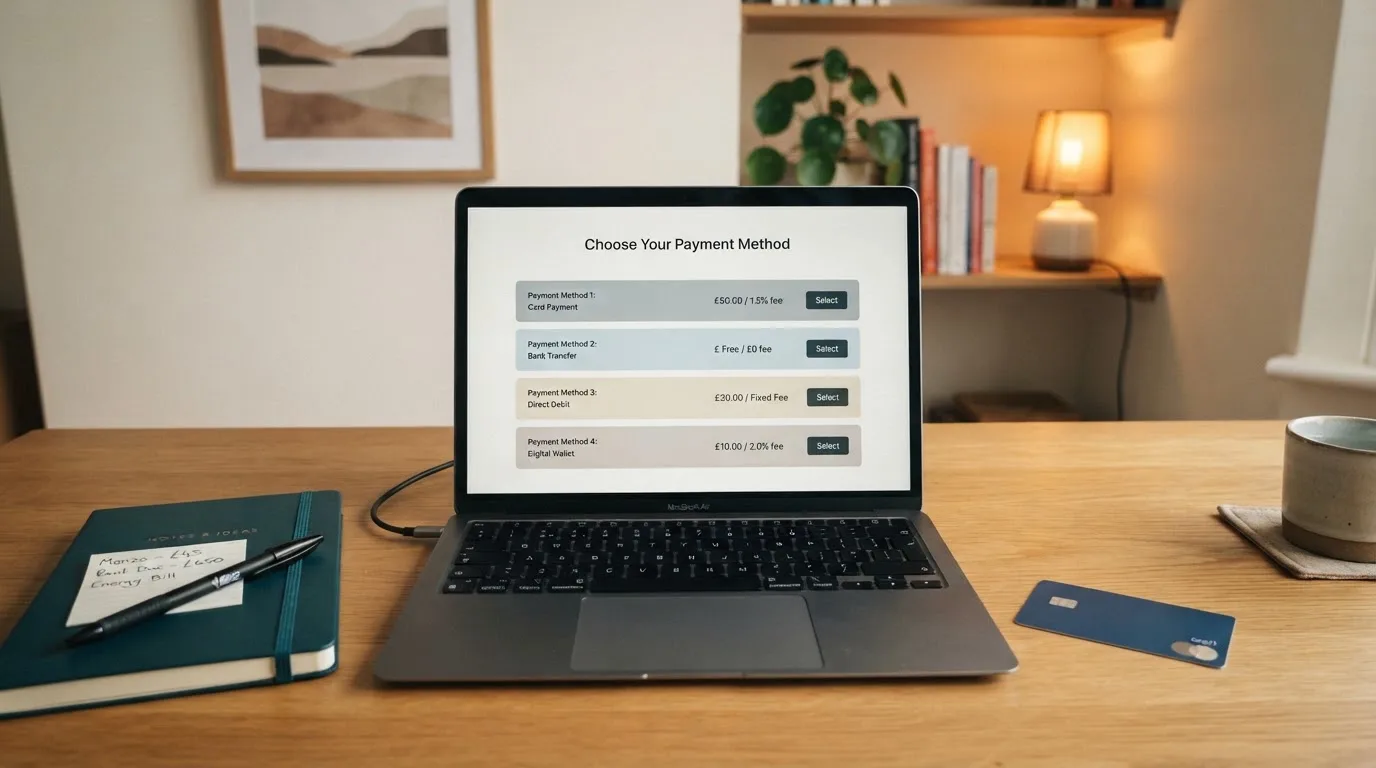
ID comes before the first deposit. Since 7 May 2019 a Commission licensee has had to verify name, address and date of birth before a customer can deposit or place a bet. That is not a payment-method question; it is a customer-onboarding question. A pay-by-mobile top-up that looks anonymous still runs through the same verification step, and any rail that lets a customer skip straight to a balance is operating outside the licence conditions. The rail a player chooses is irrelevant to whether the check fires. What matters is that it fires once, at the front, and that everything downstream is allowed to happen.
GAMSTOP is mandatory. Every online licence carries a condition that the operator must integrate GAMSTOP, the national online self-exclusion scheme, and check new customers against it on registration. Self-exclusion periods run six months, one year or five years and cannot be shortened early. A payment method cannot get around it. If a self-excluded customer tries to deposit through any rail at any operator, the rail is the wrong thing to argue about — the registration is the barrier, and GAMSTOP is where it lives.
Financial vulnerability checks at £150 net deposits in a rolling 30 days, in force since 28 February 2025, run a public-data screen against the customer’s details. These are not the same as the wider financial risk assessments that have been announced and are not yet in force. The current rule is a lighter touch: public data only, triggered by behaviour rather than by sign-up, and aimed at catching the obvious flags. A player who hits the £150 threshold can expect a soft prompt before a further deposit goes through.
A limit prompt before the first deposit has been required since 31 October 2025. The Commission does not set a state-wide ceiling; the operator must invite the customer to set a financial limit before the first deposit is accepted. The customer can decline, but the prompt has to happen. For anyone who wants a deposit cap, that prompt is the place to take it: once set inside the operator, it applies across the session and through every payment method the operator offers.
A stake cap on online slots sits on the game, not the wallet. From 9 April 2025 the maximum stake per game cycle is £5 for players aged 25 and over; from 21 May 2025 the limit is £2 for players aged 18 to 24. There is no deposit or loss ceiling set by the regulator; the per-spin cap is the only state-imposed ceiling that bites. Auto-play is banned and a single spin cannot resolve faster than 2.5 seconds, both in force since 31 October 2021. “Losses disguised as wins” — slot animations that celebrate a net loss as a win — are banned as well. None of this is a payment-method rule, but each one changes what a payment method is being asked to fund.
What this means in plain terms. The payment method is the third step a player notices: register, verify, deposit. The first two are not negotiable at a Commission licensee, and a player who finds a site that lets them skip either one is on a site that does not hold the licence it claims to hold. The Commission’s public register is the only place this is checked, and it is checked by account number, not by marketing.
Payment rails: what each one actually does
The choice between debit card, e-wallet, pay-by-mobile, bank transfer and prepaid voucher is mostly a choice about speed, cost and the shape of the audit trail a player leaves behind. None of them overturns the ID check or the GAMSTOP check. What they change is how long a deposit takes to clear, how long a withdrawal takes to land once it has been approved, and what evidence the player has to hand over if a source-of-funds conversation opens.

Debit card is the default rail and the one most UK players start on. A debit card deposit is funded from money already in the bank account, which is why it survived the credit-card ban that has been in force since 14 April 2020. That ban covers credit cards directly and credit cards routed through e-wallets — the Gambling Commission does not let an e-wallet funded from a credit card reach a gambling balance. A debit card deposit usually posts inside seconds; the card network sits behind Visa Debit or Mastercard Debit and the operator’s payment gateway handles the rest. Withdrawals back to a debit card are common, though some banks treat a gambling refund differently from a merchant refund and the funds can take one to three working days to land once the operator has released them. Disputes and chargebacks route through the card network, which is the practical reason a debit card leaves a clearer paper trail than most alternatives.
Apple Pay sits on top of a debit card. The card data is replaced with a device-specific tokenised Device Primary Account Number and each transaction generates a dynamic security code, which is what the card network sees — the actual debit card number never leaves Apple’s secure element. The system launched on 20 October 2014 supporting only US-issued cards; UK cards were added on 14 July 2015. In-store transactions use near-field communication, and the iPhone authenticates with a double-click of the side button on Face ID models or the Home button on Touch ID models. For an online casino deposit it works the same way as a contactless card payment — the deposit posts through a debit rail, the operator sees a card transaction, and a refund comes back through Apple Pay as the operator’s standard withdrawal flow allows. Apple Pay is supported where a participating card issuer and a supported device line up, and the Commission’s ban on credit-card gambling catches any Apple Pay attempt funded from a credit card. In November 2024 the US Consumer Financial Protection Bureau brought large non-bank wallet operators including Apple Pay under bank-like federal oversight, a frame that has not been mirrored in the UK but that signals where the regulatory winds are heading for wallet operators globally.
AstroPay is the kind of digital wallet that sits between the player and the casino balance. It was founded in 2009, is headquartered in Uruguay, and offers online payments, virtual and physical debit cards and peer-to-peer transfers. The UK arm, Larstal Limited, is an electronic money institution authorised by the Financial Conduct Authority under the Electronic Money Regulations 2011; the Isle of Man arm is licensed by the Isle of Man Financial Services Authority for money transmission; the Brazilian arm is authorised by the Brazilian Central Bank as an electronic currency issuer; and the Danish arm is authorised by the Danish Financial Supervisory Authority. AstroPay spun off its payment-processing business dLocal as a separate company in 2016 and serves users across markets including the UK. For a UK player, what this means is that an AstroPay-funded deposit posts as a wallet-to-merchant transfer backed by an e-money licence, and a withdrawal back through AstroPay typically settles against the wallet balance before the player chooses where to send it next.
Paysafecard is a prepaid voucher, sold in fixed denominations at corner shops and online, that pays in without a bank account in the loop. The Commission has not banned prepaid vouchers, and several Commission licensees accept Paysafecard deposits; the ID check still fires on first deposit, and the voucher simply puts a ceiling on what a single transaction can move. A withdrawal cannot go back to a Paysafecard voucher — vouchers do not receive funds — so a player depositing with Paysafecard has to nominate a different rail for the withdrawal, which is where the choice of deposit rail shapes the withdrawal rail indirectly. The Commission’s ban on credit-card gambling does not catch a voucher paid for in cash.
Pay-by-mobile runs the deposit through the player’s mobile phone bill. It is fast, the deposit appears as a charge from the operator’s billing aggregator, and the amount is added to the monthly phone bill or deducted from pay-as-you-go credit. The ID check still applies and so does every safer-gambling control. Pay-by-mobile deposits typically carry a per-transaction cap set by the billing aggregator, well below a single large bank transfer, and most pay-by-mobile rails do not process withdrawals at all — the player has to nominate a bank account or card for the payout. This is where a player who picked pay-by-mobile for the convenience of the deposit discovers that convenience does not extend to the way home.
Bank transfer within the UK typically moves through the Faster Payments Service, which launched in 2008 and is operated by Pay.UK. It runs 24 hours a day, seven days a week; most payments arrive instantly or within a couple of minutes, though transfers can occasionally take up to two hours. The scheme’s per-transaction limit is £1,000,000, but individual banks impose lower limits on their own customers, and a player at a bank with a tighter outbound limit will see that limit, not the scheme’s. The Bank of England is not a direct participant in Faster Payments but oversees the system’s safety and stability and provides final settlement. A casino deposit by Faster Payments is treated like any other outbound transfer; a withdrawal back by Faster Payments often settles faster than a debit card refund because no card network is in the middle.
The credit-card ban is the rail a player cannot pick. Since 14 April 2020 the Commission has banned the use of credit cards to fund gambling across all online and offline gambling products in Great Britain, with the exception of non-remote lotteries paid for face-to-face. Debit card and bank transfer deposits are unaffected. The Commission estimated that around 800,000 UK consumers used credit cards to gamble in 2018 and found that 22% of online gamblers who used credit cards to gamble were classed as problem gamblers, which is the underlying reason the ban is in place. A credit card routed through an e-wallet does not get around it; the Commission’s rules treat the underlying funding source, not the front-end rail.
The withdrawal rule the player has to plan for. A licensed UK casino must run the player’s withdrawal back through the same payment method that funded the deposit where that is technically possible, and where it is not, through a method the operator can justify and document. The exception is vouchers and pay-by-mobile, which cannot receive funds, so a withdrawal has to go to a bank account or a card the player has already verified. This is why the deposit choice is also a withdrawal choice: pick a rail that can receive money back. The practical order the player goes through is deposit on rail A, play, request withdrawal, wait while ID and any source-of-funds checks finish, see the funds land on rail A (or the closest equivalent that holds the same evidence trail).
How long a withdrawal actually takes
The honest answer is “longer than the deposit, and not in the operator’s gift to speed up”. A deposit is a payment authorisation; a withdrawal is a settlement plus a compliance check. Three stages stack up:
- The operator’s internal approval, which covers any remaining wagering on a bonus, any unsettled bets, and a final ID reconciliation.
- The Commission’s safer-gambling checks where they apply — financial vulnerability at £150 net deposits in a rolling 30 days from 28 February 2025, and any enhanced source-of-funds work the operator chooses to run above the public-data screen.
- The rail’s own settlement time once the operator has released the funds. Faster Payments can be minutes. A debit card refund can be one to three working days. A bank transfer outside Faster Payments can be longer.
A player who wants the fastest payout is a player who has cleared every check on the way in: full ID, full address, full source-of-funds evidence ready to hand. That is not a payment-method question; it is a one-time question the player answers at registration, and it is the thing that determines whether a withdrawal is a 24-hour event or a three-day event.
Where the trade-offs sit
The deposit rail is rarely the deciding factor on its own. What matters is the combination: a rail that lets a player deposit cheaply, that lets the same player withdraw back to the same place, and that gives the operator enough evidence to clear a source-of-funds check without a follow-up conversation. A pay-by-mobile deposit is cheap and quick at the top of the funnel but does not exist at the bottom; an AstroPay or Apple Pay deposit is fast on both ends but adds a wallet into the audit trail. A bank transfer is the slowest at the top and the fastest at the bottom once the operator has the bank details. A Paysafecard deposit is anonymous in the shop and unhappily constrained at the payout end.
Two figures decide which rail a particular player picks. One is the player’s tolerance for friction at registration — a player who is happy to upload a bank statement once and never again is a Faster Payments player. The other is the player’s tolerance for waiting on a payout — a player who wants the funds back in minutes is a Faster Payments player too; a player who does not mind a debit-card refund landing in a couple of days has more choice. The Commission’s rules do not pick for the player. The rails do.
The ten licensed operators, side by side
Every brand below is taken from the Gambling Commission’s public register: each domain is listed against the licence account that runs it, with the remote casino operating licence number. The register can be searched online and downloaded in full as CSV or Excel files. As of 18 September 2026 it listed 139 businesses holding an active remote casino operating licence, with 1,065 active and 361 white-label website entries on the domain list — a white-label site trades under another company’s licence. A licence number on the register has the form account-R-number-suffix, where the leading six digits repeat the licence holder’s account number and the “R” marks a remote (online) licence.
Several brands in this set share one licensee. Gamesys Operations Limited (account 38905) sits behind both Virgin Games and Jackpotjoy; LC International Limited (account 54743) sits behind Gala Bingo alongside a wider group of brands the page does not feature. Treating these as independent operators is the standard marketing mistake and the one a comparison should not make.
The table below sets the brands side by side on the matters the Commission’s register actually publishes. Research does not carry brand-level payment-method data for any of these ten, so the right-hand column is the honest no-data marker rather than a guess. A player who wants a brand-level answer should check the operator’s own banking page, then check the Commission’s register to confirm the licence number is what the operator claims it is.
| Brand | Licence holder and GB remote casino licence | Domain status on the register | Subject support |
|---|---|---|---|
| Virgin Games | Gamesys Operations Limited · 038905-R-319430-022 | White-label domain of account 38905 | — |
| Betfred | Petfre (Gibraltar) Limited · 039544-R-319290-010 | Active | — |
| Betfair | PPB Games Limited · 039411-R-319335-010 | Active | — |
| Sky Vegas | Bonne Terre Gaming Limited · 065519-R-339675-002 | Active | — |
| Gala Bingo | LC International Limited · 054743-R-330863-014 | Active | — |
| 32Red | Platinum Gaming Limited · 045322-R-324275-019 | Active | — |
| Casumo | Recro Limited · 061549-R-336718-002 | Active | — |
| Midnite | Dribble Media Limited · 042647-R-321653-022 | Active | — |
| PokerStars | Stars Interactive Limited · 039108-R-319334-026 | Active | — |
| Jackpotjoy | Gamesys Operations Limited · 038905-R-319430-022 | Active | — |
The column that says the most is the licence-holder column. Virgin Games and Jackpotjoy are the same licensee, two different front doors — a player moving between them is not changing operator so much as changing brand on the same balance and the same compliance file. Gala Bingo sits in a wider LC International group. The rest are independent on the register.
The white-label column tells a player what kind of presence the brand is on the register. Virgin Games is a white-label domain of Gamesys Operations Limited — the brand is the front, the licence is the back. A white-label site trades under another company’s licence, which means the customer contract is with the licence holder, not the brand. For most disputes and Commission complaints this is the licence holder a player escalates to. The rest of the table is “Active”, which means the domain sits directly on the licence account’s record.
Virgin Games — white-label on a Gamesys licence
Virgingames.com is listed as a white-label domain of account 38905, Gamesys Operations Limited (licence 038905-R-319430-022). The brand functions as a front for the licence holder, meaning the customer contract sits with Gamesys. For a Commission complaint, this is the entity the player contacts. Jackpotjoy uses the same licence, sharing both the compliance infrastructure and the balance management systems.
Betfred — Petfre (Gibraltar) Limited
Betfred operates via account 39544, Petfre (Gibraltar) Limited (licence 039544-R-319290-010). Petfre (Gibraltar) Limited manages the brand, and the Gibraltar location does not affect UK licensing obligations; the Commission licence remains the primary regulatory document for British customers.
Betfair — PPB Games Limited
Betfair is maintained by account 39411, PPB Games Limited (licence 039411-R-319335-010). PPB serves as the licensee. Any player wishing to submit a formal complaint should reference this specific licence number.
Sky Vegas — Bonne Terre Gaming Limited
Sky Vegas (account 65519) is managed by Bonne Terre Gaming Limited (licence 065519-R-339675-002). As a separate licence holder, Sky operates independently from other brands, handling its own customer disputes and regulatory compliance.
Gala Bingo — LC International Limited
Gala Bingo is part of account 54743, LC International Limited (licence 054743-R-330863-014). Since LC International maintains a large portfolio, comparing Gala Bingo to other brands in the group is primarily comparing the user interface, as the compliance structure is shared.
32Red — Platinum Gaming Limited
32Red operates via account 45322, Platinum Gaming Limited (licence 045322-R-324275-019). Platinum Gaming represents the licence holder of record, serving as the required point of contact for Commission escalations.
Casumo — Recro Limited
Casumo operates on account 61549, Recro Limited (licence 061549-R-336718-002). Recro Limited is responsible for all UK regulatory requirements associated with the Casumo platform (licence 061549-R-336718-002).
Midnite — Dribble Media Limited
Midnite is registered to account 42647, Dribble Media Limited (licence 042647-R-321653-022). Dribble Media holds the licence directly.
PokerStars — Stars Interactive Limited
Pokerstars.uk is listed as an active domain of account 39108, Stars Interactive Limited, which holds the active remote casino operating licence 039108-R-319334-026. The .uk domain rather than .com is the one that points at the UK customer base.
Jackpotjoy — same Gamesys licence as Virgin Games
Jackpotjoy shares the Gamesys Operations Limited account (38905) and licence (038905-R-319430-022) with Virgin Games. The two brands utilize the same balance and compliance backend, so a user finds the same support standards at either front door.
The legal frame behind every payment method
The payment rail sits inside a licence regime that has been redrawn several times in the last decade. The headline points a player needs are these.
The Gambling Commission is the regulator. Sponsored by the Department for Culture, Media and Sport, the Commission operates under the Gambling Act 2005. The Act covers Great Britain — England, Scotland and Wales — and does not cover Northern Ireland, which has its own regime. Since the Gambling (Licensing and Advertising) Act 2014 any operator taking customers in Great Britain needs a Commission licence wherever it is based; a Curaçao, Maltese or Gibraltar licence is not a substitute for a Commission licence for the GB customer base.
The Commission’s public register is the only test of whether a brand holds a licence. The register is searchable online and downloadable in CSV or Excel, with each domain listed against the licence account that runs it and the licence number that goes with it. A licence number has the form account-R-number-suffix, where the leading six digits repeat the licence holder’s account number and the “R” marks a remote (online) licence. As of 18 September 2026 the register listed 139 businesses holding an active remote casino operating licence, with 1,065 active and 361 white-label website entries. That is the licensed set a player is choosing from.
The minimum age is 18, and the ID check is not optional. Name, address and date of birth must be verified before the first deposit or any play, in force since 7 May 2019. This applies whichever payment method a player picks — the rail is not the variable, the licence is.
The controls around play are Commission-set, not operator-set. Online slots carry a maximum stake per game cycle — £5 for players aged 25 and over from 9 April 2025 and £2 for 18 to 24 from 21 May 2025. There is no state-set deposit or loss ceiling; operators must prompt a customer to set a financial limit before the first deposit, in force from 31 October 2025. Since 31 October 2021 auto-play is banned, a slot spin may not be faster than 2.5 seconds, and losses disguised as wins are banned.
Bonus and wagering terms are Commission-capped. Since 19 December 2025 wagering requirements are capped at 10x and mixed-product bonuses — bet on sport, get casino spins — are banned. The 10x cap applies to the bonus amount a player has to turn over before a withdrawal. Anonymous play is not possible at a licensed site.
The offshore alternative is not equivalent. Providing gambling to people in Great Britain without a Commission licence is an offence under section 33 of the Gambling Act 2005. The Commission disrupts illegal sites through cease-and-desist notices, search-engine delisting and referrals to payment and hosting providers; it has no power to block at the ISP. A player on an unlicensed site loses the protections the licence brings — no GAMSTOP, no Commission complaints route, no approved alternative dispute resolution. The Commission does not penalise the player; the cost falls on the player who loses the safety net.
Tax is on the operator, not the player. Players pay no tax on gambling winnings in the UK. Operators pay Remote Gaming Duty, raised from 21% to 40% from 1 April 2026. That figure sits behind the bonus economics a player sees on the front page; a 40% duty cap reshapes what an operator can afford to give away as a welcome offer and is one of the reasons the wagering cap sits where it does.
The complaint path runs through the operator first, then through an approved ADR body the operator names, then through the Commission if neither resolves it. The Commission does not resolve individual disputes; it acts on the patterns it sees. For a single player the practical route is the operator’s customer service, then ADR, then the Commission as the regulator of last resort.
What a 10x wagering cap does to a bonus in 2026
The Commission’s bonus rules, in force since 19 December 2025, cap wagering requirements at 10x on the bonus amount. The “10x” figure is the number of times the bonus has to be turned over before any of it can be withdrawn; the Commission does not let an operator set a higher multiple or attach a deposit-gated requirement that the player has to clear before the bonus even starts to count.
For a player, the arithmetic runs this way. A bonus of £50 at a 10x cap means £500 of qualifying turnover before any withdrawal is allowed; a bonus of £100 means £1,000; a bonus of £200 means £2,000. The number is the deposit rail’s work, not the player’s: every penny of turnover is a stake placed through whichever rail the player has nominated. At a £1 stake per spin, a £200 bonus becomes 2,000 spins; at a 25p stake per spin it becomes 8,000 spins. With the Commission’s 2.5-second minimum spin interval in force since 31 October 2021, a 2,000-spin clearing run is at minimum 5,000 seconds of play — just over 83 minutes at the regulatory floor — and an 8,000-spin clearing run is at minimum 20,000 seconds, or about 5 hours and 33 minutes of play. A player who cannot put the time in is a player who should not be claiming the bonus.
The right way to read a 10x cap is as a band, not a number. The bottom of the band is a small bonus with a short clearing run; the top of the band is a larger bonus with a longer one. What the cap has done is move the industry away from the 30x, 40x and 50x multiples that used to sit behind welcome offers. The bonus sizes on offer have shrunk to fit, and the offers that remain are smaller and faster to clear than they were two years ago. A player comparing two welcome offers is comparing the size of the bonus and the rail it is paid through, knowing that the multiple underneath it is fixed.
The statistical estimate behind any bonus is the house edge. Slots in the UK market typically return somewhere in the 90–96% range, depending on the title; over a long enough run, a £500 turnover at a 94% return leaves roughly £30 of expected loss, and a £1,000 turnover leaves roughly £60. Those are averages across many spins; a single session can land anywhere on the distribution. The Commission’s wagering cap is a structural change: it pulls the multiple down and the cost of clearing down with it, and what a player is left comparing is bonus size against the rail and the slots they intend to play.
The promise the 10x cap does not make. It does not promise a return; the house edge is still in place. It does not promise a win; a long clearing run is a long clearing run regardless of the multiple. It caps the friction between a player and a withdrawal, and that is the only thing it does. A player who treats a bonus as the price of admission to a session is a player who has read the rules correctly; a player who treats it as a ticket to a payout is a player who has read the wrong page.
How to read a UK casino’s payment page
A casino’s banking page is a marketing document with a compliance document underneath. The marketing layer lists every rail the operator wants the player to use; the compliance layer is what determines whether a particular rail is available to a particular player at a particular moment.
Three checks a player can run quickly. First, the licence number on the operator’s footer should match a Commission register entry — the same account number, the same “R” suffix, the same licence number. If the operator’s footer gives a licence number that does not appear on the register, the operator is not what it claims to be, and no payment rail on the site is worth using. Second, the payment-method list should not include credit cards, on credit or routed through an e-wallet — a list that does include them is a list that does not reflect the 14 April 2020 ban. Third, the deposit screen should not let a player reach a balance without an ID check — if it does, the operator is not running the conditions the Commission attached to its licence.
Three things the player should plan for. A source-of-funds conversation may open at any deposit level above the Commission’s light-touch financial vulnerability threshold of £150 net deposits in a rolling 30 days. The conversation is not a complaint about the player; it is the operator meeting its licence conditions, and the evidence a player hands over is the evidence the operator is required to keep. A withdrawal back to the deposit rail is the default, not the player’s choice — where the rail cannot receive funds (a Paysafecard voucher, a pay-by-mobile billing line), the operator names an alternative rail and the player has to verify it. A bonus carries a 10x wagering cap at most, in force since 19 December 2025; any bonus advertised above that cap is an offer from an unlicensed operator.
Two figures the player should write down before any deposit. The operator’s licence number, copied from the Commission register, not from the operator’s footer. The GAMSTOP registration status of the player, set before the first deposit, so the player is not setting it in the heat of a session.
Frequently asked questions
Are credit cards still allowed for UK online casino deposits?
No. Since 14 April 2020 the Gambling Commission has banned the use of credit cards to fund gambling across all online and offline gambling products in Great Britain, with the exception of non-remote lotteries paid for face-to-face. The ban catches credit cards routed through e-wallets as well. Debit cards and bank transfers are not affected. The Commission estimated that around 800,000 UK consumers used credit cards to gamble in 2018 and that 22% of online gamblers who used credit cards to gamble were classed as problem gamblers, which is the underlying reason the ban is in place.
Which casino payment methods are generally considered safest?
Safer here means auditable and refundable rather than anonymous. Debit cards and bank transfers sit at the top because every transaction leaves a clear record at the bank and at the operator; Apple Pay adds tokenisation on top of a debit card. AstroPay sits behind an FCA-authorised e-money licence in the UK. Paysafecard is anonymous at the point of purchase but loses that advantage at the withdrawal end. The Commission’s ID check, the GAMSTOP check and the financial vulnerability check apply across all of them; the rail does not exempt the player.
Does Paysafecard work as a deposit method at UK-licensed casinos?
Yes, at several Commission licensees. Paysafecard is a prepaid voucher and the ID check still applies at registration; the voucher simply caps a single transaction. A withdrawal cannot be sent back to a Paysafecard voucher because vouchers do not receive funds, so a player depositing with Paysafecard has to nominate a bank account or a card for the payout before they can complete a withdrawal.
Do all casino payment methods settle withdrawals at the same speed?
No. The rail matters, but the bigger variable is the compliance work on the operator’s side. A withdrawal has to clear the operator’s approval, any financial vulnerability or source-of-funds check the licence conditions require, and then the rail’s own settlement. Faster Payments can land in minutes; a debit card refund can take one to three working days; a pay-by-mobile or Paysafecard deposit has to nominate a separate withdrawal rail before the funds can move at all.
Is ID verification required before a first deposit regardless of payment method?
Yes. Since 7 May 2019 every Commission licensee has had to verify name, address and date of birth before the first deposit or any play. The rule applies to every rail the operator offers — pay-by-mobile, e-wallet, prepaid voucher, debit card and bank transfer are all subject to it. A site that lets a player skip the ID check is not running the conditions attached to its licence and is not the site it claims to be.
Can a withdrawal be sent back to a different payment method to the one used for deposit?
In general, no. A Commission licensee must run a withdrawal back through the same payment method that funded the deposit where that is technically possible; this is the standard anti-money-laundering position. Where the deposit rail cannot receive funds — a Paysafecard voucher, a pay-by-mobile billing line — the operator names an alternative rail the player has to verify. The deposit choice is therefore also the withdrawal choice, and a player who picks a rail that cannot receive funds has chosen an extra step on the way out.
Prepared by the lowdepositcasinouk editorial staff.