
Mobile casinos that take phone credit: a UK licence-holders’ view for 2026
 Available in GB
Phone credit sits in an odd place at a UK online casino. It is the only deposit method that uses the mobile network’s billing system rather than a card or a bank, it caps itself lower than any other rail, and it is run by three different commercial schemes rather than by the casino itself. For someone choosing where to deposit, the interesting questions are not whether the casino “supports” it — most of the big UK brands route it through Boku or Payforit behind the scenes — but how the £10 or £30 cap sits next to a stake limit that was tightened last year, and what an unlicensed site with a higher ceiling actually costs the person playing on it.
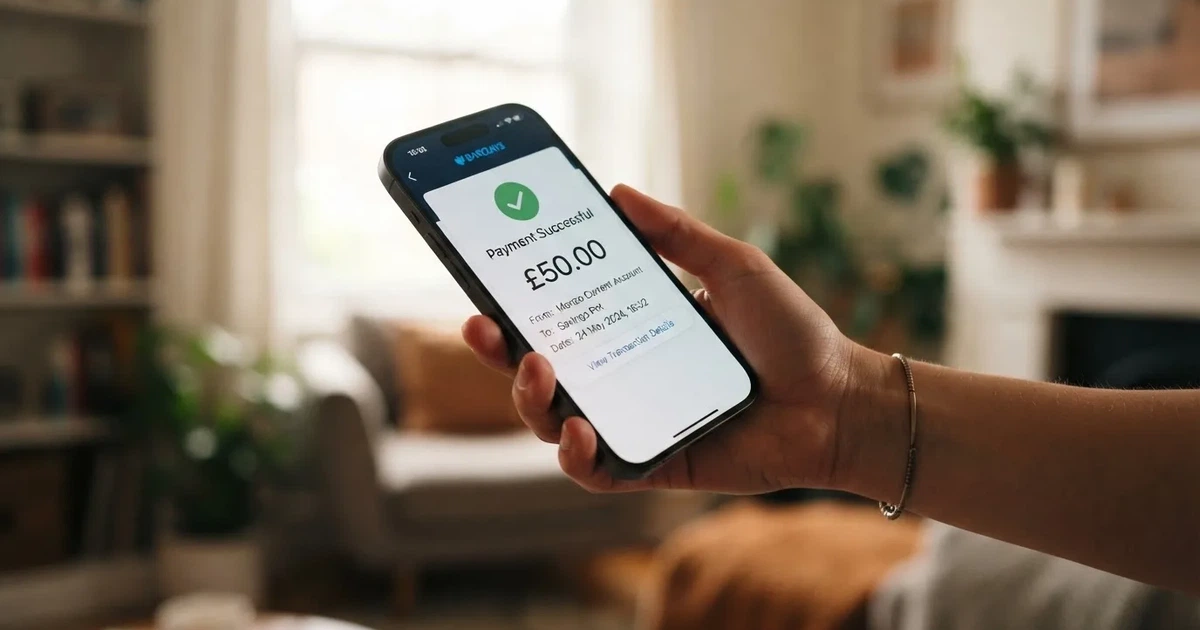
The data below is current as of 23 September 2026 and the licence claims were checked against the Gambling Commission’s public register. The ten brands reviewed are the ones the register carries as active or white-label remote casino domains in Great Britain; several sit under one licence account and are not, on that account, independent operators.
Table of Contents
- The settled-mechanics shelf: how paying by phone credit actually works
- The safer-gambling shelf: what phone credit sits inside at a UK-licensed site
- The payments shelf: speed, fees and what the £30 ceiling buys
- The ranking shelf: ten UK-licensed mobile casinos reviewed
- The legality shelf: what the Gambling Commission licence actually requires
- The market-framing shelf: what the register’s numbers say about this page
- Frequently Asked Questions
The settled-mechanics shelf: how paying by phone credit actually works
Pay-by-phone-credit deposits at a UK casino run on one of two commercial rails. Payforit is the scheme the UK mobile networks set up for purchases charged to a phone bill or pay-as-you-go credit, and it grew out of work the SimPay consortium started in 2005 and launched publicly in 2007. Boku, the other rail, was founded in 2009 and is headquartered in London, processing transactions directly against a customer’s mobile account across more than ninety countries. Most of the larger UK brands route through one of these two behind the scenes, and from the customer’s seat the experience looks the same: the casino gives a deposit amount, the customer confirms by SMS or by tapping a carrier prompt on the phone, and the charge appears on the next phone bill or comes off pay-as-you-go credit.

The amount that lands in the casino account is set by the scheme and the network, not by the operator. A £30 ceiling per transaction is the typical ceiling on Boku-backed deposits at UK-licensed casinos, and Payforit deposits cap similarly low — usually at £10 or £30 depending on the brand. The reason is a regulatory one wearing a commercial face: credit cards have been banned for gambling in Great Britain since 14 April 2020, and the ban extends to credit-card-funded e-wallets, which closed the door on the larger one-tap deposits the rail once offered. Phone credit sits in the gap the ban left, and it has stayed there because the cap is in the network’s interest as well as the regulator’s.
Two practical points follow. The first is that phone-credit deposits are not reversible in the way a card chargeback is — once the SMS is confirmed, the money has moved from network to scheme to casino, and the only route back is the casino’s own withdrawal process to a verified bank account. The second is that the casino cannot see the customer’s phone account, only the network’s confirmation, so it cannot run a credit assessment through this rail the way it would for a card. That is part of the reason the £150 net-deposits financial vulnerability check introduced on 28 February 2025 still matters even on a £30 top-up: the threshold is on the cumulative deposit at the casino, not on the rail.
A pay-by-phone deposit is not, despite the name, a charge to a mobile contract in every case. Customers on pay-as-you-go tariffs see it come straight off their credit; customers on monthly contracts see it added to the bill, with the network’s standard premium-rate service rules applying. Those rules are themselves a regulated layer: UK premium-rate numbers carry an access charge set by the caller’s phone company and a service charge set by the receiving organisation, with service charges capped between 7p a minute on 084x numbers and £3.60 a minute on 09xx numbers. Day-to-day regulation of phone-paid services in the UK moved back from the Phone-paid Services Authority to Ofcom on 1 February 2025. A casino deposit does not normally run through a premium-rate voice number, but the SMS short-code system sits in the same regulatory frame, and the rules are what keep the rail inside a price ceiling that fits the wider safer-gambling regime.
What the deposit looks like at the casino end
The deposit confirmation arrives at the casino within seconds, and the balance is credited immediately. There is no “pending” state for a phone-credit deposit because there is no authorisation chain to wait on — the network has already taken the money from the customer’s airtime or added it to the bill, and what flows to the casino is a settled instruction rather than a request. That is the same near-instant credit a cardholder gets on a debit-card deposit, and it is faster than any bank transfer for the inbound leg.

For withdrawals, the rail runs the other way and is slower. Phone credit is one-way: it cannot receive a payout. A withdrawal must go to a UK bank account in the customer’s name, and that leg is governed by the casino’s own payout cycle, the source-of-funds checks the operator runs after a cumulative threshold, and the bank’s own settlement times. The £150 rolling-30-days check is one prompt in that process; a larger cumulative deposit pattern can trigger a fuller affordability review under the operator’s licence conditions, and that review is what can hold a withdrawal up, not the rail itself. A pay-by-phone deposit is, in this sense, the easy half of the journey; the hard half — getting the money back out — runs through the operator’s bank rails regardless of how the money went in.
The safer-gambling shelf: what phone credit sits inside at a UK-licensed site
Phone credit is, in one sense, the deposit rail the safer-gambling regime was built around. The £30 ceiling a network sets is below the threshold at which any of the meaningful harm markers trip, the rail itself does not extend credit, and the network’s billing record gives the operator a verifiable audit trail for every deposit. From the regulator’s point of view, a customer who can only deposit £30 at a time is a customer who cannot accidentally run up the kind of debt the credit-card ban was designed to prevent. That framing is the reason no UK-licensed operator has any commercial reason to push back on the cap.
The other side of the same picture is that the rail carries very little information about the person using it. The casino sees the network confirmation and the phone number’s network, not the customer’s name, address or date of birth. Those have to be collected separately, and the Gambling Commission has required a full name, address and date-of-birth verification before the first deposit or any play since 7 May 2019. That requirement sits on top of every deposit rail, including phone credit; a casino that lets a customer deposit by phone before verification is not the kind of casino this page is reviewing.
Once a customer is in, the safer-gambling controls at a UK-licensed site are not optional extras. GAMSTOP, the national online self-exclusion scheme, has been a mandatory condition of every online licence since 31 March 2020; a self-exclusion period runs for six months, one year or five years, and cannot be cancelled early. Online slots carry a maximum stake per game cycle — £5 for players aged 25 and over from 9 April 2025, and £2 for players aged 18-24 from 21 May 2025. Auto-play has been banned since 31 October 2021, a slot spin may not complete faster than 2.5 seconds, and losses dressed up as wins — a celebratory sound on a spin that pays out less than the stake — are banned. Operators must prompt a customer to set a financial limit before the first deposit, with that requirement in force from 31 October 2025.
None of these controls is specific to phone credit, and none of them switches off when a customer chooses a different deposit rail. They sit on the licence, not on the payment method. That is the point of the regime: a £2 stake cap still applies whether the deposit came in by phone, debit card or bank transfer, and a GAMSTOP exclusion still blocks the account regardless of which rail the customer had been using. A pay-by-phone deposit cannot, on its own, get around any of it.
What the rail changes — and what it does not
The cap on the deposit is what the rail changes. The £30 ceiling on a phone-credit deposit is much lower than the ceiling on a debit-card deposit, and that limit is the network’s, not the operator’s — a UK-licensed casino cannot raise it. For a customer who wants to spend £200 in a session, phone credit is the wrong tool: it requires seven separate confirmations, and the casino’s safer-gambling system sees seven deposits in a short window rather than one. For a customer who wants to deposit £20 once an evening, it is the right tool.
The rail does not change the source-of-funds check that runs after a cumulative threshold. A customer who deposits £30 by phone three times in a week has deposited £90 at that casino, and that is below the £150 rolling-30-days vulnerability-check threshold; a customer who does it five times has crossed the threshold, and the operator is required to run a check using public data only. The check is on the casino’s deposit ledger, not on the rail.
The payments shelf: speed, fees and what the £30 ceiling buys
The headline of phone credit is speed on the inbound leg, and that is what every UK-licensed operator offers. A deposit confirmed by SMS or carrier prompt lands in the casino balance within seconds; the longest delay is the time the customer takes to type the deposit amount and tap confirm. There is no fee at the casino end on any of the brands the Gambling Commission’s register carries — the network absorbs the scheme’s commission, and what the customer sees on the phone bill is the deposit amount and nothing else. The rail is, in that narrow sense, free to use.
The ceiling is the rail’s defining feature. Most UK-licensed casinos cap a phone-credit deposit at £30 per transaction, and several cap it at £10. A £30 ceiling means a session that would have been one deposit on a debit card is two or three confirmations on phone credit, and the operator’s deposit ledger records each one separately. For a customer who wants to deposit small and often, that is the point; for a customer who wants to deposit large once, it is the reason the rail exists at the back of the cashier page rather than at the front.
For withdrawals, phone credit is irrelevant. The rail is one-way, and the payout goes to a UK bank account in the customer’s name. Payout speed at a UK-licensed operator is governed by three things: the operator’s own pending-period, the source-of-funds or affordability check that may be required at the cumulative-deposit threshold, and the bank’s own settlement time on the receiving end. A pending period of 24 hours is typical; a same-day or instant payout is offered by some brands once the account is fully verified, but it is never guaranteed, and it always sits behind the operator’s withdrawal checks. The rail the money came in on does not change how the money goes out.
Fees, charges and what the phone bill looks like
The deposit itself carries no fee at the casino’s cashier. The charge that does appear is on the phone bill or the pay-as-you-go deduction: the deposit amount, with VAT applied at the standard rate on the network’s content-purchase line. For a £30 deposit, that is a few pence; for a £10 deposit, it is barely a penny. The charge is the network’s, not the casino’s, and it is the price of using a rail that runs through the carrier billing system rather than through card-acquiring rails.
Premium-rate SMS shortcodes beginning with 72 are reserved in the UK specifically for society lotteries, and casino deposits do not run through them. The casino deposit prompt sits inside the casino’s own cashier on a phone, and the customer’s confirmation goes back through the network’s standard mobile-billing path. The two layers — the casino’s cashier and the network’s billing system — are the reason the rail feels like a single tap to the customer and looks like a three-party transaction to the operator.
The ranking shelf: ten UK-licensed mobile casinos reviewed
The ten brands below are the ones the Gambling Commission’s public register carries as active or white-label remote casino domains in Great Britain. They are not ranked by payout speed, by bonus value or by any other editorial measure that is not on the register; they are listed in the order research supplies them, and that order is the order the rest of this page uses. Every brand holds a remote casino operating licence; every brand is required to take part in GAMSTOP; every brand’s domain status on the register is reproduced in the table below.
The verdict at the end of each block is the page’s own reading of the brand against the subject, and it is the sentence the operator write-up closes on. The specifications above it are the ones the licence and the register establish; the verdict is the one that says what those specifications are worth to a reader who specifically wants to deposit by phone credit.
| Brand | Licence holder and GB remote casino licence | Domain status on the register | Phone-credit deposit support |
|---|---|---|---|
| bet365 | Hillside (UK Gaming) ENC · 055149-R-331499-004 | Active | — |
| Betfred | Petfre (Gibraltar) Limited · 039544-R-319290-010 | Active | — |
| PokerStars | Stars Interactive Limited · 039108-R-319334-026 | Active | — |
| 32Red | Platinum Gaming Limited · 045322-R-324275-019 | Active | — |
| Virgin Games | Gamesys Operations Limited · 038905-R-319430-022 | White-label | — |
| William Hill | WHG (International) Limited · 039225-R-319373-015 | Active | — |
| Midnite | Dribble Media Limited · 042647-R-321653-022 | Active | — |
| Grosvenor Casinos | Rank Interactive (Gibraltar) Limited · 057924-R-334666-005 | Active | — |
| 888casino | 888 UK Limited · 039028-R-319297-014 | Active | — |
| kwiff | Eaton Gate Gaming Limited · 044448-R-323408-017 | Active | — |
The final column is empty for a reason. None of the Gambling Commission’s register fields record a payment-method-by-method view of what a brand accepts; the register lists the licence, the licence holder, the domain and its status, and nothing finer-grained than that. A reader who wants to know whether bet365 takes a £30 Boku deposit has to open the cashier on the brand itself, and the answer will depend on which network the phone is on and which rail the brand has integrated. The register confirms the licence; the rest of the picture is on the brand’s own deposit page.
bet365 — the high-volume incumbent
bet365 sits on the register as an active domain of account 55149, with the remote casino operating licence 055149-R-331499-004 held by Hillside (UK Gaming) ENC. The brand has been on the UK online market for longer than most of its peers and runs a cashier that covers the usual rails alongside any network-billing integration it has wired in. The relevant detail for a phone-credit reader is not the licence but the cashier: a high-volume brand of bet365’s size tends to keep phone-billing rails turned on because the small-deposit, high-frequency segment is part of its traffic mix, and the rail does not change the licence conditions the brand operates under. The same GAMSTOP, the same £2 or £5 stake cap, the same source-of-funds checks apply on a phone-credit deposit as on any other.
For a reader who wants a brand that has been on the register without interruption, bet365 is the obvious shortlist. The register cannot confirm whether the cashier surfaces phone credit on the first screen or requires further navigation, so that detail is found on the brand’s own deposit page.
Betfred — the retail-tied bookmaker
Betfred’s domain Betfred.com is on the register as an active domain of account 39544, with the licence 039544-R-319290-010 held by Petfre (Gibraltar) Limited. The licence holder is Gibraltar-domiciled, which is the common arrangement for UK-licensed online brands whose operating company sits outside the UK; the licence is the Commission’s and the obligations are the Commission’s, irrespective of where the holder is incorporated. Betfred’s high-street bookmaking heritage shows in its brand presentation rather than in its licence conditions, and a phone-credit deposit on Betfred runs through the same cashier as on any other UK-licensed brand.
The register tells a reader what the licence is and where it sits. Whether the cashier surfaces phone credit on the first screen, the second, or only after the customer expands a list of “other payment methods” is on the brand’s deposit page.
PokerStars — the poker-vertical specialist
PokerStars runs under Pokerstars.uk, which the register lists as an active domain of account 39108, with the remote casino licence 039108-R-319334-026 held by Stars Interactive Limited. The brand is best known for its poker product, but the licence it holds is a full remote casino operating licence, and the casino vertical is part of what it can offer to a UK customer. A phone-credit deposit on PokerStars is a casino cashier transaction in the same way it is on any other brand, and the same stake cap and the same GAMSTOP registration apply.
A poker-specialist brand running a full casino vertical tends to expose phone credit through the casino cashier rather than the poker lobby. The deposit page is the place to look, not the lobby.
32Red — the casino-focused brand under Platinum Gaming
32Red’s domain 32red is an active domain of account 45322, with the remote casino licence 045322-R-324275-019 held by Platinum Gaming Limited. The brand has run as a casino-focused site for most of its UK life, and the cashier is built around slots and live-dealer products rather than around sports. Phone credit, where it is wired in, sits in the same cashier as cards and e-wallets.
The licence is the Commission’s and the controls are the Commission’s. The brand’s positioning is its own.
Virgin Games — the white-label under Gamesys
Virgin Games appears on the register as a white-label domain of account 38905, with the licence 038905-R-319430-022 held by Gamesys Operations Limited. A white-label entry means the domain trades under another company’s licence rather than holding its own — the customer-facing brand is Virgin Games, but the regulated entity is Gamesys. For a phone-credit reader, the practical consequence is that any complaint route runs to Gamesys and any safer-gambling controls are Gamesys’s, not Virgin’s, even though the casino on screen carries the Virgin branding.
A white-label entry is not a weaker licence. It is a different way of holding the same licence, and the obligations are identical.
William Hill — the legacy high-street name
William Hill’s domain William Hill is an active domain of account 39225, with the licence 039225-R-319373-015 held by WHG (International) Limited. The brand carries the longest high-street history of any UK-licensed online operator, and its online cashier mirrors that breadth — the rail mix is wide and the safer-gambling controls are the Commission’s full set. Phone credit, where it is enabled, runs through the standard Boku or Payforit rail and carries the same £30 ceiling as elsewhere.
A legacy brand of William Hill’s size has the operational reach to keep every rail on. Whether the rail is the first option in the cashier or the last is a brand decision, not a register record.
Midnite — the newer UK-rooted brand
Midnite’s domain Midnite.com is an active domain of account 42647, with the licence 042647-R-321653-022 held by Dribble Media Limited. The brand is one of the newer UK-rooted entrants on the register and runs a casino-and-sports hybrid product. A phone-credit deposit on Midnite runs through the same scheme rail as on any other brand, and the same safer-gambling controls apply. This operator is one of the few on the list that runs with a UK-based operating company rather than a Gibraltar-domiciled one; Dribble Media Limited is the licence holder and the entity the Commission regulates.
Grosvenor Casinos — the land-based-tied brand
Grosvenor Casinos’ domain Grosvenor Casinos is an active domain of account 57924, with the licence 057924-R-334666-005 held by Rank Interactive (Gibraltar) Limited. The Grosvenor brand is tied to a UK high-street casino estate, and the online operation sits alongside the physical one under the Rank group. A phone-credit deposit on the online site is an online-cashier transaction, and the rail mix is set by Rank Interactive rather than by the high-street estate. The licence is a full remote casino operating licence, and the obligations are the Commission’s.
888casino — the long-running casino-vertical brand
888casino’s domain 888casino is an active domain of account 39028, with the licence 039028-R-319297-014 held by 888 UK Limited. The brand has been on the UK market for most of the lifetime of the regulated market and runs a casino-focused product across slots, live dealer and table games. Phone credit, where it is enabled, sits in the same cashier as the rest of the rail mix and carries the same £30 ceiling.
kwiff — the smaller UK-rooted brand
kwiff’s domain Kwiff.com is an active domain of account 44448, with the licence 044448-R-323408-017 held by Eaton Gate Gaming Limited. The brand is one of the smaller UK-rooted operators on the register and runs a sports-and-casino hybrid. A phone-credit deposit on kwiff is the same kind of transaction as on any other brand on the list, and the same safer-gambling controls apply. Readers seeking a smaller UK-rooted brand instead of a Gibraltar-domiciled holding will find kwiff fits that description.
The verdict the table does not draw
The ten brands above share one feature: every one of them is licensed by the Gambling Commission, every one of them is required to take part in GAMSTOP, and every one of them is subject to the same stake caps, the same source-of-funds checks, and the same £150 rolling-30-days vulnerability check. The differences between them are not on the register. They are in the cashier — which rails the brand has integrated, where in the cashier those rails sit, and whether the brand processes the rail through Boku or through Payforit. A reader who has already chosen to deposit by phone credit has, on this register evidence, ten licit choices and one shared rulebook; the brand-level decision is about which cashier experience they prefer, not about which licence conditions apply.
The legality shelf: what the Gambling Commission licence actually requires
The Gambling Commission is the regulator for Great Britain — England, Scotland and Wales — under the Gambling Act 2005. Northern Ireland is governed by its own separate regime. Since the Gambling (Licensing and Advertising) Act 2014 any operator taking customers in Great Britain has needed a Commission licence regardless of where the operator is based, which closed the door on offshore-licensed brands reaching into the UK market without a UK licence. A Curaçao, Maltese or Gibraltar licence is not a substitute: it can sit alongside a Commission licence but cannot replace one.
The Commission’s public register is the test of whether a brand holds a licence. On 18 September 2026 the register listed 139 businesses holding an active remote casino operating licence, and the same register’s domain list recorded 1,065 active and 361 white-label website entries. A white-label site is one that trades under another company’s licence rather than holding its own, and several of the brands on this page — Virgin Games is the example on the list above — are white-label entries on a parent licence. A remote casino licence number has the form account-R-number-suffix, where the leading six digits repeat the licence holder’s account number and the “R” marks a remote (online) licence. The format is the same for every brand, and a register lookup by licence number or by account number is the way to confirm any brand’s status.
The minimum age for any gambling product at a UK-licensed site is 18, and the operator is required to verify the customer’s name, address and date of birth before the first deposit or any play. That requirement has been in force since 7 May 2019, and it sits on top of every deposit rail. A casino that lets a customer deposit by phone before verification is not the kind of casino this page is reviewing.
What the licence obligations do to a phone-credit deposit
Three licence obligations touch a phone-credit deposit directly. The first is the credit-card ban: since 14 April 2020 no UK-licensed operator can take a credit-card deposit, and the ban extends to credit-card-funded e-wallets. Phone credit is not a credit card and the ban does not apply to it. The second is the stake-cap regime: online slots carry a maximum stake per game cycle of £5 for players aged 25 and over, in force from 9 April 2025, and £2 for players aged 18-24 from 21 May 2025. The stake cap applies to the spin, not the deposit, and it does not change with the deposit rail. The third is the financial-vulnerability check that runs at £150 net deposits in a rolling 30 days, in force from 28 February 2025 using public data only. The check is on the cumulative deposit at the casino, and a customer who tops up by phone in small amounts trips the threshold the same way a customer who tops up by debit card does.
A fourth obligation is the auto-play ban in force since 31 October 2021, the 2.5-second minimum spin interval, and the ban on losses disguised as wins. None of these touches the deposit rail directly, but they shape the game cycle that the deposit funds. A customer depositing by phone is playing the same game cycle as a customer depositing by debit card.
The 10x wagering cap and what it does to a bonus
Wagering requirements on casino bonuses are capped at 10x since 19 December 2025, and mixed-product bonuses — the kind that credit casino spins in exchange for a sports bet — are banned. The cap is on the bonus amount, not the deposit, and it is the single most consequential rule change for the bonus economics at any UK-licensed casino. A £10 bonus carries a £100 required turnover at the 10x cap; a £30 bonus carries a £300 required turnover; a £100 bonus carries a £1,000 required turnover. The cap is in force at every brand on this page, and it is the same cap on every brand.
The arithmetic is straightforward: turnover = bonus × wagering factor. At the 10x cap, a £10 bonus asks for £100 of wagering; at the typical slot stake of £1 per spin that is 100 spins; at a 2.5-second spin interval that is roughly four minutes of play. A £30 bonus asks for £300 of wagering, or 300 spins at £1, or about twelve minutes of play. A £100 bonus asks for £1,000 of wagering, or 1,000 spins, or close to three-quarters of an hour of play. The condition attached to those figures is the one the licence enforces: only the bonus amount is being turned over, not the bonus plus deposit, and the stake is at the cap’s edge (£5 for 25+, £2 for 18-24) for a slot spin.
The cost of clearing a bonus is the figure that matters. At a 96% return-to-player, which is a typical figure for an online slot, £100 of wagering carries an expected loss of £4; £300 carries £12; £1,000 carries £40. Those are statistical averages over many spins, not guaranteed outcomes, and they are calculated on the bonus amount only. A bonus that looks “free” carries that cost; a bonus that looks “modest” carries less; a bonus that looks “generous” carries more. The 10x cap is the ceiling, and the brands on this page all sit at or below it.
What an unlicensed site actually costs
Providing gambling to people in Great Britain without a Commission licence is an offence under section 33 of the Gambling Act 2005. The Commission disrupts illegal sites — cease-and-desist notices, search-engine delisting, payment and hosting referrals — but has no ISP-blocking power. The penalty is aimed at the operator; there is no penalty for the player. What the player loses on an unlicensed site is not money in the conventional sense, but protection: no GAMSTOP, no Commission complaints route, no approved alternative dispute resolution.
A site that offers a £500 phone-credit deposit ceiling is, on those terms, offering something the UK-licensed market cannot match. The cost of taking that offer is the safer-gambling regime in its entirety — the GAMSTOP exclusion, the stake cap, the source-of-funds check, the ADR route. The £30 ceiling at a UK-licensed brand is not a market failure; it is the ceiling the regulator set, and the brand is required to enforce it. An unlicensed site with a higher ceiling is offering the ceiling without the regime.
The market-framing shelf: what the register’s numbers say about this page
The Gambling Commission’s public register is downloadable in CSV or Excel, and the snapshot this page is built on is the 18 September 2026 download. The register is the authoritative test of whether a brand holds a licence; the licence number is the test of whether the licence is in the right category (a remote casino operating licence); the domain-status field is the test of whether the brand’s website is the one the licence covers.
The ten brands on this page are a subset of the 139 active remote casino licence holders on the register, and the 1,065 active domain entries the register carried on the same date. The register has room for far more brands than any review page can feature; the ten above are the ones research routed to this page, and the register evidence is the same evidence that would apply to any other licence holder on the list.
A reader who wants to check a brand the page does not feature can do so by searching the register by domain name, by licence number or by account number. The format of a licence number — account-R-number-suffix — is the same for every entry, and the suffix is the version of the licence the holder currently holds. The register is the test; the page is one reading of it.
What the bonus economics look like across the ten brands
The 10x cap is the ceiling on every brand’s bonus economics, and it is the same ceiling on each. A bonus that clears inside the cap is one a brand has priced on its own margins; a bonus that approaches the cap is one the brand is offering at the limit the regulator allows. Below the cap, the brand can run any bonus structure it likes: a 5x requirement, a 1x requirement, a no-wagering free-spin bundle. Above the cap, the bonus is unlawful.
The brands on this page are not, on the register evidence, distinguishable by their bonus terms — those terms sit on the brand’s own promotions page rather than on the register. The register tells a reader what the licence is; the brand’s own page tells a reader what the bonus is. A reader who is choosing on bonus terms should be reading the brand’s page, not this one.
What the wagering cap means for a player at the stake-cap edge
The stake cap and the wagering cap are two different caps, and they interact. A bonus at the 10x ceiling asks for £100 of wagering on a £10 bonus, and at the £5 stake for a 25+ player that is twenty spins; at the £2 stake for an 18-24 player that is fifty spins. The 2.5-second minimum spin interval means a 25+ player clears a £10 bonus in about a minute of play, and an 18-24 player clears the same bonus in about two minutes. A £30 bonus takes three times as long at each stake tier; a £100 bonus takes ten times as long.
The interaction matters at the edges of the regime. A 18-24 player with a £100 bonus has cleared £1,000 of wagering across roughly five hundred spins, each at £2, each running at the 2.5-second floor — that is close to twenty minutes of continuous play. The same player has, on those spins, expected losses calculated at the slot’s RTP; a 96% RTP carries an expected £40 loss across £1,000 of wagering. The bonus is not free; it is paid for in expected time and expected losses, and the stake cap makes the time longer for younger players than for older ones.
What the register says about the rail itself
The register does not record payment methods, and the page has reproduced that absence in the table’s final column. What the register records is the licence, the holder and the domain. A reader who wants to know which rail a brand runs has to open the cashier, and the rail mix on the cashier is the brand’s commercial decision. The register cannot tell a reader whether bet365 has Boku or Payforit on the deposit screen, and neither can this page.
The rail’s commercial position is, on the register evidence, stable: Boku and Payforit are the two UK-relevant schemes, both are active, and both sit inside a regulatory frame that runs from the network’s billing system through Ofcom to the Gambling Commission’s licence conditions. A brand that drops the rail is a brand making a commercial choice; a brand that adds it is a brand making a different commercial choice. Neither choice touches the licence.
Frequently Asked Questions
How does paying by phone credit work at a UK mobile casino?
The customer picks “pay by phone” in the cashier, types a deposit amount (usually capped at £30), and confirms on the phone — either by SMS or by tapping a carrier prompt. The charge goes on the next phone bill or comes off pay-as-you-go credit, and the balance lands in the casino account within seconds. The casino never sees the phone account, only the network’s confirmation.
Is a pay-by-phone-credit deposit added straight to a phone bill?
Yes, for monthly-contract customers. Pay-as-you-go customers see the amount taken straight from their credit. The transaction runs through either Boku or Payforit, the two UK-relevant mobile-billing schemes, and the network adds VAT at the standard rate before the charge appears on the bill or the credit balance.
Do UK-licensed casinos still run ID checks before a phone-credit deposit?
Yes. The Gambling Commission has required name, address and date-of-birth verification before the first deposit or any play since 7 May 2019, and that requirement sits on every deposit rail including phone credit. A UK-licensed casino will not let a customer deposit by phone before verification is complete.
Is there usually a limit on how much can be deposited by phone credit?
Yes. Most UK-licensed casinos cap a phone-credit deposit at £30 per transaction, and several cap it at £10. The cap is set by the network and the scheme rather than by the casino, and it cannot be raised by the operator. For a session that needs a larger deposit, a debit card or bank transfer is the rail to use.
How quickly does a phone-credit deposit reach a casino account?
Within seconds. There is no authorisation chain to wait on because the network has already taken the money from the customer’s airtime or added it to the bill, and what flows to the casino is a settled instruction rather than a request. The deposit confirmation arrives faster than any bank transfer on the inbound leg.
Can phone-credit deposits be reversed if made by mistake?
No. Once the SMS is confirmed, the money has moved from network to scheme to casino, and there is no card-style chargeback route. The only way to get the money back is through the casino’s own withdrawal process to a verified UK bank account, and that process is governed by the operator’s payout cycle rather than by the deposit rail.
Published by the lowdepositcasinouk team.