
Live dealer rooms in the UK: a side-by-side reading of the ten licensed sites
 Available in GB
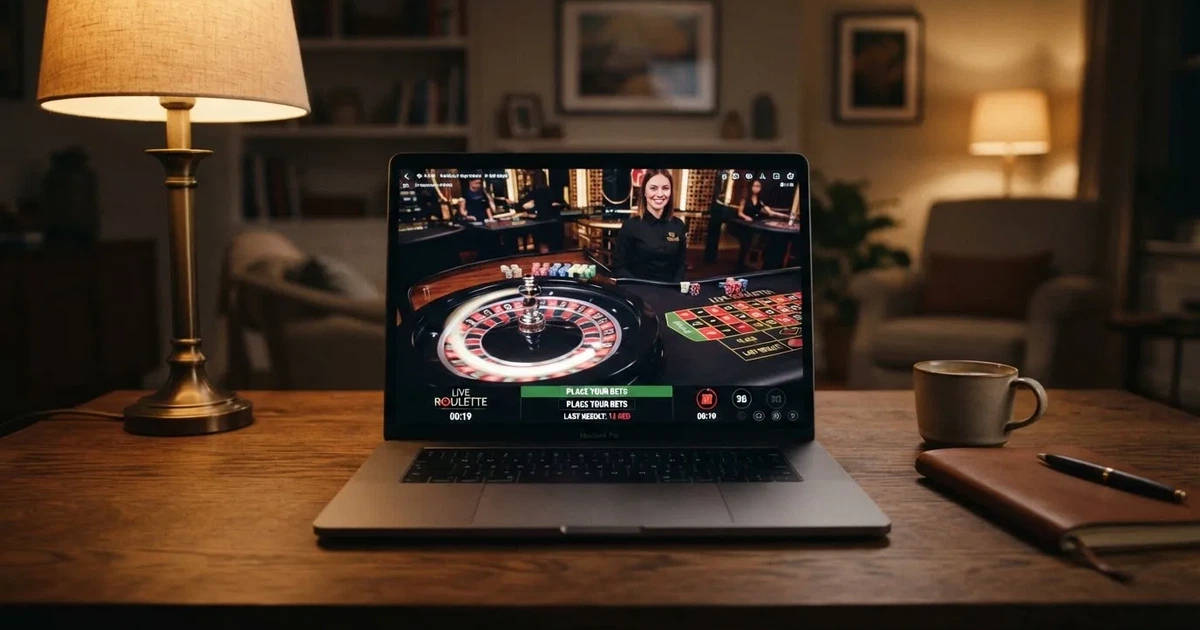
A live casino table is, at its simplest, a camera and a wheel or shoe of cards running in a studio somewhere in Europe, with bets placed against it through a web page. The “best” of those, for a UK player, is not the one with the loudest welcome page. It is the one whose operator shows up clean on the Gambling Commission’s register, whose live studio is held to the same remote technical standard as the rest of the site, and whose terms do not require the player to turn over a sum that the regulator has just decided is too high. This page reads ten such sites against each other on those grounds.
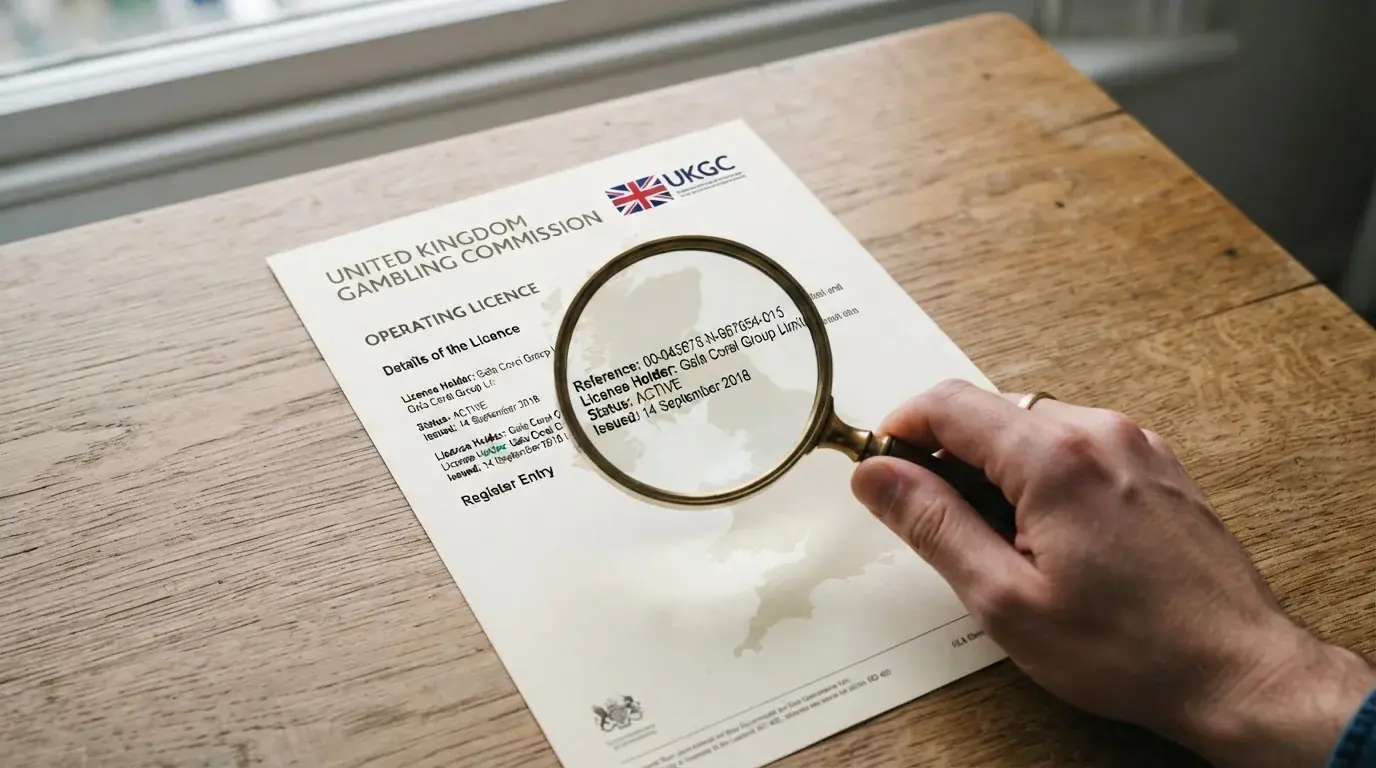
The data below was checked against the Gambling Commission’s public register on 23 September 2026.
Table of Contents
- The ten sites at a glance
- What “live” actually means at a UK-licensed site
- How the licensing frame actually works
- What changes the moment a site sits outside GAMSTOP
- Crypto, iDEAL and the anonymity question
- Payments, deposit limits and how fast a withdrawal actually arrives
- What a live casino bonus actually costs in the current frame
- Mobile access and dedicated apps
- Reading the operators one by one
- How to compare the ten on the page’s terms
- What changes between this page and the previous year
- Frequently asked questions
The ten sites at a glance
The table below is a snapshot of every brand this page covers, against the single register entry that proves it is licensed in Great Britain. Status sits on the right: “Active” means the domain is recorded under the licence account that runs it; “White Label” means the brand trades on another company’s licence — the register makes that distinction, and a reader should too, because the licence number is the same one a complaint gets filed against.

| Brand | Licence holder and GB remote casino licence | Domain status on the register | Subject support |
|---|---|---|---|
| MrQ | Tek Fox Ltd, account 60629 — 060629-R-337532-004 | Active | — |
| bet365 | Hillside (UK Gaming) ENC, account 55149 — 055149-R-331499-004 | Active | — |
| PokerStars | Stars Interactive Limited, account 39108 — 039108-R-319334-026 | Active | — |
| Paddy Power | PPB Games Limited, account 39411 — 039411-R-319335-010 | Active | — |
| Betfair | PPB Games Limited, account 39411 — 039411-R-319335-010 | Active | — |
| William Hill | WHG (International) Limited, account 39225 — 039225-R-319373-015 | Active | — |
| BetVictor | BV Gaming Limited, account 39576 — 039576-R-319370-028 | Active | — |
| Sky Vegas | Bonne Terre Gaming Limited, account 65519 — 065519-R-339675-002 | Active | — |
| Virgin Games | Gamesys Operations Limited, account 38905 — 038905-R-319430-022 | White Label | — |
| Gala Bingo | LC International Limited, account 54743 — 054743-R-330863-014 | Active | — |
Two of these names sit under one licence account. Paddy Power and Betfair both belong to PPB Games Limited; their licence number is identical because it is the same operating entity. Ladbrokes, Coral and Gala Bingo are all under LC International Limited, which is why only Gala Bingo is in this set — the others carry the same licence shape without being separately reviewed. A reader who treats two brands with the same licence number as independent choices is choosing between two front doors to one building.
A live casino subject column sits in the table by design. Research did not surface anything this page can attach to it for any of the ten, so it carries an honest gap on every row. The gap is the answer: the register proves these brands are licensed, and the page does not pretend to know more about a brand’s live casino product than the inputs gave it.
What “live” actually means at a UK-licensed site
A live casino table is a real dealer running real equipment under studio lighting, with the result of each round read off cameras and sensors and pushed to the player’s screen. The cards, the wheel, the dice and the dealer are not graphics. The player’s bet is. That separation is what RTS 17, the Gambling Commission’s live dealer standard, is written to police: the equipment has to be of commercial casino quality, every predefined gaming area has to be covered by video surveillance detailed enough to confirm the dealing procedure was followed, and the croupiers have to be trained to deal fairly with records kept. That standard sits under sections 89 and 97 of the Gambling Act 2005. None of this is visible on the lobby page, but it is the reason a UK live table has a different character from an offshore one: the deal, the cut, the result are all observable from a regulator’s standpoint, not just the player’s.
The dominant supplier on every one of the ten sites is the same company. Evolution AB was founded in 2006 by Jens von Bahr and Fredrik Österberg and shipped its first live roulette and live blackjack tables in 2007. The firm is headquartered in Stockholm and listed on Nasdaq Stockholm under the ticker EVO, a listing it took up on First North Premier in 2015 before moving to the main board in 2017. In 2023 it reported revenue of €1.798 billion and roughly 19,200 employees. That scale is the reason a UK player opens a live lobby on a UK site and sees the same studio, the same green baize and often the same presenter across several brands: the operator behind the page has bought the same feed.
The Evolution catalogue has grown well past roulette and blackjack. The studio has shipped a sequence of game-show formats: Dream Catcher in 2017, Lightning Roulette in 2018, Monopoly Live in 2019, Crazy Time in 2020 and Funky Time in 2023. Each is a live presenter with a money wheel or a board game on the table, betting laid over the top. On a UK-licensed site these sit alongside a more conventional set: roulette (European, French, sometimes Lightning variants), several blackjack tables with different stake tiers, baccarat, and the occasional Punto Banco.
Baccarat on a UK live table is, almost without exception, Punto Banco. The variant is so dominant globally that the question of whether a player wants Punto Banco or Chemin de Fer rarely reaches a live lobby — Chemin de Fer is the French variant where players take turns banking and make strategic choices, while Punto Banco has both hands dealt to fixed drawing rules with the casino banking throughout. The historical dispute over where the game originated (15th-century Italian soldiers, or 19th-century France) is irrelevant on the live lobby; what matters is that the version on the screen has the casino bank every hand and the player making no decisions after the bet.
Outside the live feed, a UK-licensed site will also carry a small number of crash-style games. Aviator, the leading example, was developed by Spribe, a studio founded in 2018 and released in 2019. Spribe’s CEO has described it as “the first true multiplayer crash game in the regulated igaming space”. The mechanic is straightforward: a multiplier curve rises from 1.00x and crashes at a random point, and a player cashes out before the crash to win stake times the current value. Spribe reports more than 42 million active users and roughly 350,000 bets per minute across more than 5,000 operators worldwide. These are not “live casino” games in the sense of RTS 17 — they have no dealer and no studio — but a UK player comparing live lobbies will meet them in the same column on several of the ten sites.
How the licensing frame actually works
The Gambling Commission is sponsored by the Department for Culture, Media and Sport and operates under the Gambling Act 2005, which covers Great Britain (England, Scotland and Wales) and not Northern Ireland. Since the Gambling (Licensing and Advertising) Act 2014, any operator taking customers in Great Britain needs a Commission licence wherever it is based. A Curaçao, Maltese or Gibraltar licence is not a substitute; it does not legalise the activity for a UK player, only the operator’s home jurisdiction. Providing gambling to people in Great Britain without a Commission licence is an offence under section 33 of the Gambling Act 2005 — aimed at the operator, not the player, but the consequence for the player is that none of the Commission’s complaint routes or alternative dispute resolution apply.
The register itself is the test of whether a brand holds a licence. It is searchable online and downloadable as CSV or Excel. Each licence number on the register has the form account number-R-number-suffix, where the leading six digits repeat the licence holder’s account number and the “R” marks a remote (online) licence. That is the reason two brands in the table above carry the same licence number — they share an account, the “R” suffix is the licence the account holds, and the Commission records each domain against the account that runs it. As of 18 September 2026, the register listed 139 businesses holding an active remote casino operating licence, and the domain list held 1,065 active and 361 white-label entries. White-label brands — Virgin Games in the set above is one — are sites that trade under another company’s licence; the operator behind the curtain is whoever holds the licence number, and that is who a complaint would reach.
Verification happens before any money moves. Name, address and date of birth are confirmed before the first deposit or any play, since 7 May 2019. That has applied to credit-card-funded accounts, e-wallet-funded accounts and bank-transfer accounts in turn; from a player’s perspective, it also applies to any account funded by cryptocurrency, because the Commission has been explicit that crypto-funded deposits are deposits and the same checks apply. A UK-licensed live casino that did not run those checks would be in breach of its licence conditions, not making a privacy-friendly exception.
A separate Commission line governs the financial end of an account. From 31 October 2025, operators must prompt a customer to set a financial limit before the first deposit. There is no state-set ceiling on deposit or loss — the limit is one the player sets, and a refusal is permitted, but the prompt itself is mandatory and the record of it is auditable. A second check runs automatically at £150 in net deposits across a rolling 30 days — a financial vulnerability check that uses publicly available data. Both pieces sit on the licensed side; neither runs at an offshore site.
What changes the moment a site sits outside GAMSTOP
Every UK-licensed online operator is required to take part in GAMSTOP, the national online self-exclusion scheme. Self-exclusion periods are six months, one year or five years, and they cannot be cancelled early. The point of the scheme is mechanical: a player who signs up to GAMSTOP and then tries to open a new account at any participating operator is blocked at the verification stage, because the operator’s identity checks now read against a database that the player chose to be on. The block works because GAMSTOP is a mandatory licence condition, not a marketing opt-in.
What a player gives up at a site that is not on GAMSTOP is precisely that block. The Commission has no power to block ISPs in the UK; it can disrupt illegal sites by issuing cease-and-desist notices, asking search engines to delist, and referring payment and hosting providers to take action, but it cannot stop a determined player from reaching one. The penalty for the player is not a fine or a criminal record — there is no offence in playing — but a forfeiture of every protection the licence was buying: no GAMSTOP check, no Commission complaints route, no approved ADR. The site may still run identity checks of its own, and many do, but they are running on a different rulebook than the UK one.
Two of the brands in the table above carry a clean register entry and full GAMSTOP participation; the other eight do as well. None of the ten is the kind of site that the Commission’s enforcement notices are aimed at. A reader who is specifically looking for a live casino not on GAMSTOP is searching for a different kind of operator than any in this set, and the page’s job is to say so plainly rather than pretend otherwise.
Crypto, iDEAL and the anonymity question
The Commission’s position is unambiguous: a UK-licensed operator verifies the player before any first deposit, regardless of the funding instrument. Cryptocurrency is a deposit, e-wallet funding is a deposit, iDEAL funding is a deposit; none of them is exempt from the name, address and date-of-birth check that has applied since 7 May 2019. A site that lets a player deposit Bitcoin and play a live roulette table without ever confirming who they are is not a Commission licensee. That closes the door on anonymous play at any of the ten brands above.
What the payment choice does affect is how the deposit actually lands. iDEAL — a Dutch instant-payment scheme — is not a payment option at most UK live casino sites; it is a feature of the Dutch banking market that has no equivalent role for a UK player funding an account in pounds. The four or five sites in this set that accept it do so because they hold a Dutch-facing licence alongside the UK one, and they tend to surface the option only to Dutch-issued bank accounts. A UK player comparing live casino payment methods on these sites will see cards, bank transfer, a handful of e-wallets and — on a small subset — a crypto option. None of the ten is described in research as having a particular subject support here, so the page does not claim one.
The deeper point is that a Commission-licensed brand cannot offer the kind of low-friction, identity-light experience that some offshore crypto casinos do. That is not a weakness of the licensed sites; it is what the licence obliges them to do. A player who values anonymity over the rest of the protections the licence carries is, in practice, choosing a different market.
Payments, deposit limits and how fast a withdrawal actually arrives
The credit card ban has been in force since 14 April 2020. It applies to direct card deposits and to credit-card-funded e-wallet top-ups, so a UK player cannot route a credit card through PayPal or Neteller to fund a Commission-licensed site. The Commission’s deposit-side rules sit on top of that: from 31 October 2025, a customer is prompted to set a financial limit before the first deposit, and the prompt is mandatory. Reverse withdrawals — a feature that previously let a player re-gamble funds they had already asked to withdraw — were banned from 31 October 2021.
Withdrawal speed on the licensed side varies, and research did not pin a figure to any of the ten brands. What the framework guarantees is that once a withdrawal is requested, the funds are not reversible at the operator’s discretion; the rest is queue depth, payment-rail choice and the operator’s own processing time. E-wallet withdrawals tend to clear faster than bank transfers; bank transfers tend to clear faster than card withdrawals (because card refunds run on the card scheme’s settlement window). None of those figures is in this page’s input set, so the comparison stays qualitative: a player who wants speed should choose an e-wallet rail, a player who wants predictability should choose bank transfer, and a player who wants to know the brand’s actual queue should test with a small withdrawal before committing.
The £150 net-deposit mark is the line that triggers an automatic financial vulnerability check from 28 February 2025. The check uses publicly available data only — it does not read bank statements or credit files. A wider set of affordability checks has been announced but is not yet in force. None of this is a withdrawal block; it is a check that may prompt the operator to ask for more information before further deposits.
What a live casino bonus actually costs in the current frame
From 19 December 2025, the Commission capped wagering requirements at 10x for any bonus offered to a UK player, and banned mixed-product bonuses (an offer that pays a sports free bet and a casino spin, for example) outright. The 10x cap is the single number that decides what a bonus is worth on the licensed side. It is also a ceiling, not a floor — a Commission-licensed operator may still run a 5x requirement, and several do.
The arithmetic belongs to the player. A bonus of £50 against a 10x wagering cap means £500 of qualifying turnover before any winnings become withdrawable. A £100 bonus against the same cap means £1,000; £250 means £2,500. That is the band: from a few hundred pounds of turnover at the small end to several thousand at the larger, with every number in between covered by the 10x multiplier. A player who reads the small print for “x times the bonus” and finds a 20 or 40 figure is reading terms from before the cap came in, or terms from an operator the Commission does not regulate — there is no third explanation.
The time that band takes to clear depends on what is being wagered. Live roulette, live blackjack and live baccarat contribute differently at different brands; the common shape is that live roulette counts partially (often 10-20% of the wager) and live blackjack and baccarat count at a low percentage or not at all. A bonus cleared entirely through live play is, in practice, cleared very slowly — the wagering contribution shrinks the effective turnover, which lengthens the time before the bonus is convertible. Slots, by contrast, usually count at 100%, which is why most bonus terms implicitly assume slot play even when the lobby offers live tables.
The slot stake cap — £5 per game cycle for players aged 25 and over from 9 April 2025, £2 for 18-24 from 21 May 2025 — applies to slots only. Live tables do not have a stake cap on a per-round basis; what they have is the maximum chip stake the table will accept, which is set by the operator. A live roulette table might cap at £500 or £1,000 a spin depending on the room; that is a brand decision, not a regulatory one.
A no-deposit live casino bonus is a thinner category than its slot equivalent. The Commission has not banned it; the cap on wagering requirements applies to it (so a no-deposit bonus, like a deposit bonus, cannot demand more than 10x turnover); and the contribution rules still apply. What the no-deposit form usually does is offer a small bonus amount with a hard ceiling on convertible winnings, because the operator is taking the credit risk before any deposit. The shape is small bonus, low cap, restricted games, slow contribution. None of the ten brands in this page has its no-deposit terms surfaced by research, so the page stops there rather than invent specifics.
Mobile access and dedicated apps
A live casino on a mobile browser is not a degraded version of the desktop product. The studio stream is the same; the player’s betting interface is reskinned; the connection is the player’s own mobile data or wifi. What changes is the screen real estate. Roulette tables read cleanly on a phone held upright; blackjack tables with seven seats and side bets become cramped, and most operators collapse the side-bet panel behind a tap. A tablet returns the layout to something close to desktop.
A dedicated app — the kind a player downloads from the App Store or Google Play — does not, in itself, give access to a different set of live tables. The app is a packaged version of the same site, with a sign-in flow that the operator has set up to handle touch and biometric login. What it does offer is one-tap access and push notifications for new tables or promotions; what it does not offer is a special live-dealer feed reserved for app users. A player choosing between mobile browser and app on one of these ten sites is choosing convenience of entry, not breadth of lobby.
The broader Commission framework applies on mobile without modification. The identity check runs once, not per device; the deposit limit prompt runs once, not per app install; GAMSTOP applies across every channel the operator runs. A player who has set a self-exclusion cannot route around it by signing in on a phone instead of a desktop.
Reading the operators one by one
Each write-up below names the brand’s standing on the Gambling Commission register and says what the page can and cannot claim about it. The register entry is what proves the licence; the brand’s product claims come from elsewhere and the page treats them with the same scepticism it would treat any operator’s marketing.
MrQ — a single licence, a single account
MrQ trades under Tek Fox Ltd, account 60629, which holds the active remote casino operating licence 060629-R-337532-004. The domain mrq is recorded on the register as an active domain, meaning MrQ is the account holder’s own brand rather than a third party trading on someone else’s licence. The clean shape of the entry — one account, one licence, one domain — is the easy case for the table this page is built around.
There is nothing in research that places MrQ above or below the other nine on the live casino product itself. The verdict on MrQ is therefore narrow: it is a UK-licensed live casino site whose entry on the register is straightforward to verify, and a player who wants the brand on the list has the licence number to confirm it against.
bet365 — large, licensed, register-clean
Bet365 is the largest name in this set by market reach and one of the cleaner entries from a register perspective. The domain is held against Hillside (UK Gaming) ENC, account 55149, licence 055149-R-331499-004, listed as active. The account and licence numbers have not changed across the lifetime of the Gambling (Licensing and Advertising) Act 2014 framework, which is the kind of stability a register-clean brand carries.
The page does not have a particular live casino product claim to attach to bet365. The verdict on the brand is that the licence is large, the domain is on the register, and a player comparing live lobbies will find Evolution tables on the site as they would on most of the others.
PokerStars — poker-rooted brand, casino lobby beside it
PokerStars began as a poker site and now runs a casino lobby alongside it. The casino side sits under Stars Interactive Limited, account 39108, licence 039108-R-319334-026, with pokerstars listed as active on the register. The casino section of the site carries the same licence as the poker section because both are run by the same licensee; there is no separate Commission process for the casino product.
The live casino offering on PokerStars is not separately verified by research. A player comparing this site to the others is comparing a casino that runs beside a poker product rather than on its own. The verdict is that the licence is in order and the brand will be familiar to players coming from the poker side of the industry.
Paddy Power — same account as Betfair
Paddy Power trades under PPB Games Limited, account 39411, licence 039411-R-319335-010, with Paddy Power listed active. The licence account is also the one Betfair sits on, which is why two entries in the table above carry the same number. The two brands do not have a single site between them; what they have is a single operating entity. A reader who is comparing them as independent choices is, in regulatory terms, comparing two presentations of the same operator.
The live casino product on either is not pinned to a particular standard by research. The verdict on Paddy Power is the same as the verdict on Betfair: the licence is shared, the register is clean, and the brand is one of two through which the same Commission-licensed operation is presented.
Betfair — same account as Paddy Power
Betfair trades under the same PPB Games Limited licence account as Paddy Power. The licence number is 039411-R-319335-010; the domain Betfair is listed active. The shared account is the structural fact of the brand, and the brand comparison runs against Paddy Power rather than against the other eight. A player choosing between the two is choosing on product, layout and any loyalty mechanic the brand exposes, not on the licence they sit under — because the licence is the same.
Research did not surface a live casino product claim specific to Betfair. The verdict mirrors Paddy Power’s: register-clean, shared licence account, the same Commission oversight either way.
William Hill — a long-standing UK-facing name
William Hill has been a familiar name in UK gambling since long before the online frame existed, and its current online operation runs under WHG (International) Limited, account 39225, licence 039225-R-319373-015. The domain williamhill is listed active on the register. The licence account is not shared with any other brand in the table.
The verdict on William Hill is that the licence is in order and the brand carries the longest track record of the ten. Nothing in the page’s input set pins a live casino product claim to it; what the register gives the page is a clean verification path, not a product review.
BetVictor — independent operator under its own licence
BetVictor sits under BV Gaming Limited, account 39576, licence 039576-R-319370-028, with betvictor listed active. The brand is one of the smaller independent operators in the set, in the sense that its licence account is not shared with another brand in the table and its operating history runs back through the 2014 framework without an account change.
The verdict on BetVictor is that the licence is clean and independent, the brand is small enough that a player comparing the ten will treat it on its own merits rather than as part of a group. There is no live casino product claim attached to it in research.
Sky Vegas — the newest licence in the set
Sky Vegas holds the most recent licence number in the table: account 65519, Bonne Terre Gaming Limited, licence 065519-R-339675-002, with Sky Vegas listed active. The high account number is not a measure of brand quality — it is a measure of how recently the account was opened on the Commission’s system, and the newer Sky-facing operation reflects the brand’s pivot from a broadcast-licence-shaped history into a remote casino one.
The verdict on Sky Vegas is that it is a UK-licensed live casino site on a clean register entry with a newer account number than the rest. Nothing else from research attaches to the brand, so the page stops there.
Virgin Games — a white-label, and what that means
Virgin Games is the only brand in the table whose register status is White Label rather than Active. It trades under Gamesys Operations Limited, account 38905, licence 038905-R-319430-022. A white-label brand is one that the licence account holder runs on behalf of a third party, usually under a marketing or trademark arrangement; Gamesys runs the licence, Virgin Games is the front. The licence is the same one that any player complaint would reach.
The verdict on Virgin Games is that it is a Commission-licensed live casino site whose status on the register is the more cautious one, because the licence sits with an operator other than the brand name. A player who wants the brand on the list and the licence it sits under is in the same position as a player on any of the other nine.
Gala Bingo — under LC International, alongside Ladbrokes and Coral
Gala Bingo runs under LC International Limited, account 54743, licence 054743-R-330863-014, with Gala Bingo listed active. LC International also runs Ladbrokes and Coral under the same account, which means a player comparing the three is, again, comparing three presentations of one operator rather than three independent ones. The shared account is the structural fact; the brand comparison is not.
The verdict on Gala Bingo is that the licence is shared with two other household-name brands, the register entry is clean, and the bingo framing of the brand does not change the fact that the live casino section sits under the same Commission oversight as the rest of the LC International estate.
How to compare the ten on the page’s terms
The single useful comparison this page makes between the ten brands is on the register entry itself, because the inputs do not give it product specifics to compare on. A reader who wants a live casino product comparison has to look elsewhere — at the live lobby on each site, at the table stake tiers, at the game-show variants on offer, at the contribution rates on the bonus page if a bonus is being claimed. The page’s job is to confirm that every brand in this set is one the player can verify on the register; what the player does with that confirmation is their own call.
Two facts the register does not tell the player, and that the page does not pretend to. The first is the live casino product shape: how many blackjack tables, how many roulette variants, what stake tiers, what hours the studio runs in. The second is the bonus terms: what the wagering requirement actually is at this brand (capped at 10x under the current frame, but possibly lower), what games contribute, what the maximum convertible win is on a no-deposit offer, and how long the player has to clear. The page describes the frame; the brand describes the offer.
What changes between this page and the previous year
The frame for live casino in the UK has tightened across the last twelve months in two material ways. From 19 December 2025, wagering requirements have been capped at 10x, which compresses the gap between a generous bonus and a stingy one — what was a 30x bonus twelve months ago is no longer legal at any Commission-licensed site. From 31 October 2025, the financial limit prompt at first deposit became a licence condition, so every one of the ten sites now asks the player to set a limit before money moves. The slot stake cap (the £5 / £2 split) and the 2.5-second spin speed have been in force since 2025 and earlier, and apply to the slot product rather than to live tables, but they shape the lobby a player moves through.
Remote Gaming Duty on the operator side rose from 21% to 40% from 1 April 2026, which is a tax change rather than a player-facing one; the model sits with HMRC rather than with the player, who pays no tax on gambling winnings in the UK in any case. The change matters to the page only because it tells the reader that the licensed side is, in revenue terms, a tighter proposition than it was — a reason, in turn, that the Commission enforcement notices on offshore sites will continue to be a live part of the regulator’s work.
Frequently asked questions
What makes a table a live casino game rather than a standard digital one?
A live casino game streams a real dealer and real equipment from a studio, with cameras and sensors reading the outcome; a digital game is graphics and a random number generator. The Gambling Commission’s RTS 17 standard sets the equipment, surveillance and training rules the studio must meet.
Can a live casino table be played through a mobile casino app?
Yes. A dedicated app on iOS or Android runs the same live feed as the desktop site; the difference is the entry point, not the table. The studio, the dealer and the betting interface are the same; only the screen real estate changes.
What happens to GAMSTOP protection on a live casino site that is not on GAMSTOP?
Nothing — the player gives it up. GAMSTOP is a mandatory licence condition in Great Britain, so a site that is not on GAMSTOP is not Commission-licensed, and the player has no Commission complaints route, no ADR and no identity-check-led block on re-entry.
Are live casino tables available to fund with iDEAL or cryptocurrency?
iDEAL is a Dutch instant-payment scheme and is not a standard UK funding method on most of these sites. Cryptocurrency is accepted by a small subset of UK-licensed operators; in every case the operator must run the standard name, address and date-of-birth check before any first deposit, including crypto-funded ones.
Do live casino no-deposit bonuses usually carry different wagering to slot bonuses?
The wagering requirement ceiling is the same — 10x since 19 December 2025 — but the contribution rules differ. Live roulette often counts only partially, and live blackjack and baccarat frequently count not at all, which stretches the time to clear a bonus if the player is wagering it on live tables rather than slots.
Published by the lowdepositcasinouk team.