
Online craps in the UK: who runs the tables, and what an offer is really worth
 Available in GB
Online craps is the rarest of the table games on a British-licensed casino floor. Slots are everywhere. Live roulette is everywhere. Live baccarat has become routine. Craps remains a niche, and the niche is small enough that almost every UK player who has played it has played the same product from the same studio. The consequence of that runs through everything else on this page.
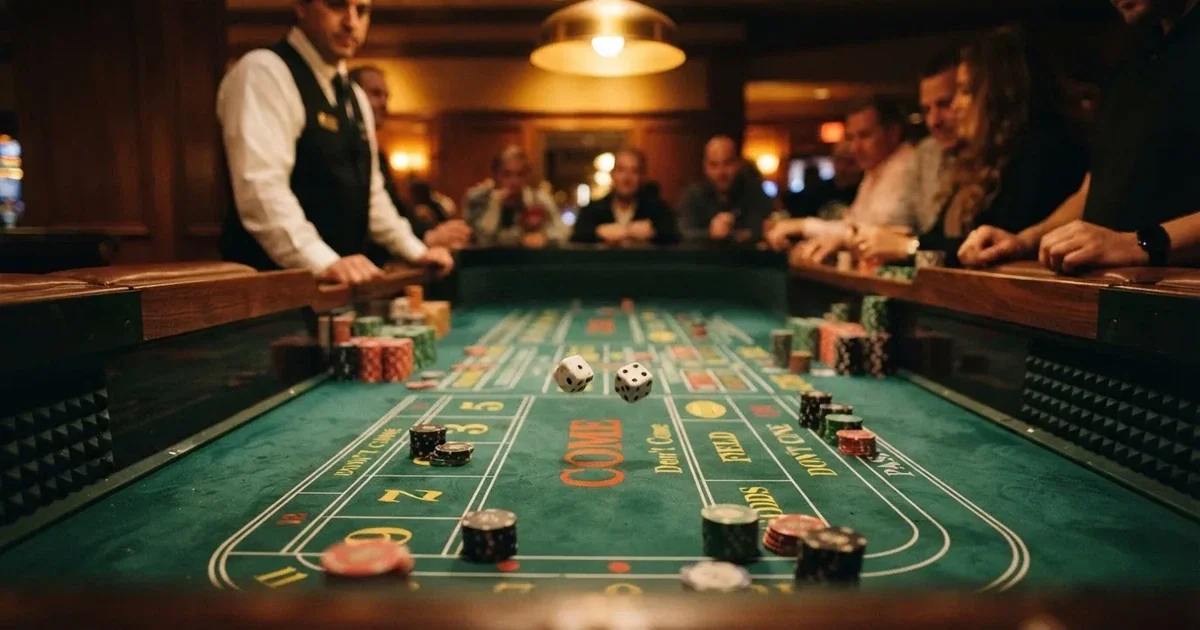
A player searching for craps at a UK-licensed site is not comparing ten well-stocked craps lobbies. They are choosing between operators that may or may not carry the game, may or may not carry it with a live dealer, and may or may not have weighed craps in their bonus terms at all. Finding the best casinos for online craps in the British market is therefore a narrower question than the topic suggests. Best cannot mean “highest bonus.” It cannot mean “loosest terms.” It can mean “operates under a current Gambling Commission licence, takes the safer-gambling duties that come with one, and runs a craps product whose payouts and house edge are published somewhere a player can read them.”
The list at the end of this page is ten such operators as they stood on the Gambling Commission’s public register on the date the currency line below names. None of them is recommended over another, and several have not confirmed craps as a current product. What the page does is explain the framework around the game — the licence, the safer-gambling controls, the bonus arithmetic, the mobile experience, the live product that does most of the work — so that any operator a reader ends up at can be checked against it.
Current as of 23 September 2026 against the Gambling Commission’s public register of remote casino operating licences.
Table of Contents
- The UK regulatory jurisdiction: what a Gambling Commission licence actually requires
- Safer gambling around the craps table: GAMSTOP, ID checks, and the limits every UK site runs
- Crypto deposits and craps: why a UK licence ends anonymous play
- Bonus terms on craps: the 10x wagering cap and what an offer is really worth
- Mobile craps play: apps, browsers, and how a phone session actually works
- Live craps paytables, providers, and the games on offer in the UK
- The ten UK-licensed operators on the register — and how they compare
- Online craps fundamentals: where the bets pay, and where the house edge bites
- Frequently asked questions about online craps in the UK
The UK regulatory jurisdiction: what a Gambling Commission licence actually requires
The Gambling Commission is the regulator for online gambling in Great Britain — England, Scotland and Wales. Northern Ireland sits under a separate regime and is not part of this picture. The Commission’s three jobs are licensing the operator, licensing the personal management behind it, and enforcing the technical standards the product has to meet. For a player, only the first of those matters directly; the others show up in how disputes are handled and how a casino’s product is built.
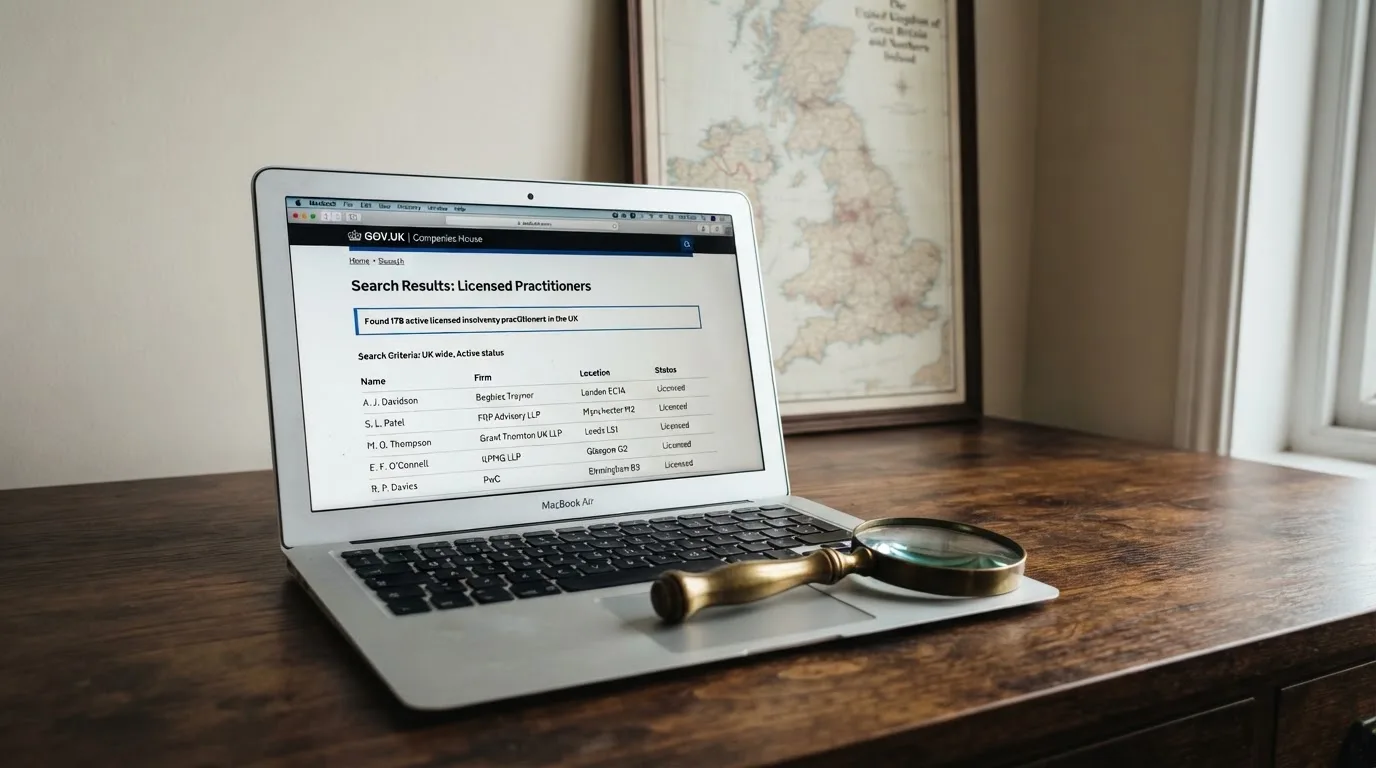
Every brand in the list at the end of this page holds what the Commission calls a remote casino operating licence — the licence a site needs before it can legally take a single deposit from someone in Great Britain. Since the Gambling (Licensing and Advertising) Act 2014 took effect, that requirement has been location-of-customer, not location-of-company. A Gibraltar-, Malta- or Curaçao-based operator cannot rely on its home licence for British customers. It needs a Commission licence or it does not take British customers at all. Several of the licensees in the list below are in fact Gibraltar companies — Rank Interactive (Gibraltar) Limited, Petfre (Gibraltar) Limited, WHG (International) Limited. What makes them legal to take a £10 deposit from a player in Leeds is the Commission licence behind them, not where their head office sits.
A licence number on the register has a recognisable shape: six digits, an R, six more digits, a dash, three more — for example, 045322-R-324275-019. The leading six digits are the licence holder’s account number, the R marks the licence as remote (online), and the suffix records how many times that account has had its licence varied since first issue. The Commission publishes the register in full as a CSV or Excel download; on the snapshot date for this page, the register listed 139 businesses with an active remote casino operating licence. The same register separately tracks domains — 1,065 active and 361 white-label entries on the same date — and it is the domain list that maps a website back to the licence account it actually runs under. A “white-label” entry is a domain that trades under another company’s licence rather than holding its own. Virgin Games is one such entry, sitting under Gamesys Operations Limited’s licence.
What holding the licence obliges a casino to do is the more useful question for a player than what the licence is called. The Commission’s Licence Conditions and Codes of Practice, or LCCP, set the rules every licensee follows. A social responsibility code sits inside the LCCP and covers things like the ID check before the first deposit, the prompt to set a financial limit, and the duty to interact with customers showing signs of harm. A separate code on technical standards — the Remote Technical Standards — governs the game itself: how a slot spin is timed, how a random number generator is certified, how a game cycle is defined. Neither of these is optional, and both are enforced with fines, licence reviews and, in serious cases, revocation.
The position for a player who lands on a site without this licence is straightforward and uncomfortable. Providing gambling to people in Great Britain without a Commission licence is an offence under section 33 of the Gambling Act 2005. The Commission can issue cease-and-desist notices, ask search engines to delist the site, and refer payment and hosting providers for disruption. It does not have the power to block sites at ISP level, which is the tool used in some other jurisdictions. The offence is on the operator, not the player — a player who has used an unlicensed site has committed no crime under British law. What the player has lost is the entire layer of protection a Commission licence buys: no GAMSTOP, no dispute route through an approved alternative dispute resolution provider, no published payout, and no Commission complaints procedure if a withdrawal stalls.
The other side of the licence is what it does not do. The Commission does not guarantee that any licensee will be solvent next year. It does not certify individual games as fair in the way some testing houses do for land-based products. The game testing happens through approved test houses, and the Commission audits, but the certification on a specific live-craps release is the test house’s certificate, not the Commission’s. A licence is a baseline. It is a necessary condition for a legal British site, not a sufficient condition for trust.
Safer gambling around the craps table: GAMSTOP, ID checks, and the limits every UK site runs
Every Gambling Commission-licensed operator runs the same set of safer-gambling controls, because most of them are mandatory conditions of the licence rather than choices the operator makes. The controls look at a craps player in exactly the same way they look at a slots player — the table game a customer is on does not change what the operator has to offer in the way of protection.
GAMSTOP is the national online self-exclusion scheme, and a Commission-licensed operator must check every new customer against it before opening an account. GAMSTOP has been a mandatory licence condition since 31 March 2020. A player can self-exclude for six months, one year or five years; the period cannot be shortened once chosen, and a licensee that lets an excluded customer deposit is in breach of its licence. The exclusion applies across every GB-licensed online operator, not just the one the player first registered with. For a craps player who has decided to step back, the consequence is that the exclusion sticks even if they open an account somewhere else the next morning. The check runs at registration, not at deposit, so the test happens before any money is at risk.
Identity checks have been required before a first deposit or any play since 7 May 2019. The operator must verify the customer’s name, address and date of birth before the account is funded, and the same test runs again on every payment method the customer tries to add. A player who wants to use crypto, an e-wallet, or a pre-paid card cannot bypass this. The crypto point matters and is covered in its own section below, but the principle runs through all of it: the Commission’s view is that anonymous play is not a feature a licensed site can offer. The check happens at the operator, not at GAMSTOP, which is why an exclusion does not need to be lifted at GAMSTOP before a player can deposit at the same site if they chose to end their exclusion and the period had expired.
Deposit limits are the other mandatory control. Since 31 October 2025, an operator must prompt a customer to set a financial limit before the first deposit is accepted. There is no state-set ceiling on how high that limit can be — a player can set £10 a day or £10,000 a day — but the prompt must happen, and the limit the customer sets is the one the operator enforces. A player who sets £50 a day and tries to deposit £80 will be blocked. The limit can be raised only after a cooling-off period the operator sets, and lowered at any time.
Financial vulnerability checks sit alongside the deposit-limit prompt. From 28 February 2025, a check runs when a customer has deposited £150 net in any rolling 30-day period. The check uses publicly available data — court records, insolvency registers, similar public sources — and flags cases where the customer’s gambling may be running ahead of what they can afford. A wider set of financial risk assessments has been signalled but is not yet in force; the £150 trigger is the rule as of the snapshot date for this page. The check is silent for most players and intrusive for a small number; either way, it is not optional for the operator.
The online slot rules — £5 maximum stake per game cycle for players 25 and over (from 9 April 2025), £2 for players aged 18 to 24 (from 21 May 2025), a minimum 2.5-second spin cycle, a permanent ban on auto-play, and a ban on losses disguised as wins — do not apply to craps bets in the same form, because craps is not a slot. But the principles behind them shape the broader safer-gambling framework a player experiences at a licensed site: rapid-play protection, no machine-driven re-staking, and visibility of real losses. The 18-to-24 stake cap was set after the UK government highlighted that this age group has the highest average problem-gambling score of any, citing that alongside lower disposable income and ongoing neurological development. For a craps player in that age band, the reason the rules look the way they do is the same one that shapes slots — but the cap itself does not bind on a dice bet.
Reverse withdrawals were banned for UK licensees from 31 October 2021. Before that date, a customer who had requested a withdrawal could cancel it and put the money back into play. The ban means once a withdrawal is requested, it goes out. For a craps player who hits a run, the consequence is that the chips leave the account, and the temptation to ride the run on money already mentally spent disappears.
Help routes outside the operator are GamCare (which runs the National Gambling Helpline) and GambleAware, both of which are signposted from every licensed site. If a player cannot resolve a complaint with an operator, an alternative dispute resolution provider — usually an independent body approved by the Commission — handles the next step. The ADR route only exists at licensed operators. It does not exist at an unlicensed site, no matter what the site’s footer says.
Crypto deposits and craps: why a UK licence ends anonymous play
The marketing around crypto-friendly casinos has leaned hard on anonymity. The legal position at a UK-licensed operator is the opposite of that marketing. A Gambling Commission-licensed site cannot let a customer fund an account without verifying who the customer is, regardless of the payment method. Bitcoin, Ethereum, Tether, a stablecoin routed through a particular wallet — the check runs in the same way it runs for a Visa debit card.
That is the consequence of holding the licence. The Know Your Customer checks the Commission requires are not negotiable on the basis of payment rail. A licensed operator that took a Bitcoin deposit from a customer whose name, address and date of birth it had not verified would be in breach of the social responsibility code. The practical effect is that a crypto-funded account at a GB-licensed casino looks identical to a card-funded one: full ID, full source-of-funds checks where the trigger is met, full GAMSTOP screening, full complaints route through ADR.
The crypto point interacts with two other rules. The first is the credit card ban that has been in force since 14 April 2020, and which extends to credit cards routed through e-wallets. A player cannot buy crypto with a credit card and then use that crypto at a licensed casino without breaking the spirit of the ban; most licensed operators block the path further upstream by not accepting credit-card-funded crypto at all. The second is the financial vulnerability check at £150 net deposits in a rolling 30-day period. Crypto deposits count towards that threshold. The check does not exempt them.
What crypto does change is the speed and the cost of moving money in and out. A deposit in Bitcoin or Ethereum can land in minutes, depending on the chain and the operator’s confirmation policy. A withdrawal back to a private wallet is typically faster than a card payout. That is the genuine difference between a crypto-funded account and a card-funded one at a licensed site. The fee structure on the chain is a separate question — network fees, exchange-rate spread between the deposit and the stake currency, and the operator’s own policy on which coins it accepts all sit in this layer.
The crypto-friendly label on an unlicensed site means something different. An offshore casino that markets itself as accepting Bitcoin without ID is not subject to the Commission’s rules. It does not run GAMSTOP. It does not route disputes through a UK-approved ADR. If the site disappears or refuses to pay, the player has no Commission complaints procedure to fall back on. The reason the Commission’s register exists is exactly this case. A site that is not on the register can take a deposit; the player cannot rely on anything British law provides if the site then does not pay out.
For the craps player specifically, the practical takeaway is short. At a licensed site, paying in crypto does not mean playing anonymously, does not mean skipping safer-gambling controls, and does not mean a faster route past a self-exclusion. At an unlicensed site, paying in crypto means no Commission protection at any stage. The choice between the two is the choice between the British regulatory framework and nothing.
Bonus terms on craps: the 10x wagering cap and what an offer is really worth
The 10x cap on wagering requirements is the single biggest change to how UK casino bonuses are written, and it took effect on 19 December 2025. The headline is that no GB-licensed operator can now require a customer to wager a bonus more than ten times before the bonus-derived winnings are withdrawable. The corollary is that any offer still quoting a 30x, 40x or 65x multiple at a licensed site is either legacy marketing or being run from outside the licence — neither is the player’s problem to fix.
The practical consequence is that the arithmetic of an offer now has a tighter ceiling. A £10 bonus clears at £100 of qualifying turnover; a £100 bonus clears at £1,000. Across the welcome packages the British market actually runs — typically £10 to £100 in matched bonus funds, sometimes a bit higher — that puts the wagering requirement between £100 and £1,000 before any bonus-derived winnings become withdrawable. The exact figure a player sees depends on the offer, but the band is the same shape across the segment.
The second part of the same rule is the ban on mixed-product bonuses. A bet-on-sport-get-casino-spins offer, or a casino deposit that unlocks bingo bonuses, is no longer allowed at a licensed operator. The point is to stop a customer from being pulled sideways into a product they did not intend to play while chasing a bonus. For a craps player the practical effect is narrow — the offer is now either a casino bonus or not a casino bonus, and the cross-sell has been cut out.
Where the craps player gets caught is on game weighting. A bonus that can be cleared on table games usually does not contribute 100% of every £1 wagered to the requirement. Slots commonly contribute 100%; craps, blackjack, roulette and baccarat often contribute 10%, 20%, or 0%. An offer that says “wager £500 on slots, get the bonus” is not the same offer once the player reads the small print and discovers that craps contributes 10% — the £500 becomes £5,000 of qualifying craps turnover, which is well past the 10x cap on a £100 bonus by itself. Some offers exclude craps entirely. The plan the player makes on the front of the offer and the plan the operator has written at the back of the offer are not the same plan.
The wider point — beyond the 10x cap — is that a cleared bonus is not a winning bet. The multiplier cap limits how much a player has to wager, which is real money saved. It does not change the house edge on the game the player is wagering through. A Pass Line bet at 1.41% house edge still takes 1.41 pence from every £1 staked on average; the bonus is the price of admission to the wagering, not a hedge against the math. The combination of a 10x cap and a low-contribution table game can be the worst of both worlds: the bonus clears slowly because the contribution rate is low, and the game the player has to play to clear it still runs against them at the published edge.
A reader weighing an offer against the cap should look at three numbers in order. The bonus amount. The wagering multiple, which at a licensed site is now capped at 10. The game contribution rate, which the operator publishes in the bonus terms and which for craps is the number that decides whether the offer is worth claiming at all.
Mobile craps play: apps, browsers, and how a phone session actually works
Most UK-licensed casinos are browser-first products on mobile. The same HTML5 client that loads in a desktop browser loads in a phone browser, with the lobby reflowing for a smaller screen and the live-dealer tables streaming at the resolution the connection supports. Native apps exist for the larger brands — William Hill, Betfair, Ladbrokes, Paddy Power, Betfred among them — but the app is usually a wrapper around the same browser product. A player who uses the browser on a phone is not missing anything the app would offer.
The stake rules that apply on desktop apply on mobile as well. The £5 maximum on a slot spin for over-25s and £2 for 18-to-24s is the same rule whether the spin is on a laptop or a phone; the 2.5-second minimum cycle and the auto-play ban are likewise unchanged. Craps bets do not sit under those rules in the same form because craps is not a slot. What does carry over is the practical effect of the auto-play ban and the reality-check timer: a player cannot lock in a stake and let the game run unattended, which means every spin or every dice throw is a deliberate action. On a phone, where a thumb can drift over a button, this is the rule that catches players most often.
A live-dealer craps table on a phone is the same product as on a desktop, just at a smaller viewing angle. Evolution’s Live Craps — the only live craps the British market currently has at scale — runs the speakeasy-themed studio, the built-in tutorial, the Easy Mode for new players, and the Come Out roll / Point roll structure in either client. The croupier is visible on the screen; the betting grid sits below the video. A phone in portrait mode shows less of the layout at once than a landscape tablet does, and the layout reflows accordingly. The mechanics are unchanged.
The two practical snags on mobile are network and battery. A live-dealer stream asks more of a mobile connection than a slot does, and a session that drops the stream mid-throw is a session where the bet resolution runs against the player anyway — the round completes at the server, and the player either wins or loses on the result. Battery drain on a long live-dealer session is a separate constraint; a player planning an hour of craps on a phone should plan for the phone to be plugged in.
Depositing and withdrawing on a phone use the same payment methods as on a desktop. Apple Pay and Google Pay are the de facto choices for a lot of mobile users, and both work at every licensed operator that supports card payments. The ID check that runs before the first deposit is not skipped on mobile; the customer’s date of birth, address and proof of identity are verified in the same flow, with the camera on the phone doing the document scan.
A player who has set a deposit limit and is using a phone should expect the limit to apply in the same way. A phone does not reset the daily limit at midnight any differently to a desktop. The limit the player set on one device follows them to the other.
Live craps paytables, providers, and the games on offer in the UK
The UK live craps market is essentially one product. Evolution’s Live Craps is the game that shows up at the GB-licensed operators that carry live craps at all, and the studio does most of the work in keeping the game available at all. The setup is a speakeasy-themed studio with a real craps table, a real croupier, and a digital betting grid layered onto the felt so players can place wagers the same way they would on a desktop client. The studio also runs a built-in interactive tutorial and an Easy Mode that simplifies the layout for players who have not sat at a craps table before.
The structure of a round is the same as a physical casino craps table. The shooter throws the dice for a Come Out roll. A 7 or 11 on the Come Out roll is an immediate win for Pass Line bets. A 2, 3 or 12 is an immediate loss. Anything else — 4, 5, 6, 8, 9 or 10 — becomes the Point. The round then continues until the Point is rolled again (Pass Line wins) or a 7 appears first (Pass Line loses). Some bets resolve after a single roll; others, like the Pass Line itself, span several rolls. This is the same shape as a US casino craps table; the UK version does not depart from it.
The paytable that matters most for a UK player is the small set of bets around the Pass and Don’t Pass lines. The Pass Line carries a house edge of 1.41%. The Don’t Pass line, the bet against the shooter, runs at a slightly lower edge. The Come and Don’t Come bets mirror those edges on the next roll. The Odds bet, placed behind an existing Pass or Don’t Pass wager, pays at true mathematical odds and carries a 0% house edge — but it can only be made alongside that existing bet, and most tables cap the Odds multiple at a set figure (often 3x, 4x or 5x the original line bet).
The bets that look attractive on the felt are usually the bets to avoid. Proposition bets — the hardways, the any-seven, the horn bets — sit in the centre of the layout and pay out at high odds on a single roll. The house edge on these is correspondingly high, often above 9% and reaching above 13% on some bets. The Place bets on 4, 5, 6, 8, 9 and 10 sit between the proposition bets and the Pass line on the edge spectrum, depending on the number. A player who learns the Pass line, the Don’t Pass line, the Come and the Odds bets, and treats everything else as decoration, has covered the bets that do not punish the maths.
The craps table itself has a recognisable physical shape. A regulation craps table is U-shaped, with duplicate betting areas at each end so a right-handed and a left-handed shooter can both reach the layout. The walls of the table are pyramid-textured, designed to randomise the dice throw. An online live table does not need the pyramid walls because the dice are real but the throw is consistent; the randomisation comes from the physics of the dice in the shooter’s hand rather than the bounce off a rubber wall.
The history of the game runs back through the United States. Craps developed as a simplification of the earlier European dice game Hazard. The name itself comes from London slang — “crabs,” a term used for the losing rolls of 2 and 3 in Hazard. John H. Winn, a Philadelphia dicemaker, introduced the layout that added the Don’t Pass wager around 1907, and that layout became the standard for the modern casino craps table. Winn’s change mattered because it let casinos profit whichever way a bet went: with players able to bet against the shooter, the casino no longer had any reason to use unfair dice.
The wider UK market is not a wide market for craps. Most studios that supply GB-licensed operators — Pragmatic Play, Playtech, NetEnt, Gamesys’s own studios — do not produce a live craps product, and the digital RNG versions of craps that some of them publish sit in a separate category. A player who wants live craps at a UK-licensed site is, in practice, choosing whether the site carries Evolution’s Live Craps and at what hours the table is open. The game is open most hours of the day, but it is not 24/7 at every operator.
The ten UK-licensed operators on the register — and how they compare
The list below is a snapshot of the Gambling Commission’s public register on the date the currency line at the top names, restricted to operators that hold a current remote casino operating licence and that carry a recognised UK-facing casino brand. The order is the order they appear on the register, not a ranking. Several brands on this list sit under the same parent licence, and none of them has confirmed a craps product as a standing line on the basis of the register snapshot alone.
The register snapshot named in this page is not a guarantee that a brand carries craps today. It is a guarantee that the brand is allowed to take a deposit in Great Britain under a current licence. A reader who wants a specific game needs to check the operator’s own lobby — the register does not list the games a site runs, only the licence a site holds.
| Brand | Licence holder and remote casino operating licence | Domain status | Subject support |
|---|---|---|---|
| Grosvenor Casinos | Rank Interactive (Gibraltar) Limited · 057924-R-334666-005 | Active | — |
| Betfred | Petfre (Gibraltar) Limited · 039544-R-319290-010 | Active | — |
| 32Red | Platinum Gaming Limited · 045322-R-324275-019 | Active | — |
| BetVictor | BV Gaming Limited · 039576-R-319370-028 | Active | — |
| William Hill | WHG (International) Limited · 039225-R-319373-015 | Active | — |
| Virgin Games | Gamesys Operations Limited · 038905-R-319430-022 | White-label | — |
| Ladbrokes | LC International Limited · 054743-R-330863-014 | Active | — |
| Paddy Power | PPB Games Limited · 039411-R-319335-010 | Active | — |
| Betfair | PPB Games Limited · 039411-R-319335-010 | Active | — |
| Jackpotjoy | Gamesys Operations Limited · 038905-R-319430-022 | Active | — |
The licence number beside each name is the format the Commission itself publishes: account number, R, variation number, suffix. A reader can copy any of those strings into the register’s search box and reach the same entry this page reached on the snapshot date. The domain status column distinguishes between an active domain — one the licence account runs as its own — and a white-label entry, where the domain trades under the licence of another company. Virgin Games sits in the white-label column because Gamesys Operations Limited is the account holder, not because Virgin Games is unlicensed. White-label is a commercial structure; it is not a downgrade.
Three licence accounts in this list cover more than one brand. PPB Games Limited runs both Paddy Power and Betfair. Gamesys Operations Limited runs both Virgin Games and Jackpotjoy. LC International Limited runs Ladbrokes and is the same parent that runs several other high-street names — Coral and Gala Bingo among them — that are not in this list because the list is restricted to casino brands, not bingo or sports brands. A reader who sees two of these brands on a complaints page and assumes they are independent operators is reading the wrong end of the licence number. The licence account is the legal entity; the brand is the marketing front.
None of the ten brands in this list has a verified craps product on the basis of the snapshot and the register alone. The Commission’s register tracks licences and domains, not game inventories. A brand may carry Evolution’s Live Craps, or an RNG craps, or neither. The reader’s job is to open the operator’s lobby and check the table games section. The list here is the licence layer of that decision; it is not the lobby layer.
The deeper comparison a player might want — game weighting on bonuses, hours the craps table runs, mobile experience, withdrawal times — is not on the register. It is in the operator’s own terms, the live-dealer studio’s own page, and the player’s own test session. The register tells the player who is allowed to take their money. The lobby tells them what they can spend it on.
Online craps fundamentals: where the bets pay, and where the house edge bites
Craps looks more complicated than it is because the felt carries more bets than any other table game. The actual decision tree a player runs through is short, and the bets worth knowing sit on the edges of the layout. The bets in the centre are mostly traps.
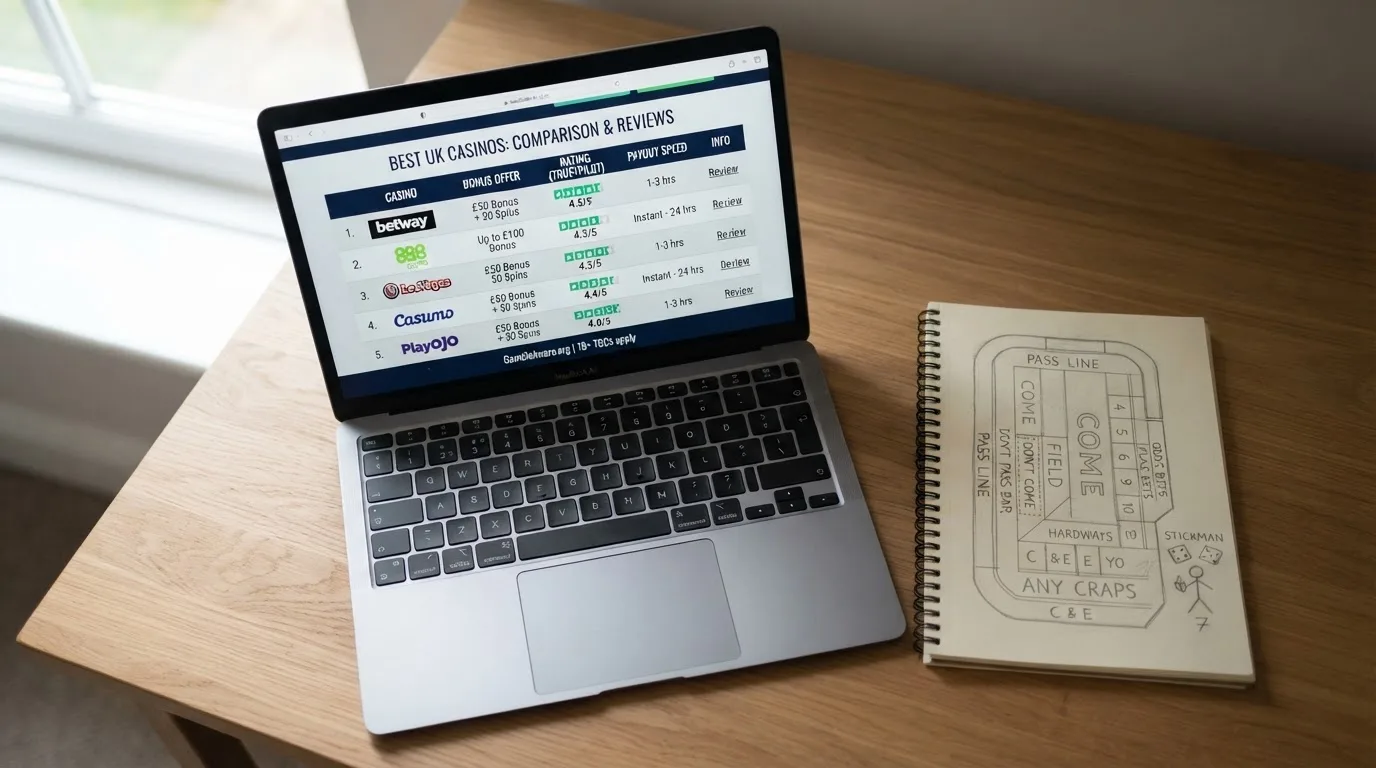
The Pass Line is the bet most players learn first. It wins on a Come Out roll of 7 or 11, loses on 2, 3 or 12, and rides through to a Point if anything else comes up. The Pass Line carries a house edge of 1.41%. The Don’t Pass line is the mirror — wins when the Pass Line loses, with the same edge shape at a slightly lower percentage. Once the Point is set, the round continues until the Point is rolled again or a 7 appears. The Come and Don’t Come bets work like miniature Pass and Don’t Pass bets on the next roll.
The Odds bet is the only bet on the table with a 0% house edge. It pays at true mathematical odds — 2-to-1 on a Point of 4 or 10, 3-to-2 on a Point of 5 or 9, 6-to-5 on a Point of 6 or 8. The catch is that the Odds bet can only be made behind an existing Pass or Don’t Pass wager, and most tables cap the multiple at 3x, 4x or 5x the original line bet. For a player who wants to push the effective house edge down, the move is to bet the table maximum on the line and the maximum on the Odds behind it.
The Place bets are bets on a specific number — 4, 5, 6, 8, 9 or 10 — winning if that number is rolled before a 7. The Place bet on 6 or 8 pays 7-to-6 and carries a house edge around 1.5%. The Place bet on 5 or 9 pays 7-to-5 with a slightly higher edge. Place bets on 4 or 10 carry a higher edge still. The Buy bet is a Place bet that pays true odds for a 5% commission, which works out roughly even on 4 and 10 and worse on the rest.
The proposition bets in the centre of the layout are the bets a player should walk past. The Any Seven bet pays 4-to-1 and carries a house edge above 16%. The Hardways — betting that a 4, 6, 8 or 10 will be rolled as a pair before any other combination — pay 7-to-1 on the hard 4 or 10 and 9-to-1 on the hard 6 or 8, with edges above 9%. The Horn bet, the Whirl bet and similar combination wagers have edges between 11% and 14%. None of these is a bet the math is paying the player to make.
The Field bet — a single-roll wager on 2, 3, 4, 9, 10, 11 or 12 — looks attractive because it covers most of the dice outcomes. It usually pays 1-to-1 except on 2 and 12, which sometimes pay 2-to-1 or 3-to-1. The edge depends on the table’s payout structure; on a table that pays 2-to-1 on both 2 and 12, the edge runs around 2.8%; on a table that pays 3-to-1 only on 12, the edge climbs. A Field bet is a one-roll bet and a thin one at best.
The Big Six and Big Eight bets — even-money wagers that 6 or 8 will be rolled before a 7 — look harmless. They carry a house edge of 9.1%, more than six times the edge on the Place bet on the same numbers. They are a relic of an older layout and have no place in a player’s strategy in 2026.
The practical takeaway is short. The Pass Line, the Don’t Pass line, the Come and Don’t Come bets, and the Odds behind them, are the bets the math pays a player to make. Everything else on the felt is there because the casino knows most players will try it at least once. A player who stays on the edges of the layout will lose less per hour at craps than a player who drifts to the centre; both will lose on average, because the house always has an edge on every bet on the table, but the rate of loss is the player’s to manage.
Frequently asked questions about online craps in the UK
What does a craps payout actually look like at a UK-licensed casino?
A Pass Line bet pays 1-to-1 — stake returned plus an equal amount in winnings. An Odds bet behind it pays at true odds: 2-to-1 on Points of 4 or 10, 3-to-2 on 5 or 9, 6-to-5 on 6 or 8. Proposition bets pay higher but carry much higher house edges, often above 9%. A player should expect the paytable to be published on the operator’s game information page before they sit down.
Is online craps only available as a digital table, or can it be played with a live dealer?
Live craps is available at most UK-licensed operators that carry Evolution’s Live Craps, which is the live product doing most of the work in the British market. The studio runs a speakeasy theme, a built-in tutorial and an Easy Mode. RNG craps — a digital version of the table — also exists at some sites, but the live-dealer product is closer to the experience of a real felt table.
Can you play craps on a phone, or do you need a desktop?
A phone works for craps. The same HTML5 client that loads on a desktop loads in a mobile browser, and the larger brands also offer native apps that wrap the same client. Live craps streams at the resolution the connection supports, and the betting grid reflows for portrait or landscape view. A long live session uses more battery than a slot session, so a charger is useful.
What bonus terms usually apply when an offer can be used on craps?
The 10x cap on wagering requirements has applied since 19 December 2025 — so the multiple is fixed. The variable is the game contribution rate: craps often contributes 10% or 20% of each £1 wagered to the requirement, sometimes 0%. A £100 bonus at 10x with 10% contribution means £10,000 of craps turnover, not £1,000. The bonus terms page sets the rate.
Do crypto-friendly casinos run craps differently from standard UK-licensed sites?
At a UK-licensed operator, paying in crypto does not change the ID check, the safer-gambling controls or the dispute route. The site is still bound by the Commission’s rules regardless of payment rail. At an unlicensed site that markets itself as crypto-friendly, none of those protections apply. The craps product itself is usually the same Evolution Live Craps either way; what differs is everything around it.
Prepared by the lowdepositcasinouk editorial staff.