
Online Casino Tournaments UK 2026 — What the Leaderboard Actually Costs
Slot Tournaments at British Online Casinos: How the Format Works and What It Costs the Player
A slot tournament looks like a promotion and is treated like one by the marketing that runs it. In practice, every British tournament is bound by the same Gambling Commission regime that governs the casino underneath it — the £5 stake cap, the 10x wagering ceiling on prize funds since 19 December 2025, and the GAMSTOP enrolment that the operator cannot opt out of. The competitive format changes how a player experiences a slot; the legal frame does not move.
This page was prepared using data current as of 7 November 2026, and the figures on licences, domains and stake limits were checked against the Gambling Commission’s public register of gambling businesses.
Table of Contents
- The legal frame every British tournament sits inside
- The stake, time and pace rules that govern every tournament spin
- What GAMSTOP, age verification and the protection net mean for tournament entry
- Crypto deposits and tournament entry at UK-licensed sites
- How tournament prize money reaches a winning player
- The bonus mechanics inside a tournament prize
- Which slot titles and formats turn up most often on British leaderboards
- Ten British-licensed operators that run slot tournaments
- What a British tournament actually costs the player
- How to read the rest of this page
- Frequently asked questions
The legal frame every British tournament sits inside
Tournaments are not separately licensed. A UK-licensed casino runs one under its existing remote operating licence, and every player-protection rule that applies to a single spin applies to the spin that counts towards the leaderboard. That point settles most of what a player needs to know before reading the rules of any specific event.
The regulator is the Gambling Commission, sponsored by the Department for Culture, Media and Sport, operating under the Gambling Act 2005 and the Gambling (Licensing and Advertising) Act 2014. Its coverage is Great Britain — England, Scotland and Wales. Northern Ireland sits under a separate regime and is not in scope for this page. Since the 2014 Act, any operator taking British customers needs a Commission licence wherever it is incorporated; a Curaçao or Malta licence is not a substitute. Providing gambling to people in Great Britain without a Commission licence is a section 33 offence; the Commission disrupts unlicensed sites through cease-and-desist notices, search-engine delistings and payment and hosting referrals, but it has no power to block them at ISP level. The player on an unlicensed site loses the protections the licence carries — no GAMSTOP, no Commission complaints route, no approved alternative dispute resolution. That is the trade a player makes when an offer is too generous to be a Commission operator’s.
The Commission’s public register is the test of whether a brand holds a licence. It can be searched online or downloaded in full as CSV or Excel, and on 18 September 2026 it listed 139 businesses holding an active remote casino operating licence. The register’s domain list records each website against the licence account that runs it, with a status of Active, Inactive or White Label; the same download recorded 1065 active and 361 white-label domain entries on that date. A white-label site trades under another company’s licence, which means a player who only checks the brand has not checked who is actually regulated. A remote licence number has the form account-R-number-suffix, where the leading six digits repeat the licence holder’s account number and the R marks a remote, online licence.
Several large British brands sit on the same licence. Ladbrokes, Coral and Gala Bingo are all domains of LC International Limited under account 54743 and remote licence 054743-R-330863-014. They are not three separate operations and a player who knows one of them knows the licence posture of the others. That matters when a dispute arises, because the regulated entity is the account holder, not the front-of-house brand.
The stake, time and pace rules that govern every tournament spin
The single configuration that decides whether a tournament is worth entering is the stake the player can put behind each game cycle. From 9 April 2025, online slots at UK-licensed sites carry a maximum stake of £5 per spin for players aged 25 and over. The lower-tier £2 cap for 18-to-24-year-olds took effect on 21 May 2025. A tournament cannot lawfully ask for more than these figures permit, and a tournament that targets younger players with a smaller ceiling cannot offer larger prizes by raising the stake — the cap is on the stake, not on the prize.
Betfred’s domain is listed on the Gambling Commission register under operating licence 039544-R-319290-010.
The spin itself is constrained as well. Auto-play has been banned since 31 October 2021, and a slot spin may not complete faster than 2.5 seconds. Tournaments that try to drive volume by running rapid auto-rounds are running foul of these requirements; that matters for a player thinking about pace, because it caps the number of qualifying spins that can be generated within a fixed session window. The “losses disguised as wins” ban sits alongside: a slot may not celebrate a result that returned less than the stake as if it were a payout. A leaderboard’s “wins” metric is the operator’s own definition; the format cannot dress up a net loss as a win on the player’s screen.
There is no state-set deposit or loss ceiling. Operators must, since 31 October 2025, prompt the customer to set a financial limit before the first deposit. That prompt is the player’s chance to fix the tournament budget before the first qualifying spin; setting it after the first deposit has cleared is too late, because the prompt belongs to the registration flow, not to a session. Financial vulnerability checks run at £150 in net deposits across a rolling 30-day window, using public data only, from 28 February 2025. The wider financial risk assessments have been announced but are not yet in force.
What GAMSTOP, age verification and the protection net mean for tournament entry
GAMSTOP enrolment is a mandatory condition of every UK online licence, in force since 31 March 2020. A self-exclusion period of six months, one year or five years cannot be cancelled early, and a player who has enrolled cannot enter a tournament at any Commission-licensed site for the duration. That is the central mechanical difference between a British tournament and an offshore one — exclusion is a hard wall, not a polite request, and a player who wants to come back has to wait.
Age and identity verification is the second gate. Since 7 May 2019, name, address and date of birth are checked before the first deposit or any play, not after a withdrawal request. Anonymous play at a licensed site is not possible; an account that lets a player deposit without a check is unregulated, and the absence of a check is itself a signal. The same minimum age of 18 governs tournament entry as governs every other gambling product on the licence.
The protection net behind GAMSTOP includes GamCare’s National Gambling Helpline and GambleAware, both signposted by every licensed operator. A player who feels the competitive format of a leaderboard is pushing them past a planned budget should treat the tournament as a product with that risk attached — setting a time limit before the first spin and stopping at it is a more reliable defence than resolving to “play one more round”, because the format is built to make one more round feel cheap.
Crypto deposits and tournament entry at UK-licensed sites
The crypto shelf sits oddly with tournaments, because the Gambling Commission’s stake caps, identity checks and GAMSTOP enrolment run on the operator, not on the deposit rail. A British player who holds Bitcoin or Ether cannot bypass any of those rules by funding the account in coin; the rules apply to the licence, and the licence governs the tournament.
What changes is the deposit experience. The Commission’s regime does not list cryptocurrencies among its typical approved payment methods, and licensed operators that do accept them route the conversion through regulated partners rather than take the coin on their own balance sheet. A tournament prize paid in pounds and a tournament prize paid in Bitcoin are not the same product once the conversion is in the loop, because the exchange rate at the moment of payout fixes the sterling value, and a coin that moves against the player between the leaderboard closing and the payout clearing leaves the prize worth less than the leaderboard showed. The marketing word for this is “instant”; the arithmetic is a conversion, and the moment a conversion runs in a volatile market is the moment a quoted prize is not the same as a paid prize.
A player who prefers digital coins for the speed of the deposit should still check that the operator in question is on the Commission’s register, because the offshore crypto casino that takes British customers without a licence is in the same legal position as any other unlicensed site — section 33 of the Gambling Act 2005, no GAMSTOP, no approved ADR. Crypto does not weaken the player’s case; it strengthens it, because the unlicensed operator is more difficult to reach when something goes wrong.
How tournament prize money reaches a winning player
The payout speed question turns on what rail the operator pays out on. A tournament win paid by bank transfer within the UK moves through the Faster Payments Service, launched in 2008 and operated by Pay.UK. The service runs 24 hours a day, seven days a week, and most payments arrive instantly or within a couple of minutes; transfers occasionally take up to two hours. Faster Payments carries a £1,000,000 per-transaction scheme limit, though individual banks impose lower limits on individual customers. A tournament prize is well inside that ceiling, and a licensed operator paying into a UK account by Faster Payments should clear within the hour.
E-wallet and card rails have their own timing. A payout to an e-wallet that the player has already verified usually clears the same day once the operator has approved it; a payout back to a debit card can take one to three banking days because it depends on the card network’s settlement cycle, not the operator’s release time. The bottleneck is rarely the operator’s “we have approved your withdrawal” step; it is the next step, which is the network’s.
Two rules frame the rails. From 14 April 2020, credit cards are banned for gambling in Great Britain, including credit cards routed through e-wallets — debit cards and bank transfers are unaffected. Since 19 December 2025 wagering requirements on bonus funds are capped at 10x and mixed-product bonuses are banned. A “free entry” tournament that asks for a deposit to claim the prize and routes the prize through a 50x wagering requirement is doing two things that the post-December 2025 rules now rule out; a player who sees that combination on a current page should treat it as a relic, not as a current offer. Apple Pay, AstroPay and the bank rails named here are all options a player may see on a deposit screen; what matters for a tournament is whether the operator can pay out by a rail that clears in the time the player needs.
The bonus mechanics inside a tournament prize
The 10x wagering cap is the figure that decides what a tournament prize is worth in cash, and it is the figure the marketing never leads with. Before 19 December 2025, a tournament could offer prize money tied to a 30x or 50x playthrough, which on a £200 top prize means turning £6,000 to £10,000 through the slot before the bonus converts to withdrawable cash. Under the current cap, the same £200 prize carries £2,000 of qualifier play to convert — heavy, but a third to a fifth of what it used to be. The cap applies to all bonus funds at UK-licensed operators, not to tournaments alone; a tournament prize that arrives as a bonus is a bonus like any other.
The way this actually moves a player’s week is in the time the wagering takes to clear. A £200 bonus at 10x wagering requires £2,000 of qualifying turnover, which at the £5 stake cap and the 2.5-second minimum spin interval works out to a defined upper bound on the play time — 400 qualifying spins at the maximum stake, and each spin is at least 2.5 seconds of clock time. That is the rough envelope a player is committing to before the bonus converts. The same £200 bonus at the £2 cap for under-25s takes 1,000 spins and a longer clock. The cap is on the stake; the wagering burden is on the player.
Tournaments that pay out as cash, not as bonus funds, sidestep the wagering calculation altogether. A cash prize goes to the wallet, the wallet pays out, and the player is done. The market has shifted towards cash prizes in part because the 10x cap makes bonus funds more attractive to operators in other categories (deposit matches, free-spin bundles) than in tournaments where the player has earned the money already; cash-prize pools are now the easier sell.
Which slot titles and formats turn up most often on British leaderboards
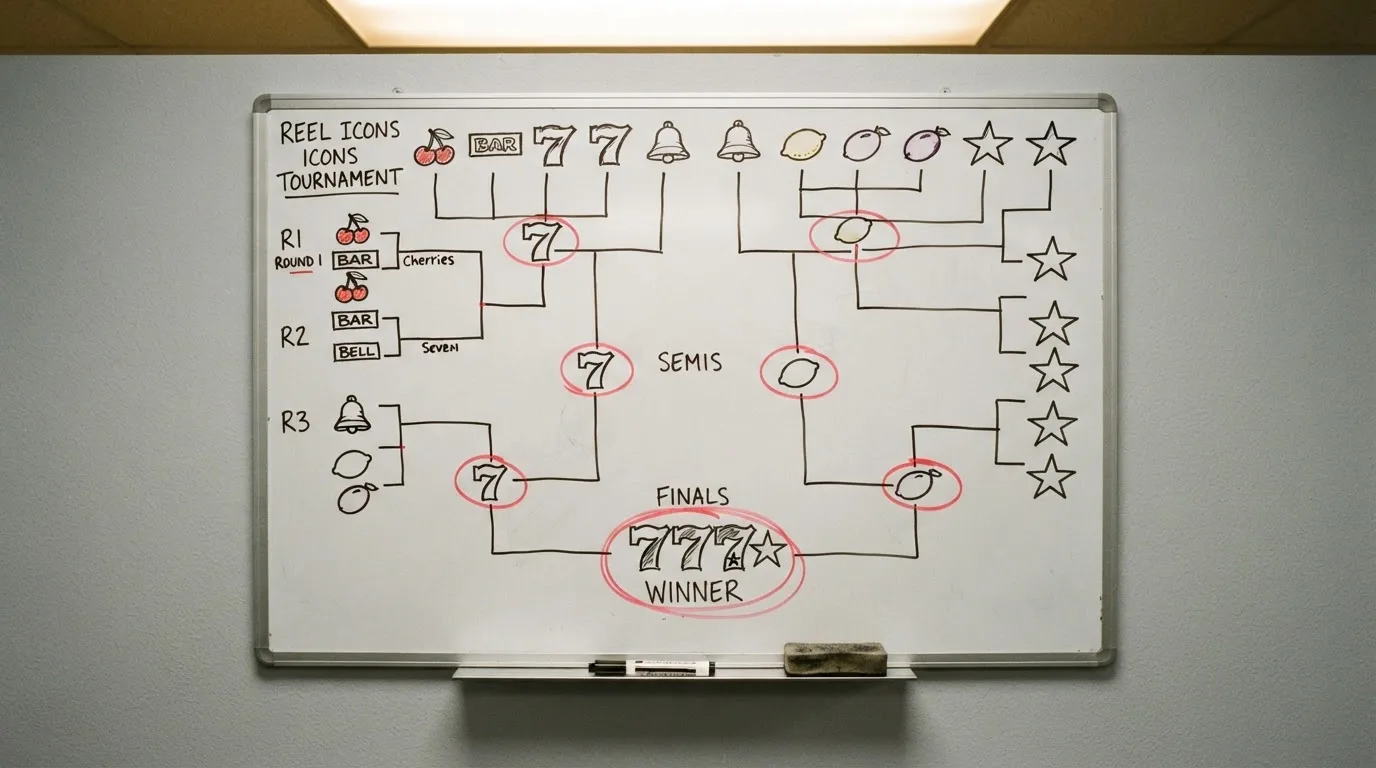
The studios and the format mix matter because the leaderboard metric is almost always the same shape — points equal wins within a window — but the slots themselves vary in volatility, return-to-player and hit rate. A high-volatility slot delivers fewer but larger wins, which makes a single spin dominate a leaderboard and pushes the outcome towards luck; a low-volatility slot delivers a steady stream of small wins, which rewards consistent volume and turns the format into a session-length contest. Most tournament-eligible slots sit in the middle, deliberately so.
A British leaderboard will tend to feature titles from the studios with the deepest UK-licensed catalogues — NetEnt, Play’n GO, Pragmatic Play, Blueprint and the Gamesys in-house range, among others — because these are the slots already deployed across the operator’s main lobby and the easiest to wrap a promotion around. A tournament built around a single high-profile release is a marketing tie-in; a tournament built around a multi-provider lobby is a retention play. Both formats exist; both are legal; neither tells the player, by itself, whether the prize is worth chasing.
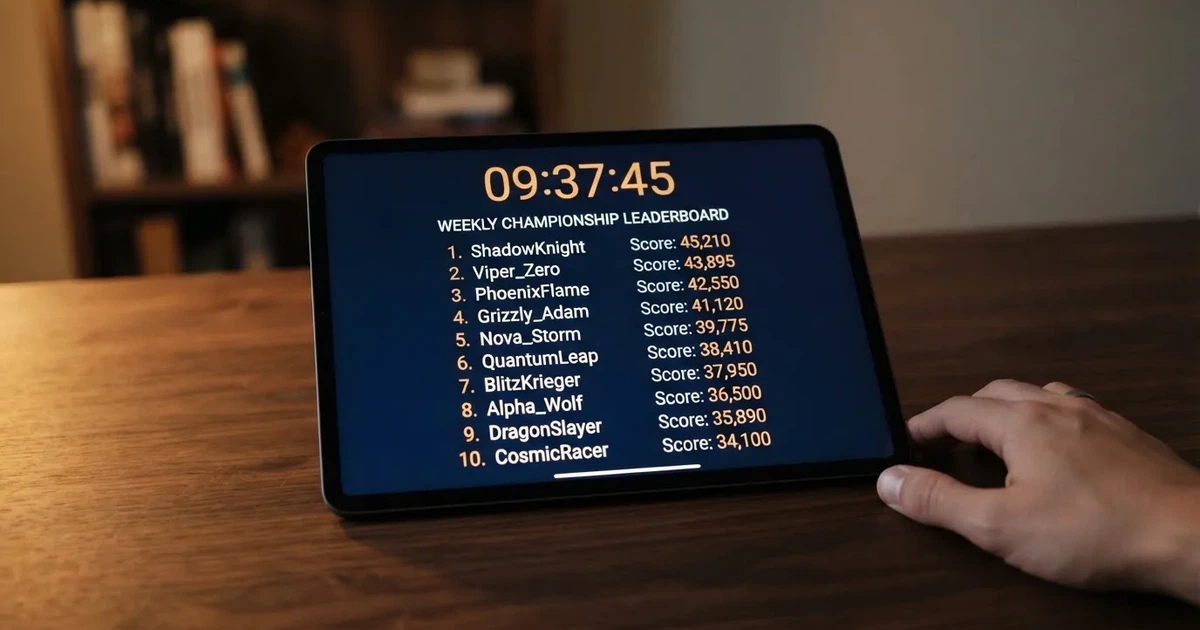
Three formats recur. The first is the timed freeroll, where every entrant plays a fixed window and the highest points total wins; entry is free, the prize pool is fixed, and the number of paid places is usually small relative to the field. The second is the buy-in tournament, where the entry fee builds the prize pool and the top finishers share it; this is rarer in the UK than in offshore markets because most licensed operators prefer not to charge for entry. The third is the opt-in promo, where any qualifying play during a promotional window scores points and a leaderboard pays out at the end; this is the commonest format and the one that rewards players who would have played anyway.
The slot choice inside the format matters. A player who values their time picks a low-volatility slot at the £5 cap and grinds the window; a player who values the upside picks a high-volatility slot and accepts that one spin will define their result. Neither is wrong, and the format does not change that — it just makes the trade-off legible.
Ten British-licensed operators that run slot tournaments
The ten names below are taken from the Commission’s public register as of 18 September 2026. Each is listed there as an active domain of a GB remote casino operating licence holder, which is the only test the page applies. Several sit under the same licence, and a player who knows one of the LC International Limited brands knows the licence posture of all three. None of these write-ups recommends one operator over another — the comparison is the licence and the registration status, nothing else.
| Brand | Licence holder | GB remote casino licence | Domain status | Tournament support |
|---|---|---|---|---|
| Paddy Power | PPB Games Limited (account 39411) | 039411-R-319335-010 | Active | — |
| Ladbrokes | LC International Limited (account 54743) | 054743-R-330863-014 | Active | — |
| MrQ | Tek Fox Ltd (account 60629) | 060629-R-337532-004 | Active | — |
| Coral | LC International Limited (account 54743) | 054743-R-330863-014 | Active | — |
| bet365 | Hillside (UK Gaming) ENC (account 55149) | 055149-R-331499-004 | Active | — |
| Betfred | Petfre (Gibraltar) Limited (account 39544) | 039544-R-319290-010 | Active | — |
| Casumo | Recro Limited (account 61549) | 061549-R-336718-002 | Active | — |
| 888casino | 888 UK Limited (account 39028) | 039028-R-319297-014 | Active | — |
| Jackpotjoy | Gamesys Operations Limited (account 38905) | 038905-R-319430-022 | Active | — |
| Gala Bingo | LC International Limited (account 54743) | 054743-R-330863-014 | Active | — |
The table is the frame the rest of the page works inside. A “—” in the tournament support column is not a denial and not an absence; it is what the public register reports, and the public register does not list tournaments. The brand-level write-ups below take each row in turn and say what is on the register, not what the operator’s promotional calendar happens to run this week.
Paddy Power
PPB Games Limited holds remote licence 039411-R-319335-010 from the Commission, with Paddy Power listed on the public register as an active domain against account 39411. The licence posture is straightforward and the player-protection regime applies in full. The page makes no claim about specific tournament events on the site at any given moment — that calendar changes weekly — but the licence is what makes any such event legal in the first place. A player who values a long-established British brand with a deep sportsbook-casino crossover is on familiar ground here; the format of the leaderboard is the only thing the licence does not fix.
Ladbrokes
Ladbrokes.com sits on the Commission’s register as an active domain of LC International Limited (account 54743, remote licence 054743-R-330863-014). This entity also covers Coral and Gala Bingo; the three brands share a regulated back office, which simplifies dispute escalation. For tournament play that matters: if a leaderboard prize is paid late, the entity on the licence is the entity the player escalates to.
MrQ
Tek Fox Ltd holds remote licence 060629-R-337532-004, with Mrq.com listed as an active domain against account 60629. MrQ sits outside the major multi-brand groups and runs a smaller operation against a single licence, which makes the licence check the whole check. The brand is well known for a no-wagering stance on its core bonus offers; whether that extends to tournament prize funds at any given event is something to read on the specific terms page for that event. The 10x cap is the maximum the operator can ask for; nothing stops an operator offering cash prizes that carry no wagering at all.
Coral
Coral.co.uk is on the register as an active domain of LC International Limited, which holds the same remote licence 054743-R-330863-014 as Ladbrokes. The shared licence is the structural fact about Coral that a player comparing options should know first. From there the comparison is about product: casino, sportsbook, the format and frequency of promotional tournaments. The register does not list any of that, which is why the table cell carries the no-data marker rather than a guess.
bet365
Hillside (UK Gaming) ENC holds remote licence 055149-R-331499-004, with Bet365.com listed as an active domain against account 55149. bet365 is the largest single-brand operation in the sample by turnover, and its licence is a clean one-account-one-licence structure rather than the multi-brand LC International arrangement. A player used to the in-house promotions engine here will find the tournament calendar tends to run alongside the sports calendar — drops timed to football weekends, slot leaderboards that overlap with the live-casino schedule. The licence is the constant; the timing is the variable.
Betfred
Petfre (Gibraltar) Limited holds remote licence 039544-R-319290-010, with Betfred listed as an active domain against account 39544. The licence holder is Gibraltar-incorporated, which often prompts a question about whether a Gibraltar licence is doing the regulating — the answer is no; only the Commission licence governs a British customer, and the Gibraltar incorporation is incidental to the regulatory frame the player experiences. Betfred is the bookmaker-casino crossover of the sample; its tournament catalogue is built around the slots side of the operation rather than the sportsbook.
Casumo
Recro Limited holds remote licence 061549-R-336718-002, with Casumo.com listed as an active domain against account 61549. Casumo has built a reputation around gamified loyalty and trophy-style progression, and that product DNA is what the promotional calendar reflects — leaderboards, missions, adventure-style events. The licence is straightforward and the player-protection regime applies in full; what the operator chooses to build on top of that is a product decision, not a regulatory one.
888casino
888 UK Limited holds remote licence 039028-R-319297-014, with 888casino listed as an active domain against account 39028. The 888 operation runs across multiple brands in the UK — 888casino is one of them — and the licence here is the 888 UK Limited entity rather than a parent-company licence, which means the regulated body is a UK-incorporated subsidiary rather than the wider 888 group. A player checking the licence will find a clean one-brand-to-one-licence matchup, which is the easiest structure to verify.
Jackpotjoy
Gamesys Operations Limited holds remote licence 038905-R-319430-022, with Jackpotjoy.com listed as an active domain against account 38905. Gamesys runs an in-house studio operation alongside third-party slots, which is why the promotional calendar at Jackpotjoy tends to feature the in-house catalogue alongside the NetEnt and Blueprint ranges. The licence is a long-standing one — the account number dates from the early-2010s register — and it has been continuously held without the kind of regulatory event that would change its status.
Gala Bingo
Gala Bingo is the third LC International Limited domain in the sample. The brand is a bingo-first operation with a casino tab attached, and the tournament calendar reflects that mix — bingo-room tournaments dominate the calendar with slot events layered on top. A player who values a shared back-office across three brands will find that useful; a player who wants three independent operations will find it the opposite.
What a British tournament actually costs the player
The arithmetic of a tournament prize is what most pages on this subject skip, and it is the bit a player acts on. The wagering cap is the headline; the time-to-clear is what the player feels.
Take a £200 tournament prize paid as bonus funds, which is on the heavy side of what a mid-tier freeroll pays out. The 10x cap requires £2,000 of qualifying turnover to convert the bonus to withdrawable cash. At the £5 maximum stake, 400 qualifying spins are required; at the 2.5-second minimum spin interval, this 400-spin session takes at least 1,000 seconds, or approximately 17 minutes of clock time. In practice, a real session involves dead spins, the operator’s reality-check pop-ups, the time it takes to relaunch the slot and confirm the wager, and the player pausing the session; a realistic envelope for £2,000 of turnover at the cap sits between half an hour and an hour of active play.
The same £200 prize at the £2 cap for under-25s requires the same £2,000 of turnover in 1,000 qualifying spins, with a clock-time floor of 2,500 seconds — roughly 42 minutes at minimum pace. The wagering burden is identical in pounds; the stake cap changes how the burden is distributed across the session.
These are statistical estimates, not guarantees. A single spin does not always return the maximum stake; the player’s actual turnover depends on what they stake per spin rather than on a single fixed assumption. What the calculation gives the player is the envelope: this is roughly the time, this is roughly the volume, and a prize that requires materially more than this has terms that need explaining before the player claims it.
A cash prize — the same £200 paid without a wagering requirement — sidesteps the whole calculation. The money arrives in the wallet, the wallet pays out, and the player’s session cost is the entry cost (if any) plus whatever they spent on qualifying spins to reach the leaderboard position. That is the format a player with a tight time budget prefers, and it is the format the post-December 2025 cap has made more common, because operators can no longer dress a heavy bonus as a tournament prize and ask for a 30x playthrough on top.
How to read the rest of this page
The two structural facts above — the licence check and the wagering cap — settle most of what a player needs to know before deciding which leaderboard to enter. The rest of the page is detail, and it falls into three bands.
The first band is the rules of the specific tournament the player is looking at: entry fee (free, buy-in, or deposit-gated), the slot or slot pool, the qualifying window, the points formula (most commonly total wins, sometimes a multiplier on wins above a threshold), the prize pool, the number of paid places, and the form of the prize (cash or bonus). These are not on the licence register; they live on the operator’s tournament terms page for that event, and they change weekly.
The second band is the operator: which licence, which regulated entity, what the brand is built around. The table above covers it. The third band is the legal frame and the player-protection regime, which is the same for every brand on the register.
A player who reads all three bands before entering is doing more work than most. A player who reads only the third band is doing more than enough to stay on the right side of the law. A player who reads only the first band is gambling on the operator’s terms, which is where the marketing lives and where the surprises live too.
Frequently asked questions
How do online slot tournaments work at UK casinos?
A slot tournament is a time-boxed competitive event on one slot or a pool of slots, where each entrant plays qualifying spins and earns points — almost always on total wins, sometimes on a multiplier of wins above a stake threshold. The top finishers on the leaderboard at the end of the window share the prize pool, which can be cash, bonus funds or a mix of both. Entry is usually free; some events are deposit-gated; buy-ins are rare at UK-licensed sites.
Can I enter a slot tournament without making a deposit?
Yes, for the free-entry and freeroll formats that recur across the Commission’s licensees. The format is common precisely because it serves as a retention mechanic for existing account holders, and an existing account is all the entry needs. A tournament that is deposit-gated is the other case: the operator asks for a qualifying deposit before spins count towards the leaderboard. Both formats are legal; they pay out differently.
What determines my ranking on a tournament leaderboard?
The points formula is set out on the tournament terms page and is almost always some version of total wins, sometimes scaled by stake size or capped at a maximum win per spin. The 2.5-second minimum spin interval and the stake caps frame how fast and how heavily a player can build that total. A player on a high-volatility slot will see a few large wins dominate; a player on a low-volatility slot will see volume dominate. The format is consistent; the slot choice is what differentiates the run.
How quickly are tournament prizes paid out?
A cash prize paid to a UK bank account by Faster Payments usually clears within the hour; an e-wallet payout typically arrives the same day once the operator has approved it; a debit card payout can take one to three banking days because the card network’s settlement cycle is the bottleneck, not the operator’s release step. Bonus funds arrive in the wallet immediately but require wagering to clear before they can be withdrawn.
Do crypto deposits count towards tournament entry the same as card payments?
Where a UK-licensed operator accepts cryptocurrency, the deposit is converted into sterling on the way in and the player’s qualifying spins count in pounds, not in coin. The Commission’s identity verification, GAMSTOP enrolment and stake caps apply regardless of the deposit rail. A player who prefers crypto for the speed of the deposit should still verify the operator is on the Commission’s register, because the protections the licence carries do not transfer to an unlicensed site.
What tips help with slot tournament strategy?
Pick a slot whose volatility matches the time you have — low-volatility for short windows, high-volatility for windows where one big spin can carry you. Stake the cap if the prize is large enough to justify the wagering burden; stake less if the prize does not. Read the points formula before the first spin; a multiplier on wins above a threshold changes which slot you should pick. And set a time limit before the first spin, because the format is built to make one more round feel cheap.